Business Paradigm Challenge · by AIBOTSBuild the leaders AI cannot replace.
In two days your team runs a real company with its own hands: design, buy, build, check, sell and close the accounts. Eight times. Every number live on every phone.
AI can write the plan. Someone still has to run the company.
The faster machines produce answers, the more it matters who asks the right question, checks the answer and takes responsibility for the result.
The machine can draw it. A person has to make it, sell it and answer for it.
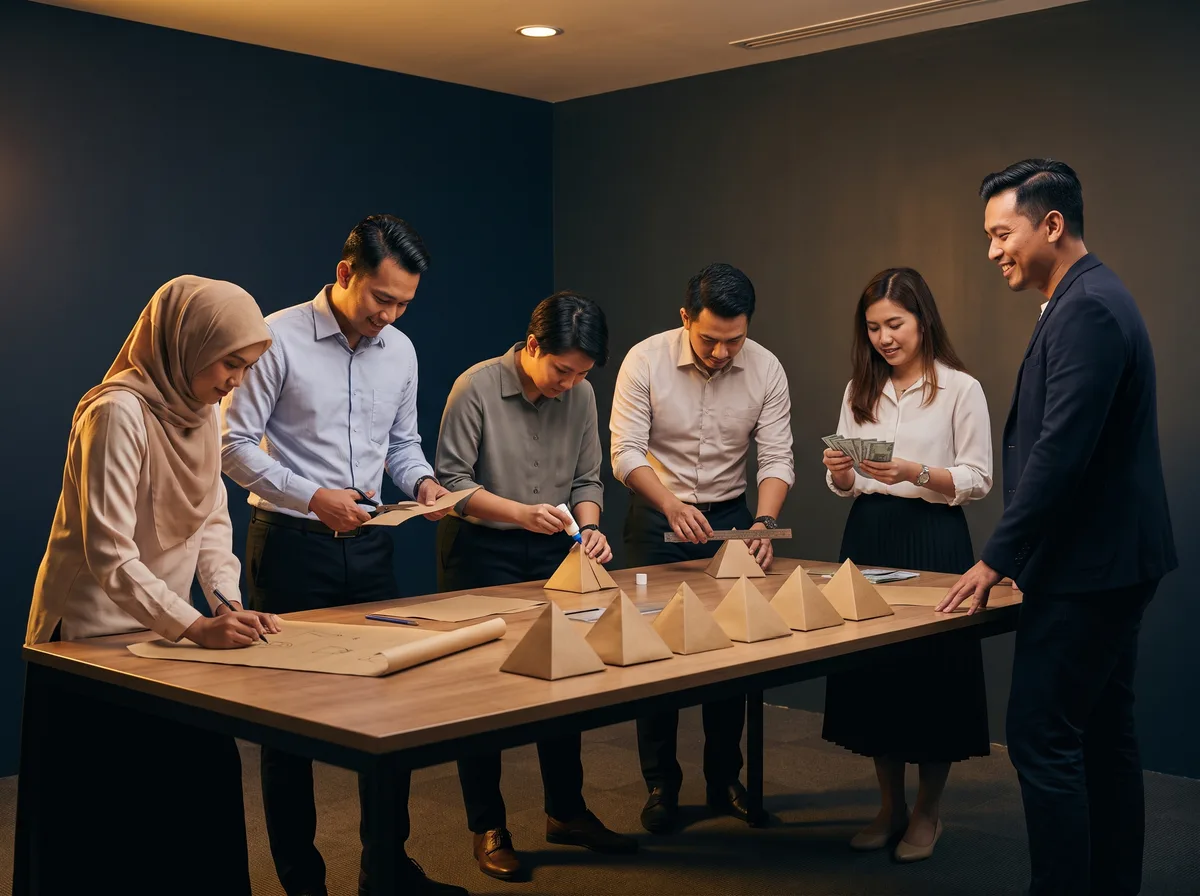
The Business Paradigm Challenge (BPC) is a two-day, hands-on business simulation by AIBOTS in which teams of six run a paper-pyramid manufacturing company over eight sessions: they design, buy, build, check, sell and close the accounts, while BPC Digital keeps every number live on their phones.
It is small enough to hold in your hand and complete enough to be a real business: suppliers, a bank, quality checks, customers and three financial statements. What it trains is everything AI leaves to people.
What stays human
Judgement under pressure
The timer is running, cash is short and the customer wants nine centimetres on every side. Somebody has to decide, and live with it.
Six people, one company
No prompt replaces trust. Teams learn to brief, listen, hand over and back each other, in a different role every session.
Owning the numbers
Anyone can ask a machine for a report. Leaders know where each figure came from, because they made the decision behind it.
Making the work better
Kaizen: after every session the team finds one waste and removes it. Improvement becomes a habit, not a slogan.
Learning with five senses
People forget slides. They remember what they saw, heard, touched, said and felt.
BPC is built so every lesson enters through all five senses, the way a transformation leader has to read a real workplace.
See. Hear. Touch. Speak. Feel. Then improve.
01
See
Genba: go and see
The line, the stock, the wallet, the charts on the big screen. You judge by what is in front of you, not by what a report says.
02
Hear
Listen before you decide
The customer at the desk, the checker who rejects a pyramid, the quiet teammate with the best idea. The sound of a sale.
03
Touch
Genbutsu: the real thing
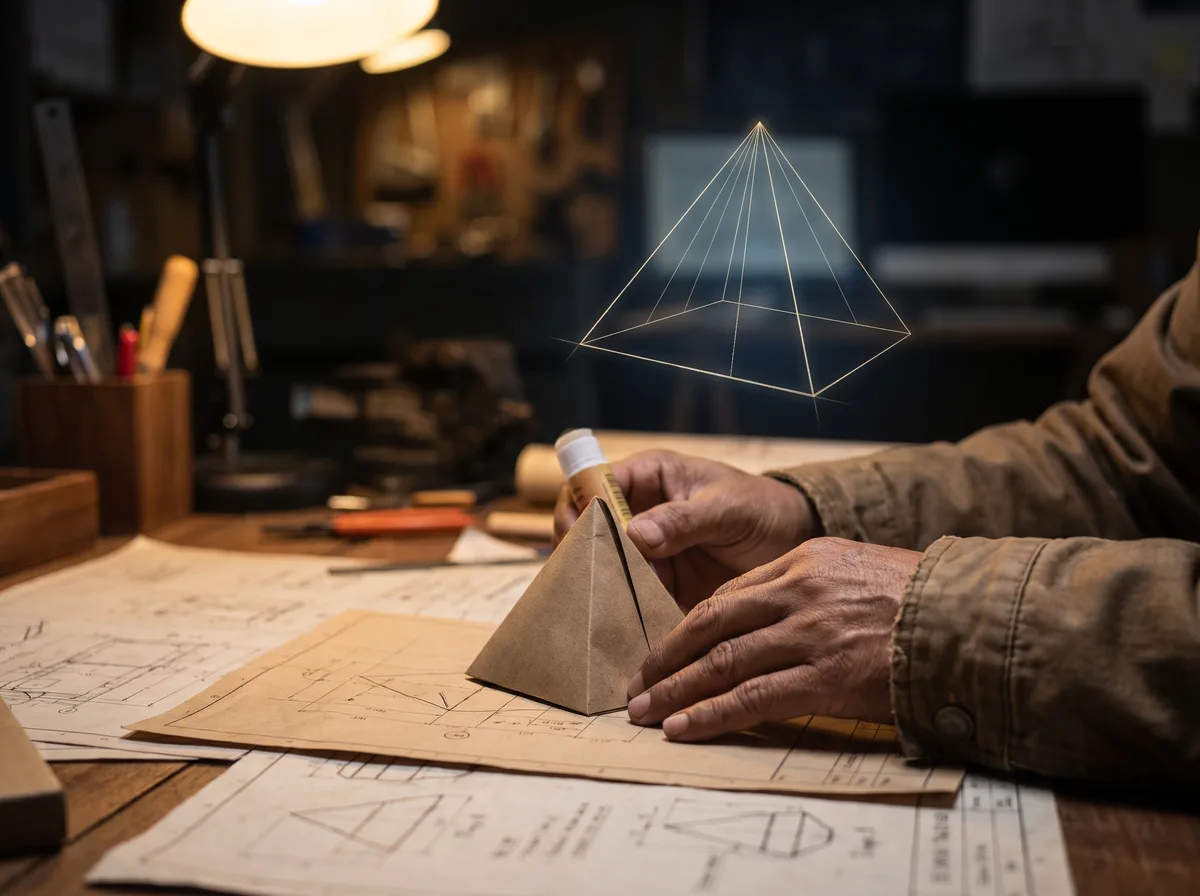
Measure, cut, fold, glue. A nine-centimetre pyramid in your own hand teaches quality faster than any definition.
04
Speak
Lead out loud
Six roles that rotate every session. Everyone briefs, negotiates, reports and leads the company at least once.
05
Feel
Make it matter
The pressure of the timer, the sting of a reject, cash running out, the joy of the first sale. Feeling is what makes a lesson stay.
A leader who has only read about change can describe it. A leader who has seen, heard, touched, spoken and felt it can make it happen, and bring a team along. That is the difference these two days are built to make.
Who it is for
One game. Three generations of future leaders.
The same paper pyramid teaches a fifteen-year-old about money and a manager about cash flow. Only the conversation afterwards changes.
School students
Meet business before the textbook.
Money, cost and profit become things they can count and hold.
Maths with a purpose: measure, price, add up, compare.
The courage to speak, decide and lead a team of friends.
A first honest look at how a company really works.
They go home knowing what they are good at, and curious about what they could become.
University students
Turn theory into a company you actually ran.
Management, accounting, operations and design in one flow, not four subjects.
Three financial statements that came from their own decisions.
The teamwork employers ask about, practised under real pressure.
AI used as a tool, with a person still responsible for the answer.
They leave with a story for every interview: what we tried, what failed, what we fixed.
Working teams
See the whole business, not only your desk.
How one decision in purchasing, production or quality lands on cash and profit.
Kaizen habits ready for Monday: find the waste, fix the cause, measure again.
Respect between departments, earned by doing each other’s job.
Leaders who have practised deciding with a team watching and a clock running.
They return as one team with one language for improvement. HRDC claimable for Malaysian employers.
The method behind it
Japanese management excellence, learned by doing.
The ideas that built the world’s most admired factories work in every office, classroom and start-up. BPC lets people meet them first, and name them after.
現地現物
Genba Genbutsu
Go to the real place and look at the real thing before you decide. In BPC the factory is your own table.
改善
Kaizen
Change for the better, a little every session, by the people who do the work. The team promises one improvement and keeps it.
人間尊重
Ningen Sonchō
Respect for people. Fix the cause, not the person. Every role is needed and every voice is heard.
リーン
Lean management
Give the customer exactly what was asked for, with nothing wasted on the way. Then do it faster.
The 7 wastes teams learn to see
The system measures five of them from the game’s own data; the trainers rate the other two.
1Transport
2Inventory
3Motion
4Waiting
5Over-processing
6Over-production
7Defects
5S: the workplace that runs itself
A tidy table is a fast table. Teams feel it within a few sessions.
8sessionsMoney, materials and unfinished pyramids carry on from one session to the next.
roles
6rolesCEO, Design, Purchasing, Production, QC and Accountant. Roles rotate every session.
trainer desks
4trainer desksShop, Bank, External QC and Sales. Every desk on one tablet screen.
big screen
1big screenTimer, phase and every company’s progress for the room. Results when the organiser says so.
Playerstheir own phones
Trainerstablets at the desks
Organiserone PC
The roomthe big screen
How a session runs
Four steps, eight times over two days.
The organiser moves the room from one step to the next with one button. The timer counts down on every phone, but it never moves the room by itself.
1
Plan & buy
15 min
Salary and utilities are paid as the session opens.
The Design Manager records the pyramid design.
Purchasing fills a cart. The Shop desk hands the items over and taps Fulfil. That is when the wallet goes down.
Short of cash? The CEO or Accountant asks the Bank for a loan.
2
Produce
30 min
Production starts each pyramid on the phone and sticks its number on.
The QC Manager checks every finished pyramid: 9 cm on every side. Pass, redo or reject.
The Shop is closed. What you did not buy, you do not have.
3
Sell & review
30 min
The outside checker at the External QC desk passes or rejects. Only a pyramid that passed both checks can be sold.
The Sales desk pays the session price at once. Every phone of the team celebrates.
The Accountant fills in the Profit & Loss, Balance Sheet and Cash Flow. The team writes its Kaizen.
4
Close
until done
Four things can stop a close: an order still waiting, a loan payment with no decision, missing reports, missing Kaizen.
Depreciation and tax post themselves. The organiser reveals the results on the big screen.
Roles rotate, and the next session begins.
The minutes are the standard settings. The organiser can change them for a training.
Six roles
Everyone runs the company. Everyone tries more than one job.
A company is six people. Roles rotate every session, so the Accountant of Session 1 may be the Production Manager of Session 2.
CEO
Leads the team, asks the Bank for loans, closes the session.
Design Manager
Decides the pyramid design and how many fit on one Drawing Block.
Purchasing Manager
Buys materials, tools and equipment from the Shop.
Production Manager
Starts each pyramid, sticks its number on, finishes it.
QC Manager
Checks every finished pyramid before it goes to the outside checker.
Accountant
Keeps the accounts and prepares the three financial reports.
What people take home
Business lessons you can hold in your hand.
Every idea is met first on the factory floor, then named in a short lesson inside the game, with a check and a glossary.
Kaizen and the 7 wastes
Change for the better: small improvements, every session, by the people doing the work. The seven wastes tell you where to look.
Productivity and takt time
Output divided by input. Find the slowest step, balance the work across six people, get each pyramid right the first time. Takt time sets the pace.
Quality
Meet the requirement: 9 cm on every side. Your own check catches problems cheaply; the outside checker catches them when it is too late. Fix the cause, not the person.
Design thinking
Understand the user, define the problem, try ideas, prototype cheaply, test. In this game you design the product and the way your team works.
The three reports
Profit & Loss: did we make money? Balance Sheet: what do we own, and what do we owe? Cash Flow: where did the cash go? Profit is not cash.
Built for the whole room
Players play. Trainers tap. The organiser presses Next.
Players
On their own phones
One big button: the thing your role should do now.
The wallet always at the top. Paying and being paid are moments you see.
Coach tips that react to what the team just did.
Sale celebrations, a live sales rank, streaks, badges, levels and role stars.
A guide to the rules, short lessons, help and a feedback form on every screen.
Trainers
On tablets at the four desks
Shop, Bank, External QC and Sales as tabs on one screen. One person can run two desks.
Hand the items over, then tap. That is the moment money moves.
Match the sticker number. A pyramid that failed a check cannot be sold, and a pyramid sells once.
Loans, payments, extensions and equipment buy-back from the Bank tab.
Send a cheer to a team that deserves one.
The organiser
On a PC, with the big screen for the room
One Next button walks the session. A close checklist says what is still missing.
Live dashboards: productivity, takt time against cycle time, the 7 wastes, a timeline of every role.
The three statements per company as tables and charts.
Scoring with weights you can tune, live results and an awards ceremony on the big screen.
A message to everyone, undo with a reason, emergency stop, an audit trail and printing.
Questions and answers
What people ask before they book.
What is the Business Paradigm Challenge (BPC)?
The Business Paradigm Challenge (BPC) is a two-day, hands-on business simulation by AIBOTS in which teams of six run a paper-pyramid manufacturing company over eight sessions: they design, buy, build, check, sell and close the accounts, while BPC Digital keeps every number live on their phones.
Why does a business simulation matter in the AI era?
AI can draft a plan, a report or a design in seconds. It cannot take responsibility for a decision, lead a team under pressure, or notice what is really happening on the floor. BPC trains exactly those human skills: judgement, teamwork, ownership of the numbers and the habit of improving the work every session (Kaizen).
Who is BPC for?
School students, university students and working staff. Students meet business, money and teamwork with their own hands before or alongside the textbook. Working teams, from new hires to managers, see how every decision in one department changes cash and profit for the whole company.
Do participants need a business or accounting background?
No. Every idea is met first in the game and then named in a short lesson. By the end, participants have closed eight sets of accounts themselves and can read a Profit & Loss statement, a Balance Sheet and a Cash Flow statement that came from their own decisions.
What are the five senses of learning in BPC?
See, hear, touch, speak and feel. Participants see the real work and the live figures, hear the customer and each other, touch and build the real product, speak as they decide and lead in rotating roles, and feel the pressure of the timer and the joy of a sale. Lessons that enter through all five senses are the ones people keep.
How long is BPC and how many people can join?
BPC runs over two days in eight sessions. Participants work in companies of six, and several companies compete in the same room, so a class is usually built in multiples of six.
What is BPC Digital?
BPC Digital is the live web system that runs the training. Players use their own phones, trainers use tablets at the Shop, Bank, External QC and Sales desks, and the organiser moves the room from a PC with a big screen. It works in the browser and nothing needs to be installed.
Which management ideas does BPC teach?
Japanese management practice in action: Kaizen (continuous improvement), Genba Genbutsu (go and see the real thing), Ningen Sonchō (respect for people), Lean thinking and the seven wastes, 5S, quality at the source, takt time and productivity, plus design thinking and the three financial statements.
How do we bring BPC to our school, university or company?
Send AIBOTS a message with the contact form at the foot of aibots.my/bpc, by email to sales@aibots.my or by phone on +60169248013. We agree the dates, the venue and the number of companies, and bring the trainers, the materials and BPC Digital. For Malaysian employers the training is HRDC claimable.
For companies
Bring the Business Paradigm Challenge to your team.
Two days. Six roles. Eight sessions. Real accounts at the end of every one, and a system that keeps every number right while your people learn by doing.
Bring the Business Paradigm Challenge to your people.
Tell us who will take part (a school, a university or a company), how many people and when. Your message goes straight to our sales team at sales@aibots.my and we reply within 48 hours.


 School students