Agentic AI Threat Escalation and Quantum Security Expansion Redefine Enterprise Defense
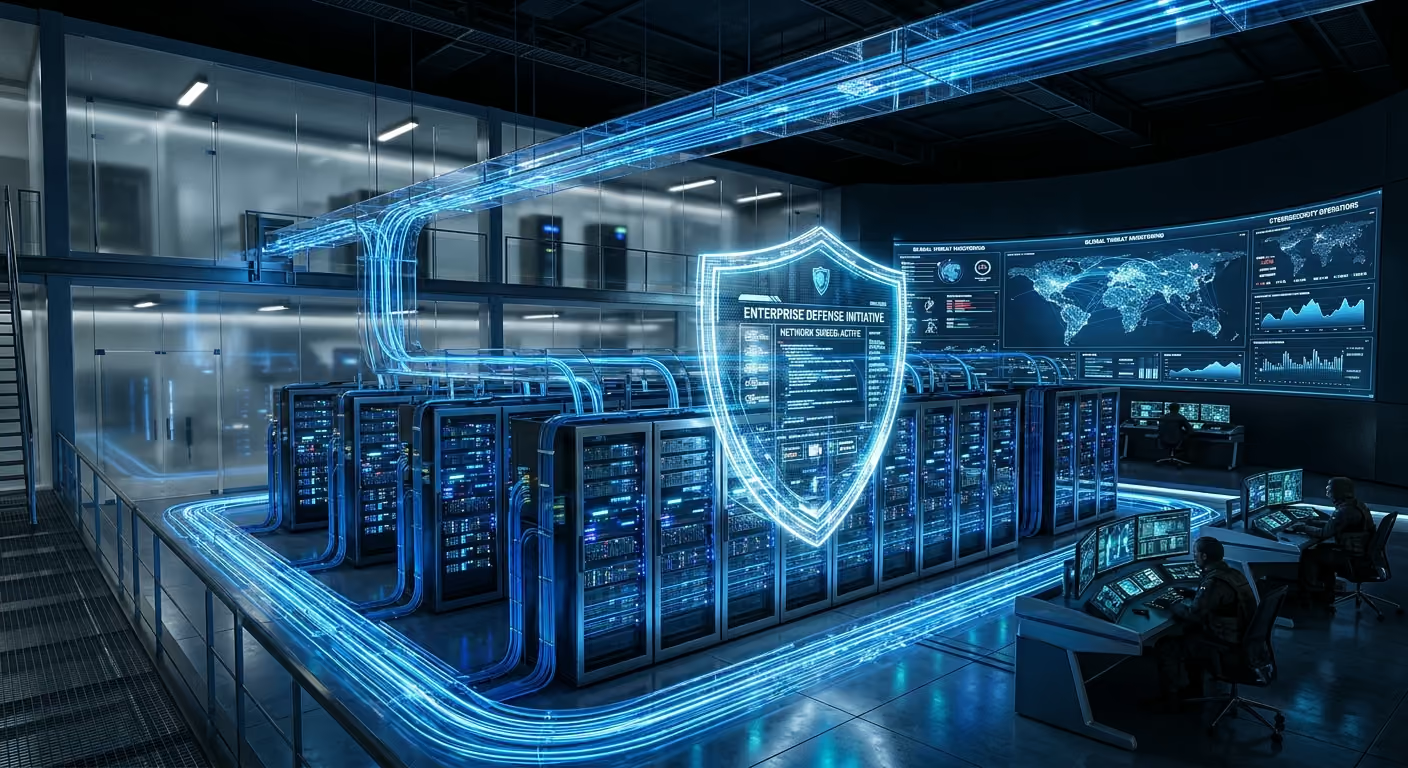
On November 29, 2026, global enterprise defense operations are confronting a decisive structural shift in threat dynamics, marked by the arrival of autonomous adversary systems and a rapid acceleration in quantum security infrastructure.
Agentic AI Moves to the Frontlines
Official warnings from ThaiCERT highlight a alarming evolution in threat tactics: the adversary group known as GT13 has begun deploying agentic AI frameworks to target enterprise infrastructure. Unlike traditional automated scripts, these AI-driven systems possess contextual decision-making capabilities, allowing them to probe target networks, adapt to active defenses, and execute intrusion paths without real-time human intervention.
Security operation centers are finding that traditional response playbooks are struggling under the speed of autonomous probes. The deployment of agentic models by GT13 signals that threat actors have successfully operationalized generative and reinforcement learning tools for reconnaissance and initial access.
The Quantum Transition Accelerates
In response to mounting post-quantum cryptography deadlines, hardware and encryption specialists are moving rapidly to secure critical infrastructure. Quantum computing developer IonQ (NYSE: IONQ) announced plans to nearly double its specialized cybersecurity customer base as corporate demand for post-quantum defense algorithms surges.
Concurrently, defense giant Thales has signaled its focus on photonics sovereignty through its strategic acquisition of Lumibird. The transaction underscores how European defense leaders are securing indigenous quantum-safe optical communications and laser tech to protect state and enterprise networks against future decryption risks.
Vulnerability Governance and AI Consolidation
As technical capabilities evolve on both sides of the defense wire, leadership teams are forced to re-examine governance structures. Industry analysts note that security leaders are currently governed by three distinct clocks during any security flaw life cycle: the time to discovery, the time to public exposure, and the time to vendor patch deployment.
With vendor consolidation accelerating across the industry, CISOs are wrestling with a critical operational question: who ultimately owns the operational risk of integrated AI components? As legacy titans like Zscaler showcase how early technology bets transform into cloud infrastructure empires, today's leaders must balance rapid AI adoption against unvetted third-party algorithmic risk.
The Bottom Line
- TL;DR Summary: GT13 is actively targeting enterprises using autonomous agentic AI tools, while providers like IonQ and Thales expand post-quantum security footprints to protect against next-generation decryption.
- Cybersecurity Fun Fact: Zscaler founder Jay Chaudhry launched the cloud security pioneer in 2007 by self-funding a $500,000 venture, which eventually grew into a multi-billion-dollar global enterprise defense titan.
Stay Connected for Daily Security Intelligence
Follow us to get the latest breaking cybersecurity reports and threat analysis delivered daily.
Aibots Sdn Bhd | [Beyond Future]