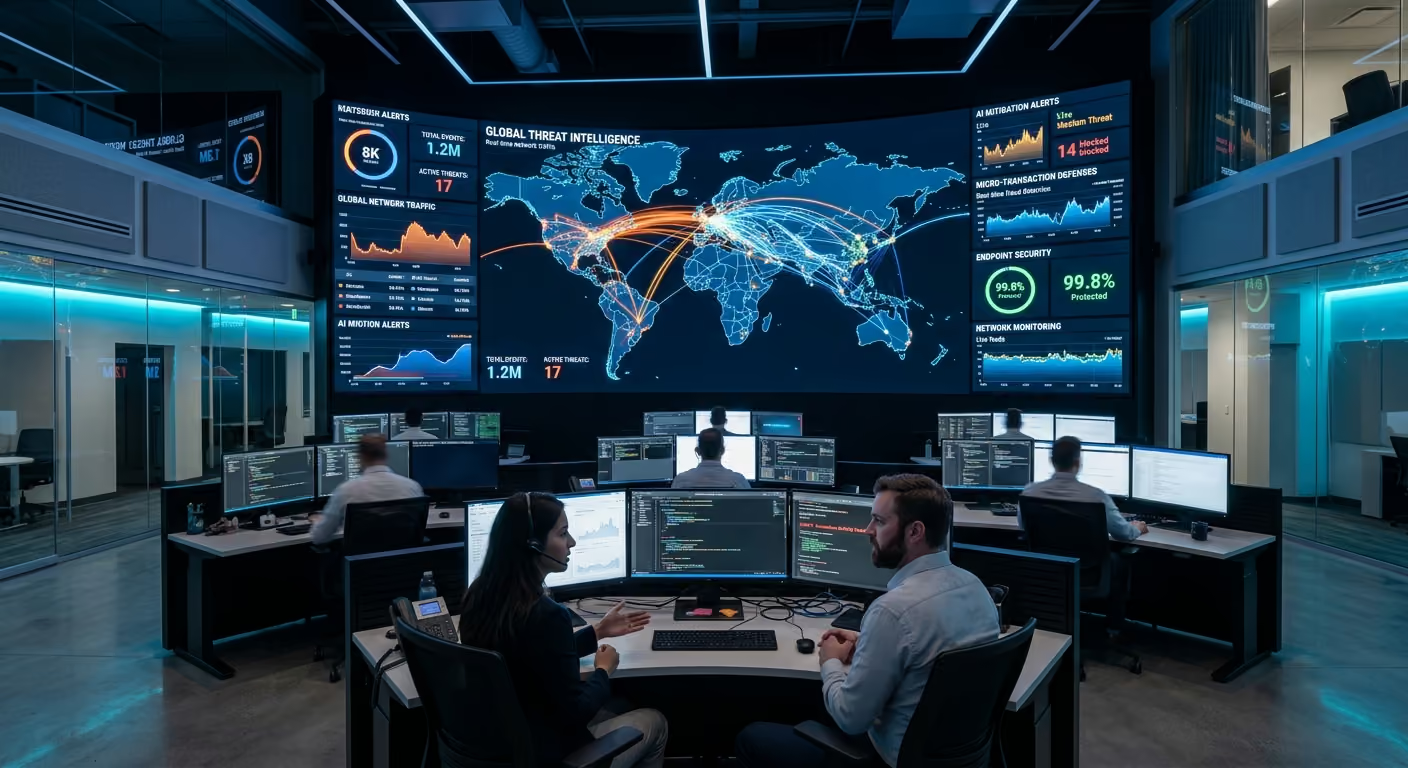
The Agentic AI Trap: Why Hasty Enterprise Security Deployments Threaten the Modern C-Suite

Today, on September 18, 2026, the global enterprise cybersecurity ecosystem is rapidly transitioning into the era of autonomous, agentic artificial intelligence. This technological evolution brings both promise and peril, as security leaders scramble to protect their networks against sophisticated frontier AI threats. Experts warn that while the temptation to deploy automated, self-healing defenses is high, rushing these integrations without robust guardrails may trigger severe, unintended vulnerabilities across the corporate perimeter.
The Rise of Agentic AI and the Rush to Automate
The emerging threat landscape is defined by "agentic" systems, AI entities capable of executing multi-step tasks and making autonomous decisions. According to industry insights from NTT Data and CrowdStrike (CRWD:NASDAQ), these models represent a major step forward from static automation. However, security researchers at SC Media caution that hastily deployed agentic security tools are not a silver bullet. Autonomous agents operating without proper boundaries can be manipulated by malicious actors, resulting in cascading failures or unauthorized privilege escalations inside enterprise networks.
Enterprise AI Infrastructure Scales to Mid-Market
As major enterprises grapple with these automated threats, technology vendors are rapidly scaling their AI-led services. HCLTech has officially launched "Pulse", a dedicated business unit designed to drive AI-driven growth for mid-market enterprises valued between $500 million and $5 billion. This aggressive expansion highlights how AI-first strategies are no longer reserved only for elite Fortune 500 tech firms. Yet, the rapid democratization of AI services places a heavy burden on medium-sized organizations to secure their operations.
A Unified Call for AI Governance and Leadership
With the rise of the "CEO of Technology" concept, modern enterprise leaders are shifting focus toward deep compliance and governance. This trend will take center stage at HMG Strategy's upcoming summit on September 24, where CIOs and CISOs will gather to address the dual challenges of AI governance and resilience. The critical need for leadership in this domain is further demonstrated by executive moves: Casepoint has appointed former ATF Chief Privacy Officer Varun Bisht as its new Vice President of Governance and Compliance. Additionally, unified security firms like LinkShadow are preparing to showcase the future of integrated threat detection at GISEC Global 2026, signaling a unified front against fragmented AI threats.
The Bottom Line
- Hasty Deployment Risks: Rushing to implement agentic AI security without rigid controls creates volatile systemic vulnerabilities.
- Mid-Market Explosion: HCLTech's new $500M to $5B focused unit, Pulse, indicates AI operations are scaling dramatically down-market.
- Governance is King: Executive hires and regional summits emphasize that compliance, privacy, and active risk management are paramount to mitigating frontier AI threats.
Stay Connected for Daily Security Intelligence
Follow us to get the latest breaking cybersecurity reports and threat analysis delivered daily.
Aibots Sdn Bhd | [Beyond Future]