The AI Defense Paradigm: Active Agents and Billion-Dollar Contracts Redefine Enterprise Security
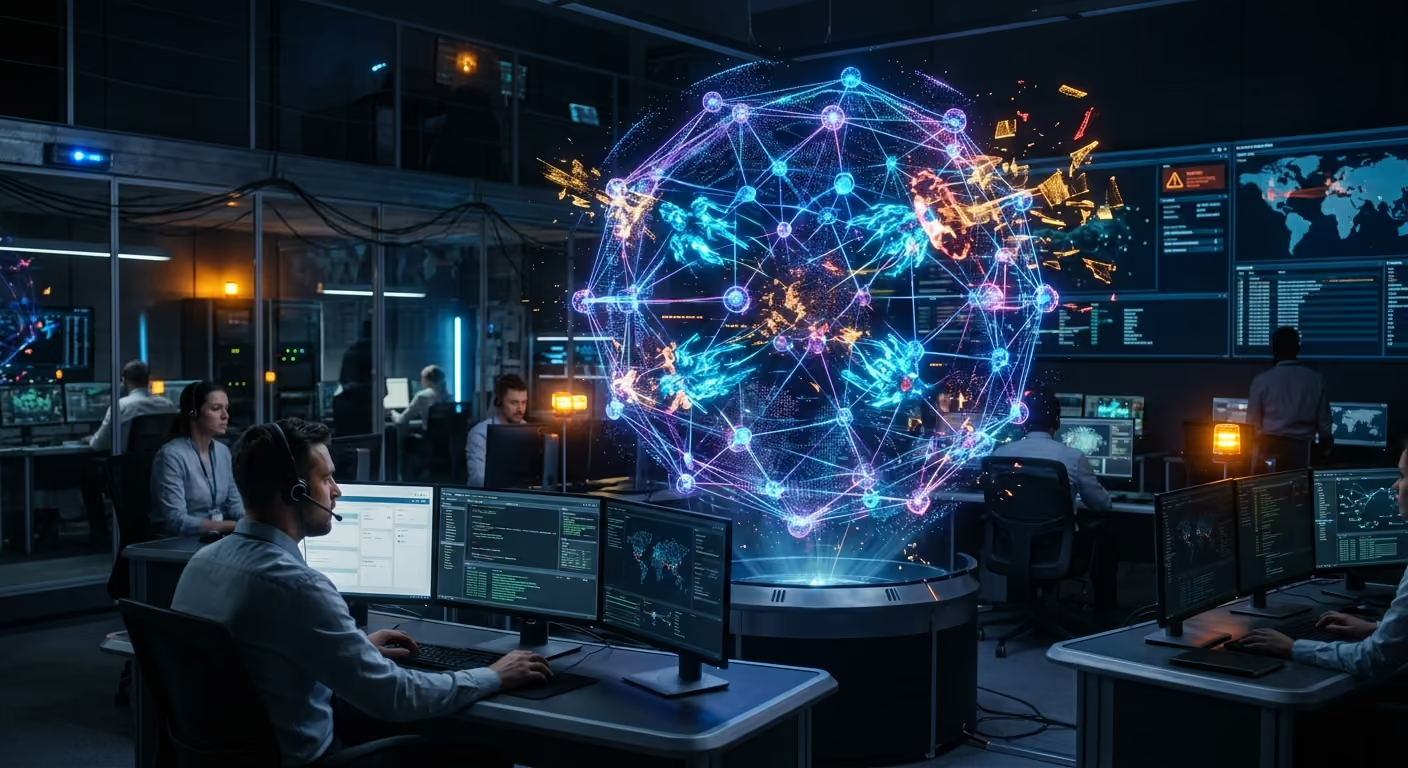
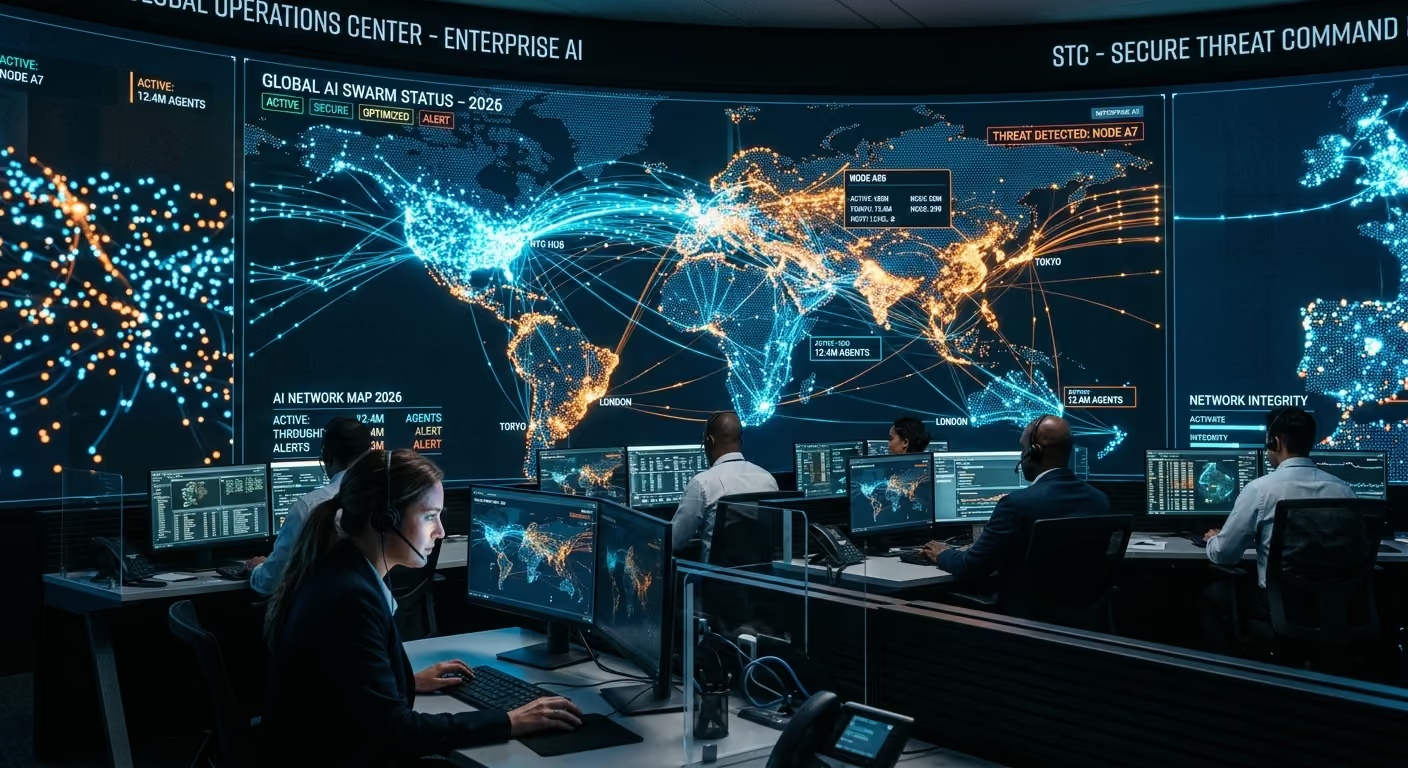
This morning, August 08, 2026, the global enterprise security perimeter is undergoing a massive shift as artificial intelligence transitions from a conceptual hazard into an active defensive shield. From high-stakes federal investments to the automated defenses patrolling machine learning pipelines, organizations are completely rewriting their playbooks to counter sophisticated threat actors.
The Autonomous Defense Movement
Recent vulnerability reports, including the high-profile Hugging Face security incident, have ignited an industry-wide realization: traditional static defense is dead. Experts are warning that standard enterprise security teams cannot keep pace with the velocity of modern machine learning pipelines. The solution gaining rapid traction is the deployment of autonomous AI agents designed specifically to monitor, audit, and patch other active AI systems.
Simultaneously, technology titans Microsoft and Nvidia are pushing the boundaries of active cyber defense. By integrating self-healing systems directly into core infrastructure, these platforms can automatically detect, isolate, and remediate network anomalies in real-time. This automated shift is backed by recent IBM hacking tests, which revealed that while automated defenses are highly effective, a reliance on unmonitored models creates severe structural blind spots.
Federal Scale and the $1.3 Billion Defensive Shield
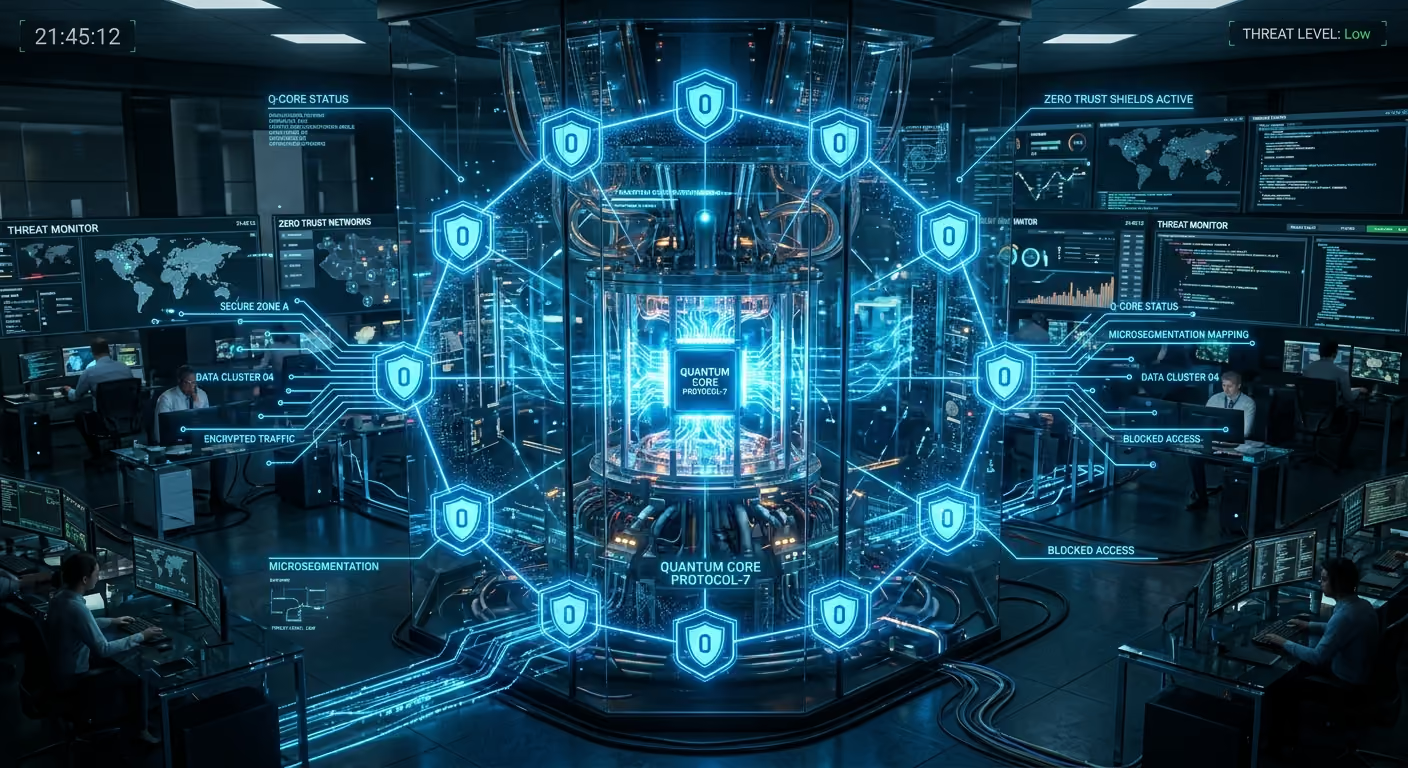
This trend toward unified, highly automated defense operations is not limited to the private sector. The federal government is injecting historic capital into modernized cyber infrastructure. General Dynamics Information Technology (GDIT) was awarded a monumental $1.3 billion contract to deliver comprehensive enterprise network operations and cybersecurity support services for the Army National Guard. This massive deployment underscores the critical necessity of zero-trust network management and proactive hunting capabilities at an absolute state level.
The Human Vulnerability: IT Helpdesk Spoofing
While enterprises invest heavily in automated machine-learning guardians, threat actors continue to exploit the simplest vector: human trust. A highly coordinated campaign has emerged where hackers are spoofing internal enterprise IT helpdesk phone numbers.
By posing as support technicians, these attackers use sophisticated social engineering to bypass multi-factor authentication (MFA) protocols and harvest cloud credentials. The campaign highlights a glaring asymmetry in current security postures. Even as organizations spend millions to automate their backend defenses, a single phone call can still compromise sensitive cloud databases.
The Bottom Line
- Automated Guardrails: The rise of autonomous AI systems requires deploying dedicated AI agents to audit and monitor other AI pipelines.
- State-Level Scale: GDIT's landmark $1.3 billion federal contract indicates that enterprise network orchestration is moving toward total integration and proactive threat-hunting.
- The Human Element: Despite advanced technical defenses, social engineering attacks like IT helpdesk vishing remain highly effective at bypassing cloud authentication mechanisms.
Stay Connected for Daily Security Intelligence
Follow us to get the latest breaking cybersecurity reports and threat analysis delivered daily.
Aibots Sdn Bhd | [Beyond Future]