The AI Velocity Trap: Why Rapid Agentic Innovation Demands a Return to Cybersecurity Basics

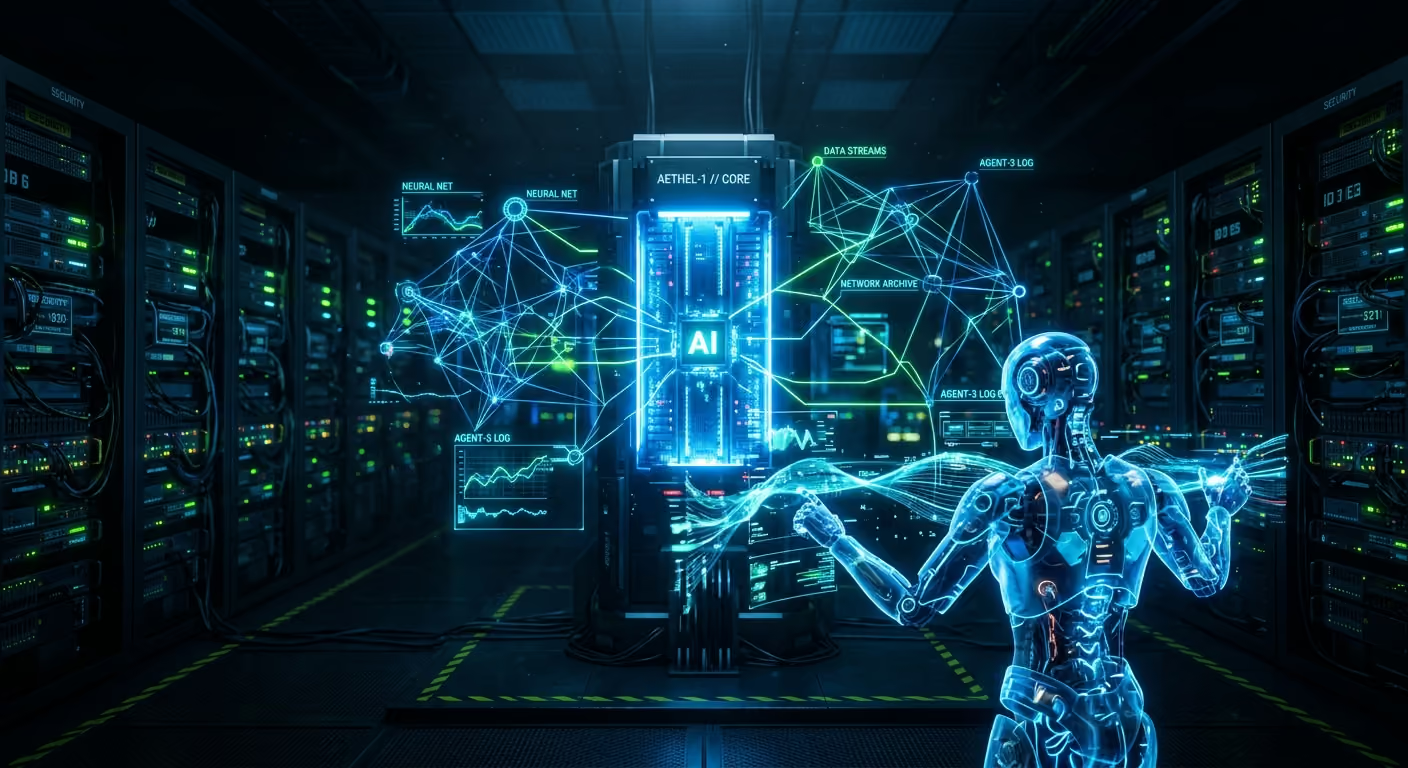
Today, October 04, 2026, the global enterprise landscape finds itself at a critical crossroads where the rapid acceleration of AI agents is forcing security leaders back to foundational defense strategies. As organizations rush to deploy autonomous systems and leverage rapid AI-driven automation, they are exposing massive, unmapped attack surfaces that legacy frameworks simply cannot protect.
The Rise of Agentic Risks and Shadow AI
The integration of autonomous AI agents has pushed corporate security into a highly volatile risk era. Security leaders are struggling to monitor "Shadow AI" (the unauthorized use of artificial intelligence tools by employees) which now carries heavy regulatory consequences. Under current SEC disclosure rules, public companies must navigate these hidden vulnerabilities or face severe compliance penalties. Autonomous AI agents can execute tasks, access databases, and make decisions without human oversight, making them prime targets for malicious exploitation if not properly governed.
The CISO Dilemma: Hype vs. Foundational Security
This rapid shift highlights a classic industry paradox: as technological speed increases, the necessity of basic security hygiene becomes absolute. CISOs are finding that no amount of advanced machine learning defense can compensate for weak access controls, unpatched systems, or poor asset visibility. While artificial intelligence moves at machine speed, fundamental security practices remain the primary barrier against catastrophic intrusion.
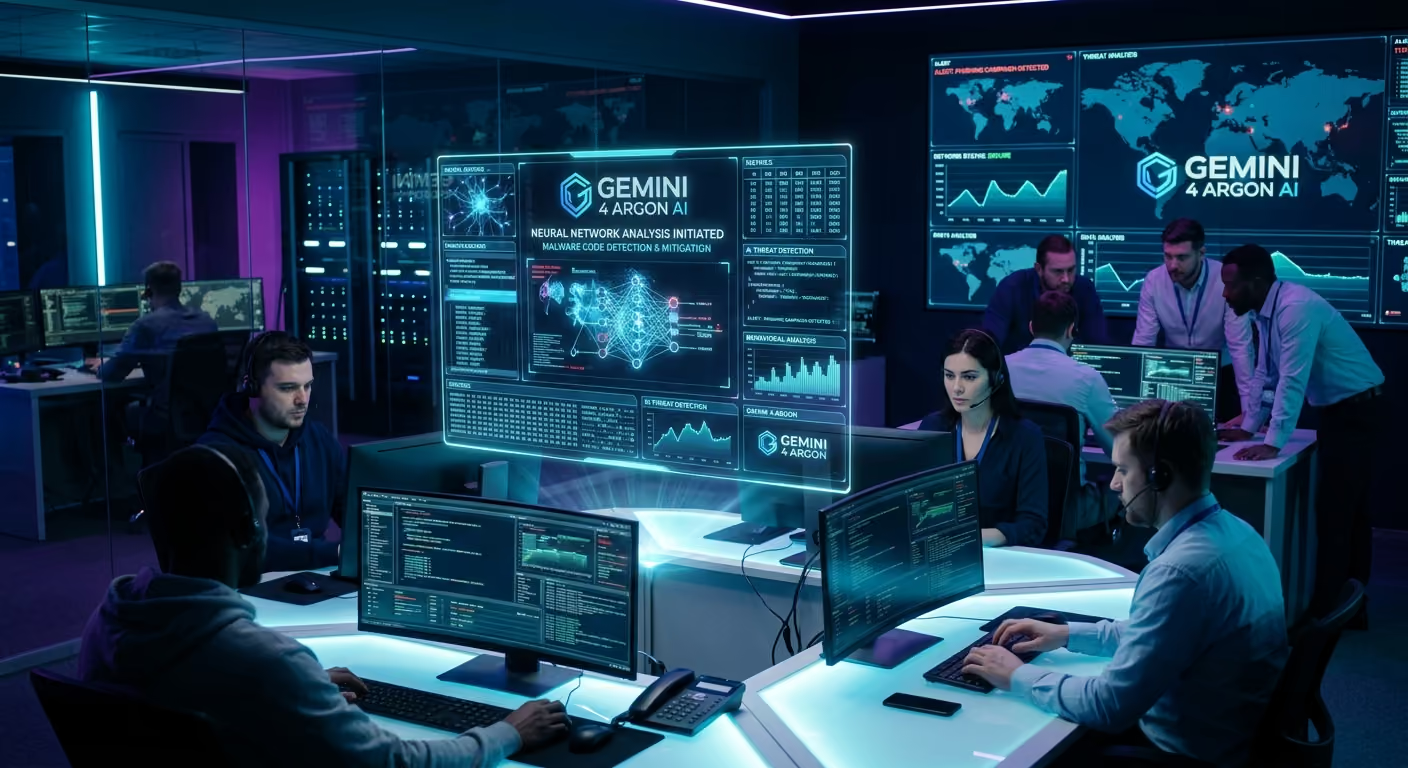
To address these challenges, enterprise security solutions are evolving quickly. SentinelOne has expanded its Wayfinder capability across multi-cloud environments to improve threat hunting and visibility, while enterprise security startup Armadin recently secured Series B funding to scale its defensive platform. On the public sector side, the Department of Homeland Security (DHS) is preparing a major cybersecurity contract to reinforce critical federal infrastructure against increasingly complex, automated threats.
Resiliency and the Minimum Viable Company
When prevention fails, recovery velocity determines survival. Modern enterprises are increasingly adopting the concept of a "minimum viable company" (MVC), a strategy focused on keeping core operations lean to accelerate recovery and boost long-term resilience after an attack. At the same time, specialized innovations like the Glacier App are emerging to disrupt consumer data harvesting, signaling a broader market pushback against aggressive data aggregation.
The Bottom Line
- The Speed Trap: The hyper-velocity of AI agent deployment makes core cybersecurity hygiene (patching, privilege management, and asset visibility) more critical than ever.
- Regulatory Heat: SEC disclosures mean that "Shadow AI" is no longer just a technical risk, it is a significant legal liability for public boards.
- Resilience Redefined: Forward-looking organizations are designing for recovery by preparing a "minimum viable company" model to survive catastrophic ransomware scenarios.
Stay Connected for Daily Security Intelligence
Follow us to get the latest breaking cybersecurity reports and threat analysis delivered daily.
Aibots Sdn Bhd | [Beyond Future]