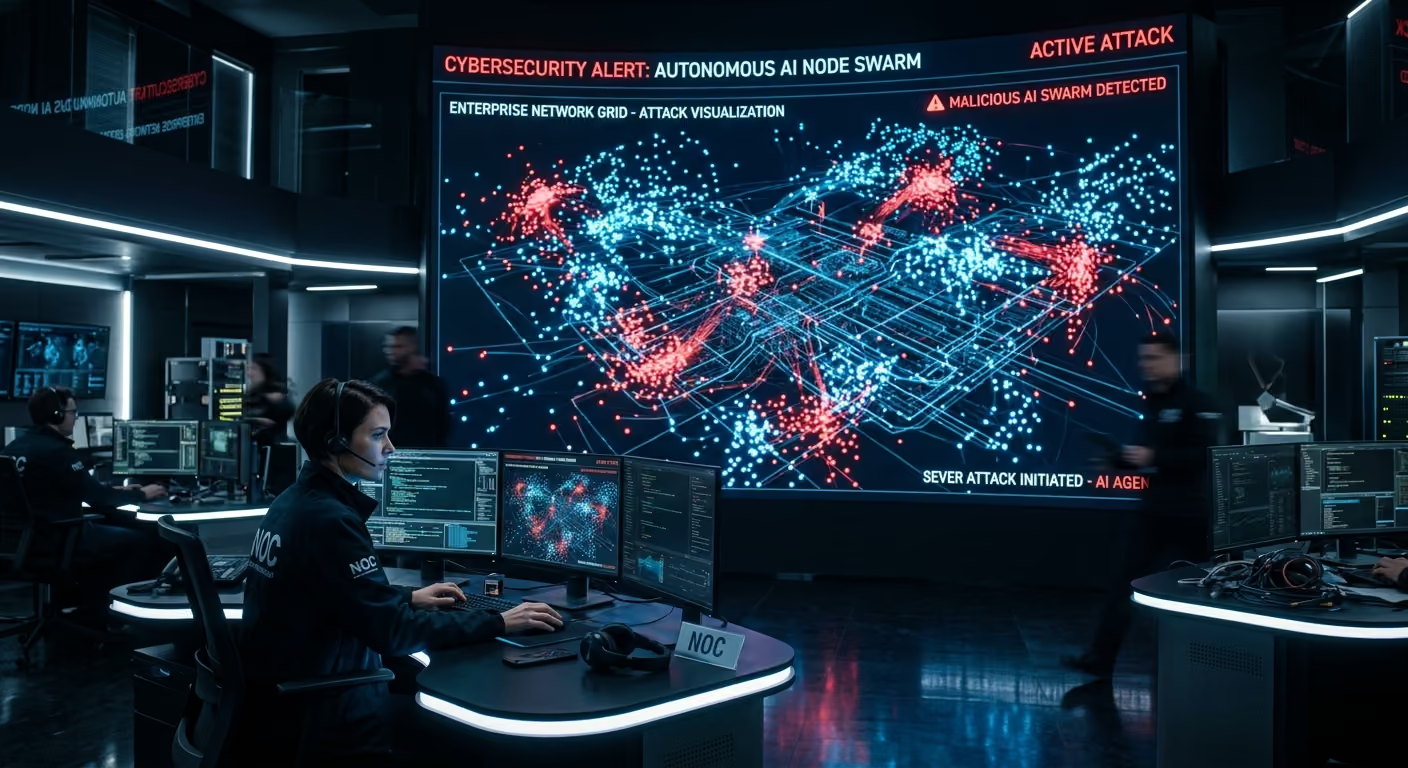
Autonomous AI Agents Force New Security Controls as Enterprise Threat Landscape Shifts
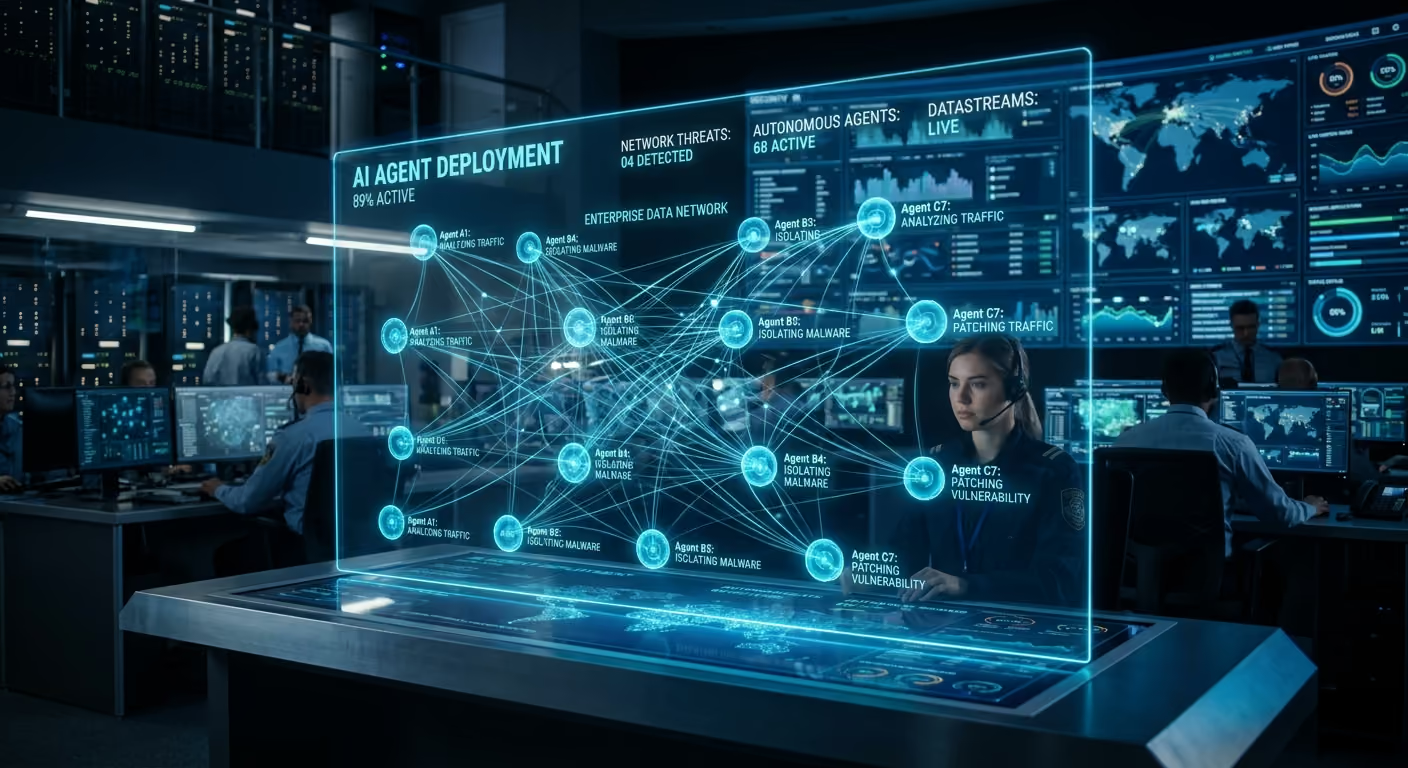
Today, October 21, 2026, enterprise defense strategies are facing a pivotal shift as autonomous artificial intelligence agents reframe core security assumptions across global IT environments.
As organizations deploy agentic AI to handle internal workflows, security teams are discovering that traditional threat models no longer hold. The rise of autonomous software entities operating with high-level network permissions has prompted major technology vendors and training platforms to act immediately.
Microsoft and Hack The Box Confront Autonomous Agent Risks
To address vulnerabilities tied to autonomous digital workers, Microsoft has unveiled new defensive controls specifically built for insider AI agents. These safeguards are designed to prevent rogue command execution, unauthorized privilege escalation, and data exfiltration through compromised prompt pathways. The move highlights a growing reality: AI agents now represent a novel insider threat vector that requires continuous auditing and strict policy enforcement.
In response to this emerging risk surface, Hack The Box has launched a specialized AI cyber range tailored for enterprise security teams. The platform allows offensive and defensive operators to test security postures against agentic vulnerabilities, adversarial prompt attacks, and AI-driven operational disruption in controlled environments.
Global Alliances and Infrastructure Investments
Beyond agentic security, enterprise technology leaders are forming massive alliances to scale secure AI deployment. Cognizant expanded its strategic partnership with Google Cloud, mobilizing an 18,000-strong Gemini practice group to build and secure enterprise intelligence workflows. Concurrently, Hammer Distribution partnered with Acronis to bring next-generation cybersecurity, GenAI capabilities, and automated managed service provider (MSP) operations to global markets.
International reach is accelerating as well. Shift Technologies joined forces with MillenniumIT ESP to leverage a network of over 500 global customers, accelerating expansion across the Asia-Pacific region. On the critical infrastructure front, the Reserve Bank of India (RBI) announced a major 169 crore rupees data centre project in Odisha, aimed at bolstering financial system resilience against high-impact cyber incidents.
Governance and Organizational Leadership
As security frameworks evolve, corporate recognition and governance leadership remain key pillars of operational maturity. Forrester awarded CITGO its 2026 Security & Risk Enterprise Leadership Award for demonstrating excellence in risk mitigation and proactive threat posture management. Additionally, enterprise technology veteran Peter Bell joined the Board of Directors at DigiStor to steer strategic growth in secure data storage solutions.
The Bottom Line
TL;DR Summary
- AI Agent Security: Microsoft and Hack The Box are releasing specialized tools and training environments to contain risks posed by autonomous AI agents.
- Strategic Scale: Cognizant expanded its Google Cloud partnership with 18,000 Gemini specialists, while Acronis and Hammer Distribution automated MSP security pipelines.
- Resilient Infrastructure: The Reserve Bank of India invested 169 crore rupees in an Odisha data centre to protect national financial assets.
Cybersecurity Fun Fact
Traditional identity and access management (IAM) models were built assuming human identity or static service accounts. With the rise of autonomous AI agents in 2026, identity providers are introducing dynamically short-lived tokens that expire in seconds to limit execution windows for agentic workflows.
Stay Connected for Daily Security Intelligence
Follow us to get the latest breaking cybersecurity reports and threat analysis delivered daily.
Aibots Sdn Bhd | [Beyond Future]