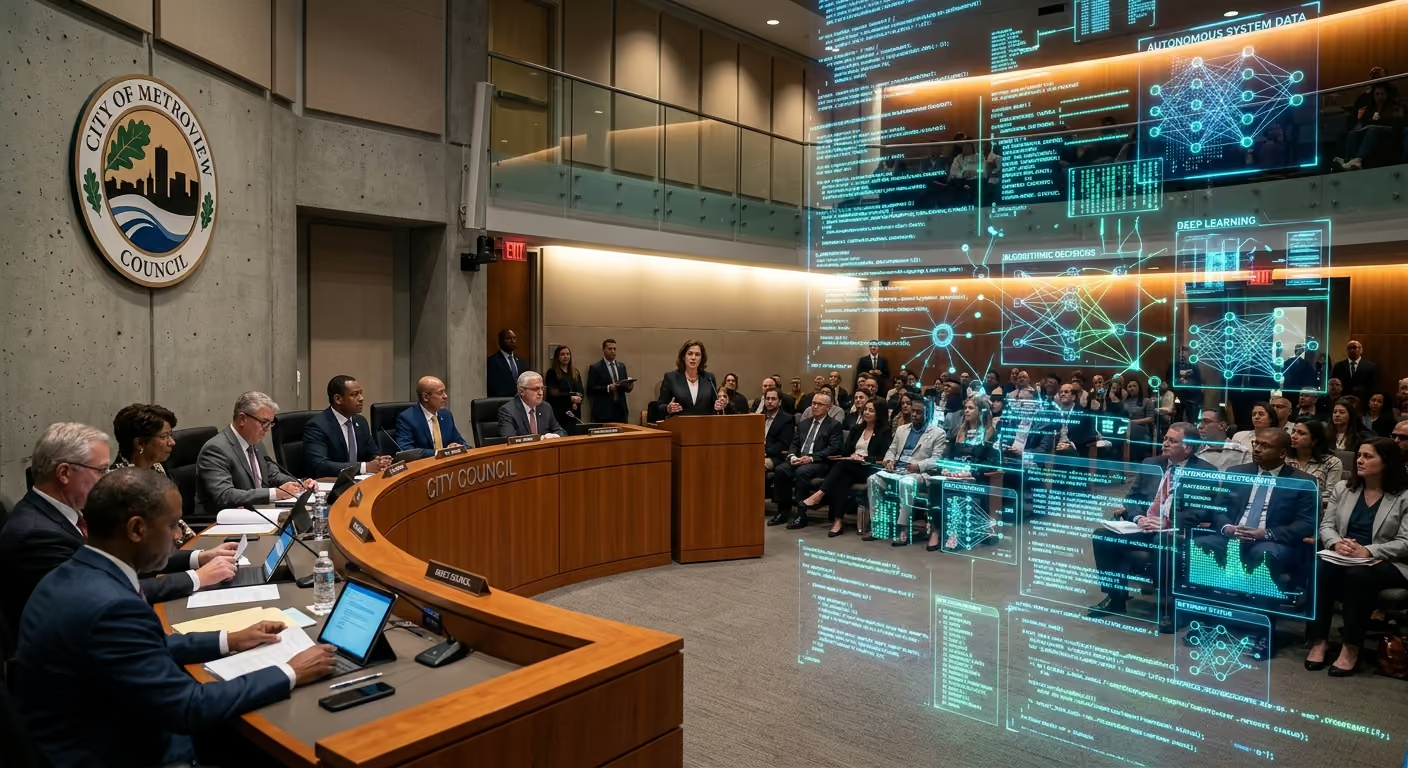
Bezos Workweek Vision and the Rise of AI Microrobots Lead Today's Tech Shift
On this day, October 08, 2026, the global conversation around artificial intelligence is shifting from corporate hype to the physical realities of labor and micro-level engineering. Today's top developments highlight how machine learning is making its way into physical systems, policy standards, and the core of the economy.
A Compressed Workweek and Changing Economic Realities
Amazon founder Jeff Bezos has revealed a striking vision of how artificial intelligence could fundamentally reshape the American workweek. According to Bezos, the rapid evolution of autonomous agents will automate administrative and cognitive bottlenecks, potentially leading to a compressed workweek where human labor is focused purely on strategic, creative, and physical tasks.
This labor transformation is supported by new macroeconomic trends. A report from The Washington Post reveals that AI is reshaping the U.S. economy in highly unexpected ways. Rather than creating massive job losses, the technology is driving localized infrastructure booms and restructuring productivity metrics across mid-sized enterprises.
Micro-Robotics and Agent Standards
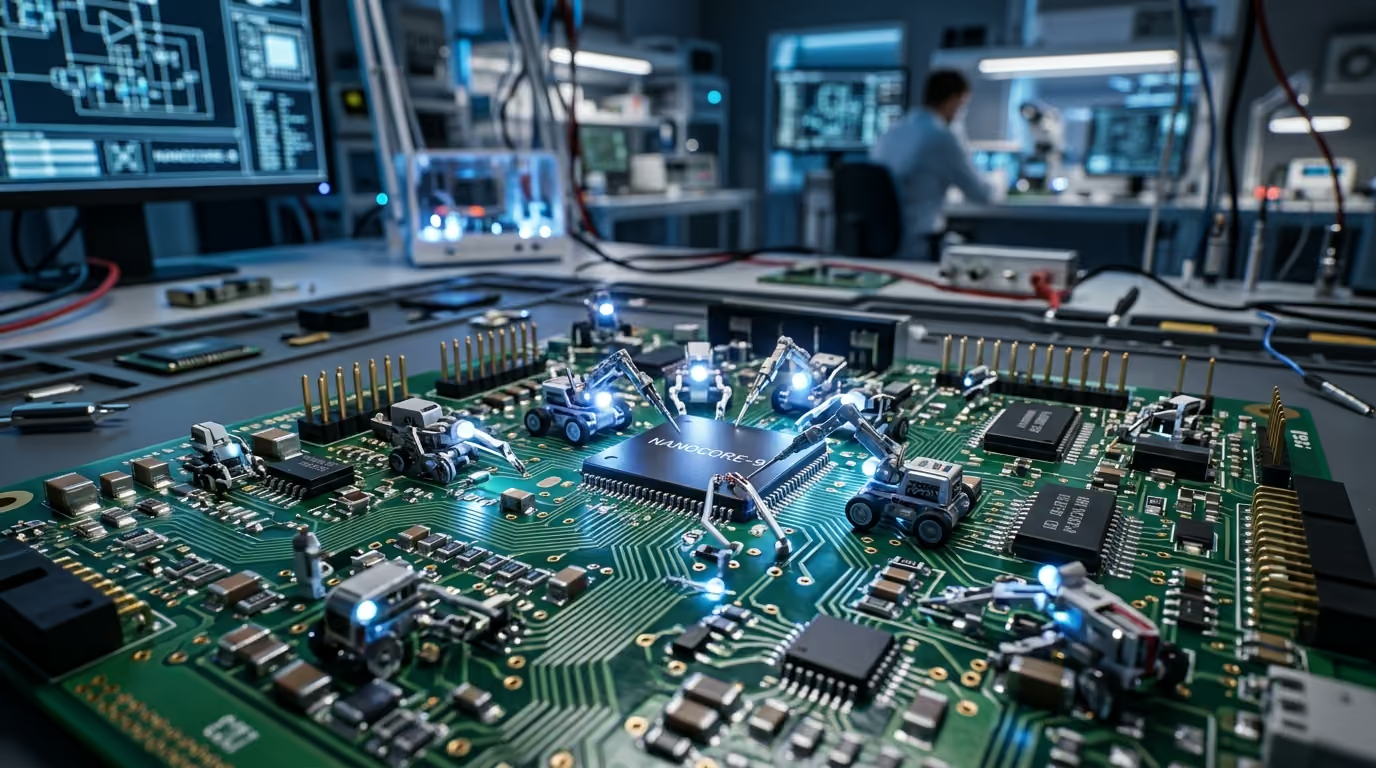
While industrial giants focus on the macroeconomy, a growing wave of hardware startups is looking to the microscopic level. A highly watched startup profiled by The New York Times aims to build AI-guided microrobots. These tiny machines utilize advanced machine learning algorithms to navigate complex physical environments, offering potential breakthroughs in medical procedures, localized circuit repair, and industrial manufacturing.
To ensure these autonomous virtual and physical agents operate in harmony, Meta has joined industry efforts to establish global standards for AI agents. This coalition aims to create a shared framework ensuring that next-generation agentic systems are safe, interoperable, and capable of executing complex multi-step tasks across different platforms.
Classroom Debates and Courtroom Battles
As AI deepens its integration into everyday life, the institutions of democracy and education are pushing back with rigorous debates:
- Academic Restraint: At Emory University, the humanities and social science faculty are actively debating the implementation of tech-free classrooms. Professors argue that keeping generative AI out of the classroom is essential to maintaining critical thinking and genuine academic debate.
- Judicial Guardrails: In Washington, a debate has emerged in the Spokane County judicial race over whether judges should use AI to assist in drafting rulings, highlighting the deep ethical questions surrounding automated justice.
- Corporate Litigation: The business sector is also seeing increased friction. Datavault AI has been hit with a major market-manipulation-related securities lawsuit, reminding investors that the high-stakes AI market is under intense regulatory and legal scrutiny.
The Bottom Line
- TL;DR Summary: Jeff Bezos outlines an AI-driven vision to compress the American workweek, while Meta joins forces with industry peers to standardize autonomous AI agents.
- Hardware Focus: Startups are successfully training AI to navigate microrobots, opening up physical manufacturing frontiers.
- Legal & Social Friction: Emory University, Washington courts, and high-profile securities lawsuits demonstrate that society is actively negotiating the boundaries of automated systems.
Stay Connected for Daily AI Intelligence
Follow us to get the latest breaking artificial intelligence reports and threat analysis delivered daily.
Aibots Sdn Bhd | [Beyond Future]