Edge AI Heals Telecom Networks while Deep-Tech Startups Anchor on Machine Learning
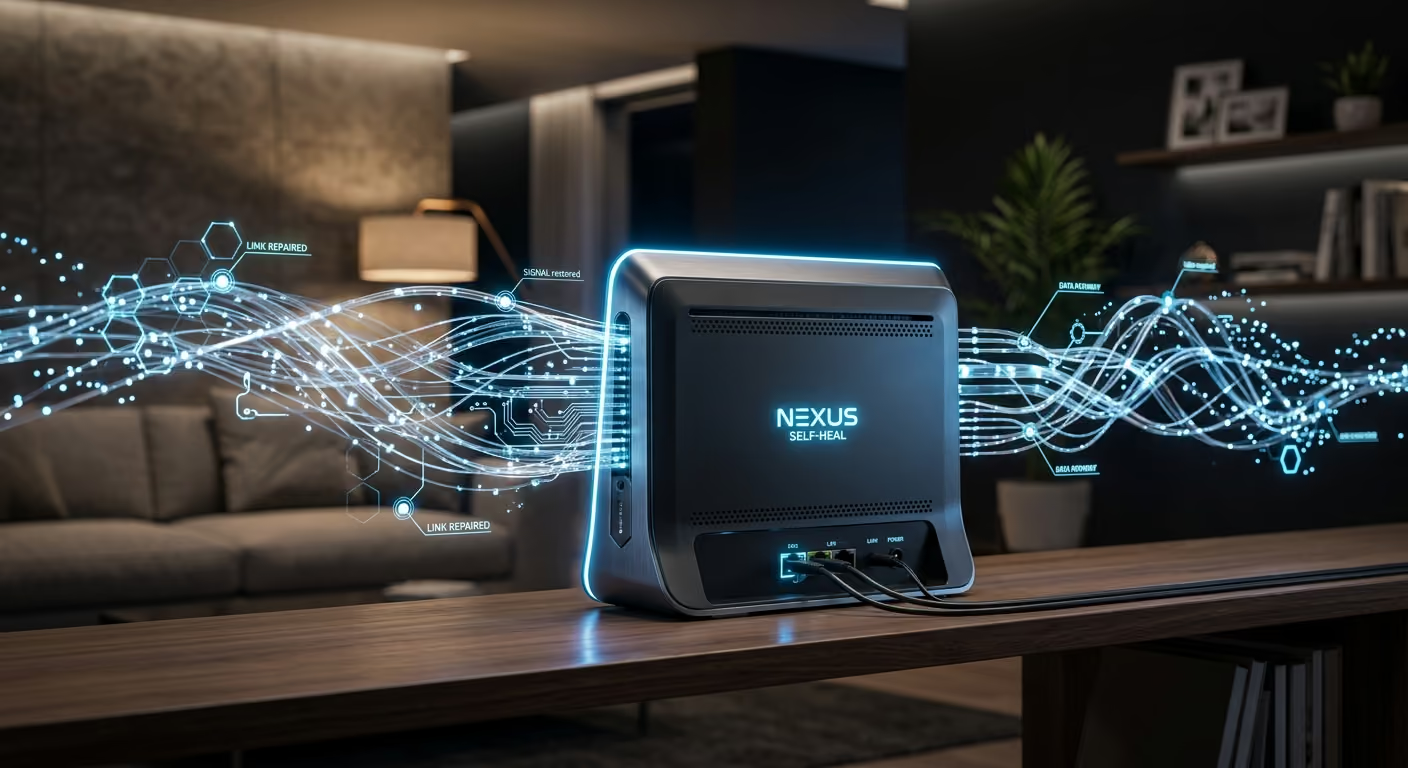
Today, on August 09, 2026, artificial intelligence is shifting rapidly from centralized clouds to the absolute edges of our daily infrastructure. In a move that signals the arrival of zero-touch network maintenance, South Korean telecommunications giant LG Uplus has successfully validated an Edge AI system designed to automatically detect and restore home internet issues. By running intelligence locally at the network boundary, the system identifies anomalies and initiates recovery protocols before consumers even register a disruption, shifting customer service from reactive troubleshooting to autonomous prevention.
Startups Double Down on Core Machine Learning
The infrastructure shift coincides with a massive consolidation of artificial intelligence within the entrepreneurial ecosystem. A new report published by Nasscom reveals that AI and machine learning have emerged as the primary foundational technologies for 74 percent of deep-tech startups. This surge demonstrates that AI is no longer treated as an optional feature or a surface-level integration: it is now the core engine driving modern business software, logistics, and data analytics. From automated same-day delivery platforms in the United States to intelligent financial trading algorithms, machine learning is redefining early-stage product architectures.
Policy, Labor, and Scientific Frontiers
This rapid technological integration is prompting a major wave of state and academic responses. In Singapore, Prime Minister Lawrence Wong addressed growing public anxiety regarding job security, pledging that the government will actively implement policies to ensure AI acts as a supportive tool for workers rather than a mechanism for wholesale displacement. The state's proactive stance highlights a growing global consensus that technological progression must be balanced with targeted workforce transition programs.
Meanwhile, the scientific and academic communities are grappling with far more controversial applications of AI. Researchers have recently begun using advanced AI models to design entirely new synthetic viruses, a breakthrough that could accelerate vaccine development but has also triggered intense debates over biosecurity and regulatory oversight. On college campuses, the friction is even more immediate: students at several Colorado universities have organized protests against the deep integration of AI in academic coursework, calling the technology a corporate plagiarism machine and demanding stricter guidelines to protect original student work.
The Bottom Line
TL;DR Summary: South Korea's LG Uplus has proven that Edge AI can autonomously heal home network failures, showcasing a trend toward self-repairing infrastructure. At the same time, Nasscom reports that 74 percent of deep-tech startups are now anchored on machine learning, pushing governments like Singapore to establish strict guidelines to protect human workers from displacement.
AI Industry Fun Fact: The transition to Edge AI is projected to reduce corporate data center latency by up to 80 percent, allowing internet-of-things devices to make complex decisions locally in milliseconds rather than routing data back to centralized cloud servers.
Stay Connected for Daily AI Intelligence
Follow us to get the latest breaking artificial intelligence reports and threat analysis delivered daily.
Aibots Sdn Bhd | [Beyond Future]