Global Tech Titans Convene at G20 as Anthropic Clinches Legal Victory and Space Force Deploys Real-Time AI Tracking
Today is August 28, 2026, and the global artificial intelligence landscape is shifting rapidly across regulatory, military, and macroeconomic frontiers. In a series of breaking developments, the industry is witnessing a critical legal precedent for LLM developers, high-level diplomatic shifts, and deep integrations into national defense systems.
Anthropic Wins Landmark Court Challenge Over Supply-Chain Risk
In a major victory for the AI sector, Anthropic has successfully overturned a U.S. federal supply-chain risk label in court. The designation, which threatened to restrict the distribution and integration of its models within sensitive government networks, was challenged on the grounds of regulatory overreach. Industry analysts note that this ruling creates a vital precedent, allowing model developers to push back against sweeping federal threat classifications that lack transparent, empirical backing.
This legal triumph comes at a time when compliance and governance are dominating boardroom discussions. By successfully challenging the label, Anthropic secures a clearer pathway for enterprise and federal adoption of its Claude models, signaling that the judiciary will require rigorous proof before labeling frontier AI systems as national security liabilities.
Global Leaders Assemble: G20 Tech Meeting and Global Risks
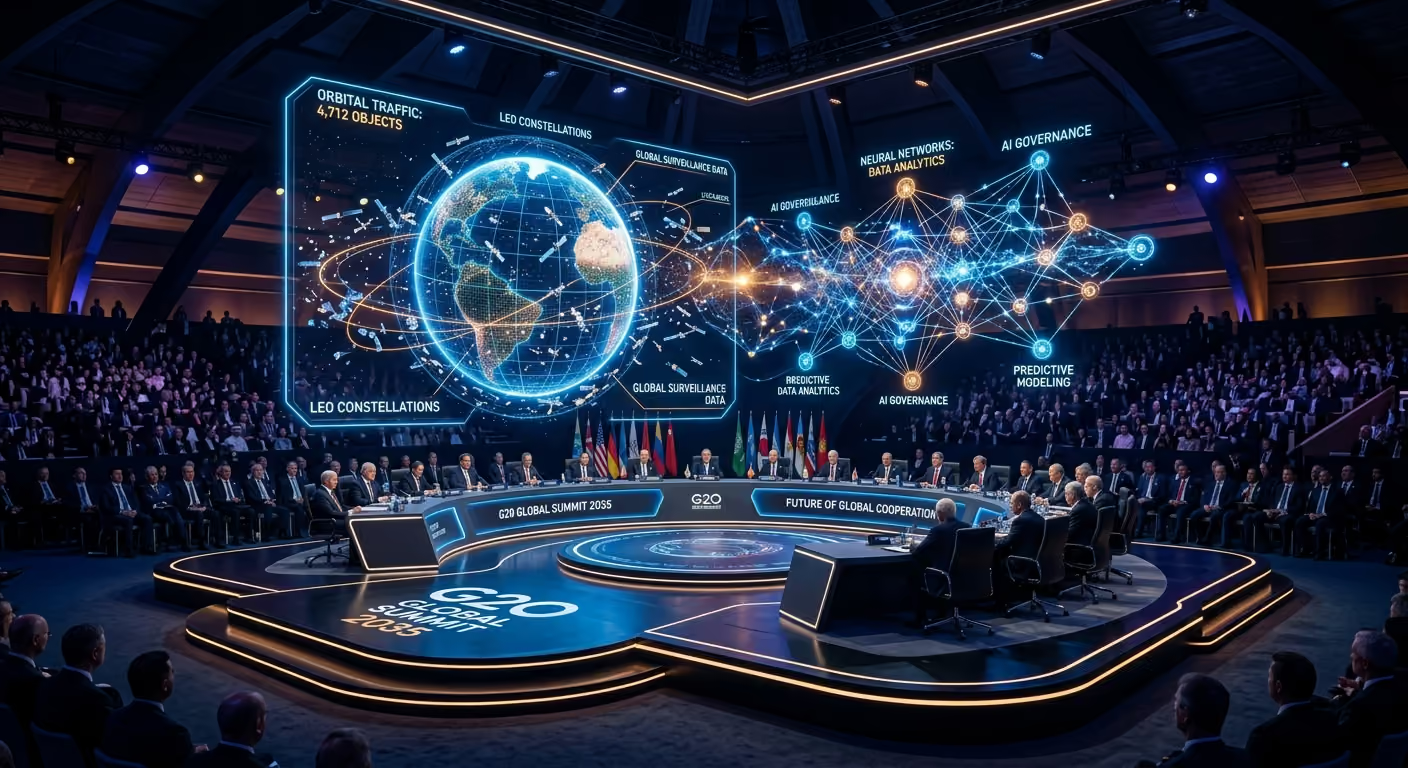
On the diplomatic front, tech heavyweights including Elon Musk, Sam Altman, and Nvidia chief Jensen Huang are scheduled to speak at an upcoming G20 technology summit. This gathering highlights a growing consensus that AI governance cannot be managed in isolation.
The summit is expected to address critical issues of technology diffusion and international standards, echoing a recent warning from Microsoft co-founder Bill Gates, who emphasized that AI risks demand immediate global priority. Concurrently, the United Nations DESA Development Policy Seminar Series has begun examining productivity convergence and how AI can close the economic gap between nations rather than widen it.
Space Force and Public Sector Mobilization
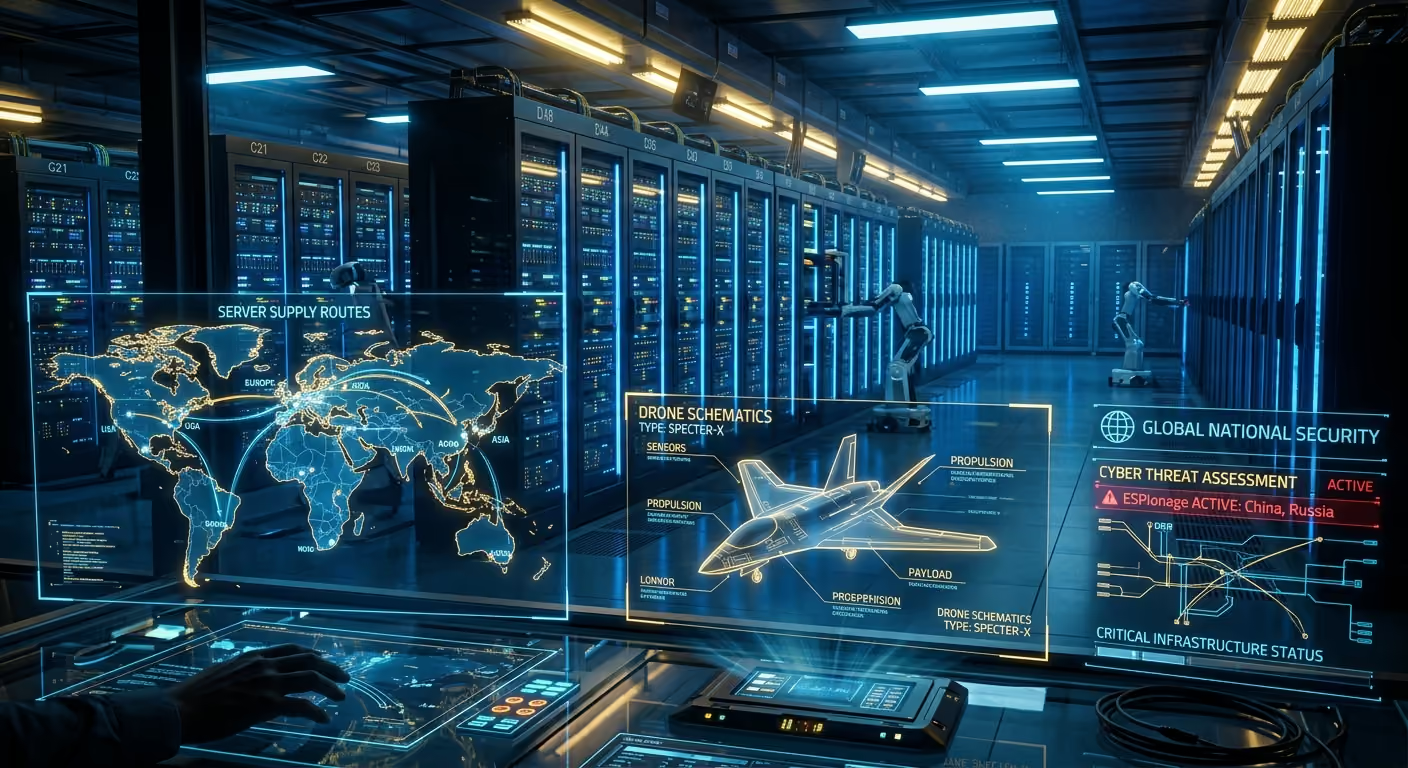
As diplomacy takes center stage, practical applications are scaling in defense and public administration. The U.S. Space Force has officially deployed real-time AI systems designed to track space programs and orbital assets in real time. This operational integration shows how national security agencies are moving past experimental pilot projects and putting machine learning at the core of situational awareness.
On the domestic front, AI is streamlining local educational infrastructure. In West Virginia, administrators of the Hope Scholarship are utilizing machine learning algorithms to dramatically accelerate online educational purchases, processing transactions at a fraction of the previous manual processing time. This demonstrates that automation is quickly moving from high-tech research labs into community-level logistics.
Workforce Uncertainty and the Economic Pivot
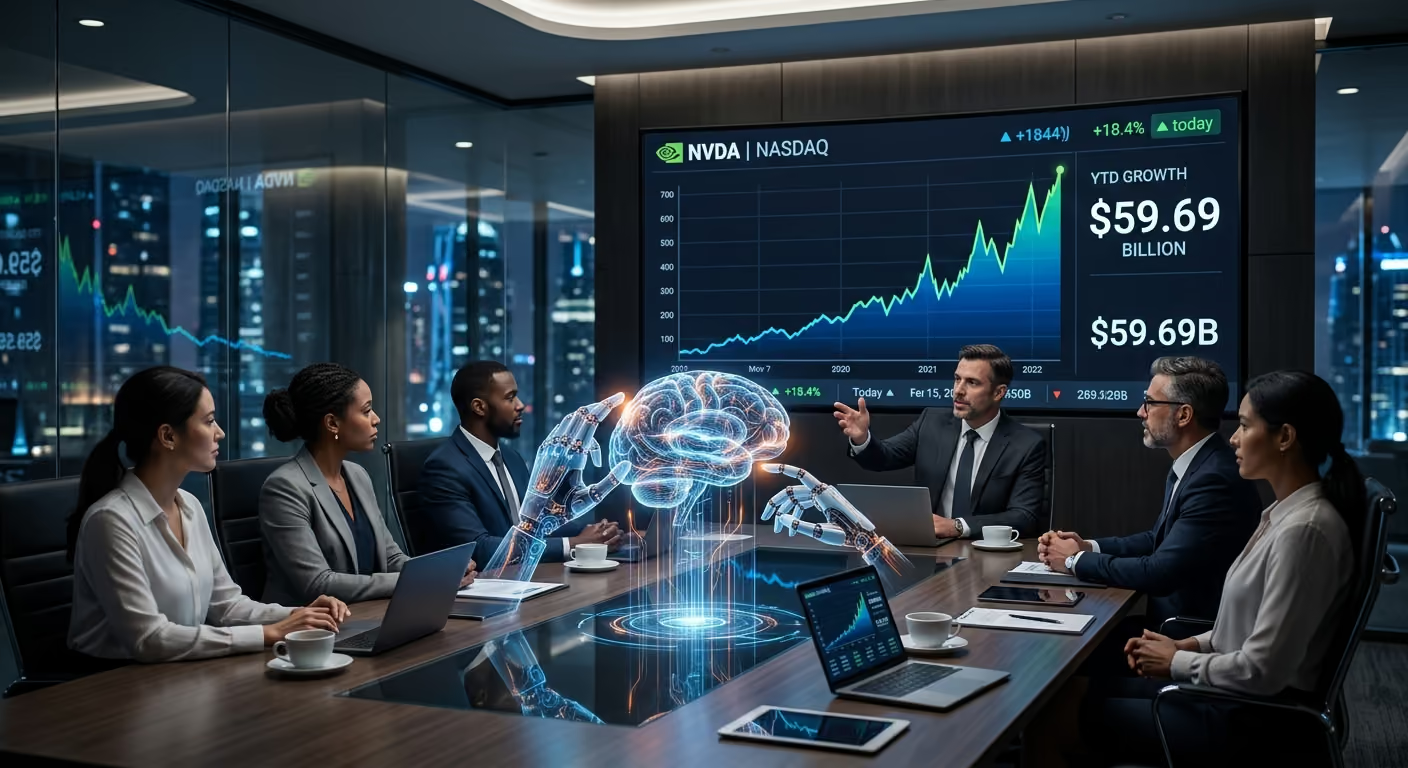
Despite the surge in market opportunities, the macroeconomic impact of automation remains highly contested. Nvidia's continuous financial growth has once again boosted specialized AI exchange-traded funds (ETFs), but central bankers are watching the labor market closely.
The Federal Reserve Bank of Minneapolis recently initiated programs aimed at preparing workers for an increasingly uncertain automated future. With some labor advocates warning that AI is coming for a vast swath of traditional service and administrative roles, the Fed's focus on proactive retraining programs highlights the delicate balancing act between technological progress and workforce stability.
The Bottom Line
- Regulatory Precedent: Anthropic's legal victory establishes a critical boundary against vague federal risk designations, easing regulatory anxiety for enterprise deployments.
- Defense Scaling: The U.S. Space Force's integration of real-time tracking proves that machine learning is now a core asset in modern, multi-domain defense strategies.
- Workforce Response: As central banks like the Minneapolis Fed step in to prepare labor pools, economic policies are shifting from passive observation to active intervention.
Stay Connected for Daily AI Intelligence
Follow us to get the latest breaking artificial intelligence reports and threat analysis delivered daily.
Aibots Sdn Bhd | [Beyond Future]