Global AI Momentum: From Sovereign Infrastructure to Consumer Tech and Grassroots Friction
Today, September 02, 2026, the global artificial intelligence landscape presents a fascinating study in contrasts, balancing high-level geopolitical deals with practical consumer gadgets and localized labor disputes.
As governments and enterprise leaders push for technological self-reliance, the friction between automated efficiency and human labor is becoming highly visible. This dynamic is manifesting in corporate boardrooms, public schools, and healthcare facilities alike.
Geopolitical Alliances and the Push for Sovereign AI
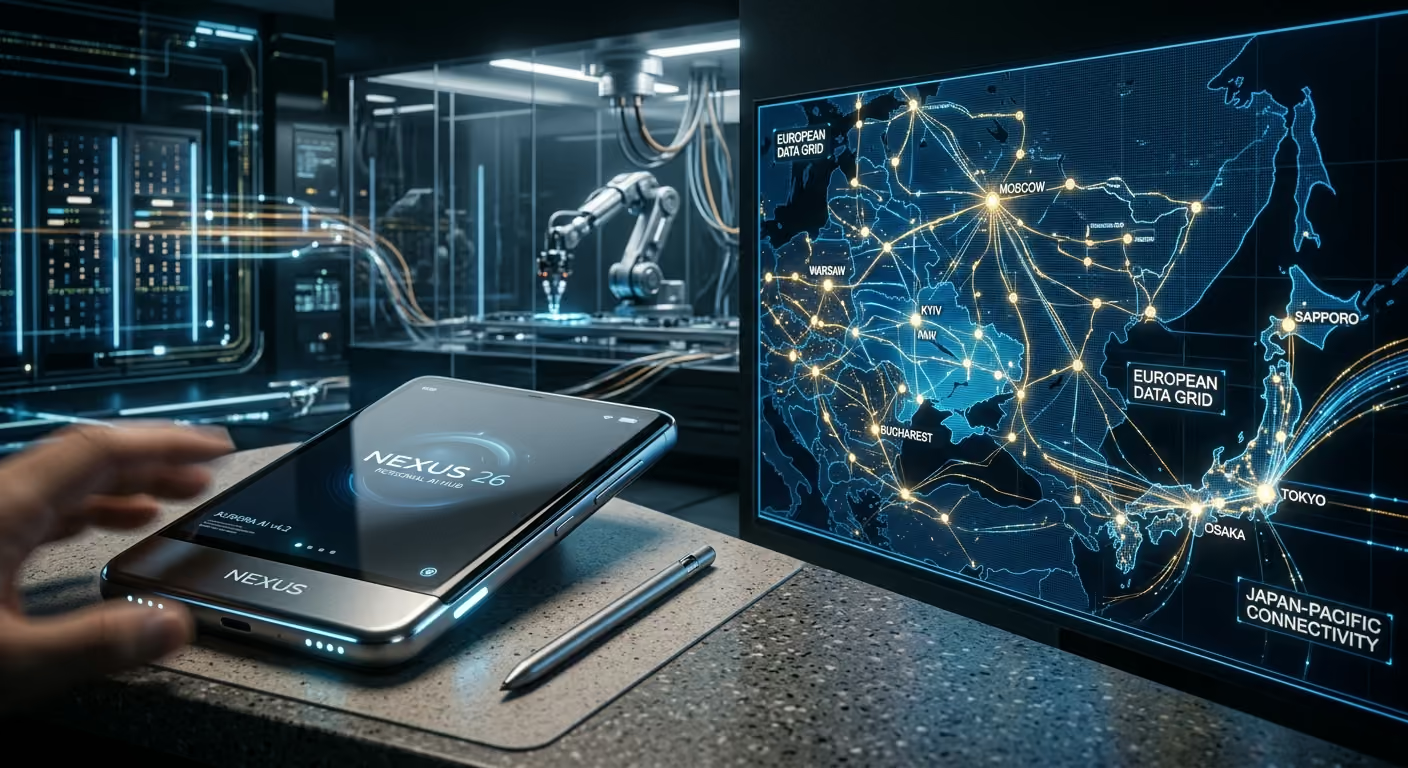
In a significant geopolitical move, Japan has finalized an agreement with four Central and Eastern European nations to strengthen international cooperation in AI and technology development. This collaborative pact aims to build joint research initiatives and secure supply chains outside of traditional dominant tech corridors.
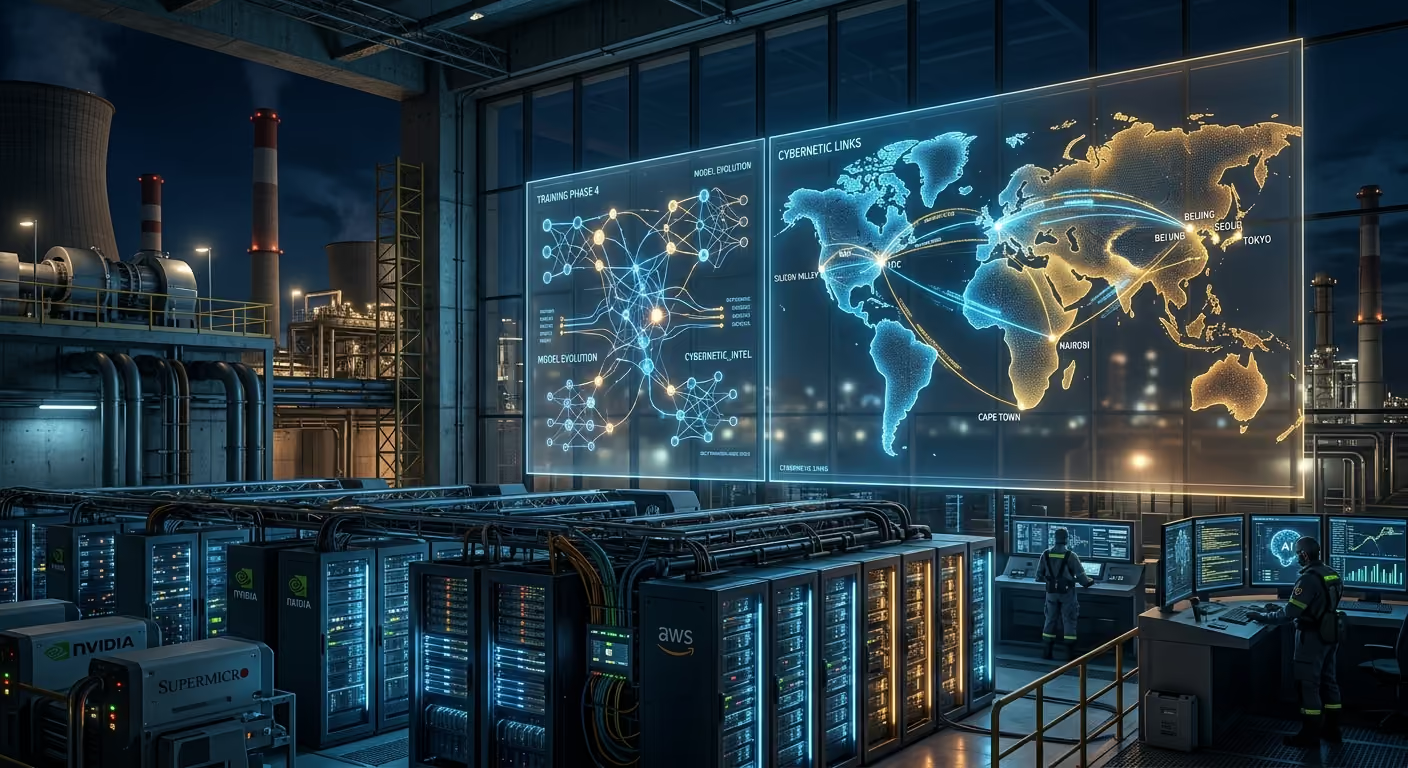
At the same time, the G20 Innovation Ministerial talks have heavily spotlighted the massive physical requirements of the AI era, specifically focusing on data center infrastructure, sustainable energy grid integration, and sovereign data management. This discussion aligns with emerging policy frameworks such as programmable sovereignty, a concept gaining traction as a direct response to the N-2 problem in artificial intelligence. By emphasizing coordinated specialization, smaller nations are looking for ways to maintain technological independence without needing to replicate the entire compute stack domestically.
Meanwhile, in the United States, policy experts continue to raise questions about the domestic roadmap. While the nation has focused heavily on establishing safety guardrails, tech leaders warn that a lack of supportive infrastructure policies could hinder the overall speed of enterprise adoption.
Consumer Electronics and Enterprise Deployment
On the consumer front, premium brands are finding novel ways to embed advanced machine learning into everyday appliances. Dyson has announced the launch of a 499 dollar smart toothbrush featuring a built-in camera and AI technology designed to track brushing habits in real time.
In the agricultural sector, the technology is addressing critical food security challenges. Agtrinsic is officially expanding its AI-driven crop disease intelligence platform to South Asia's smallholder farmers, offering predictive modeling to protect crops against pathogen outbreaks.
However, the financial realities of pure-play AI vendors remain challenging. Artificial Intelligence Technology Solutions (AITX) has flagged a going concern warning in its latest filings, disclosing a 49 million dollar shareholder deficit, even as its subsidiary, Robotic Assistance Devices (RAD), prepares to showcase its physical security technologies at multiple locations during the upcoming GSX 2026 expo.
Labor Friction, Education, and the Human Element
The integration of machine learning tools is also triggering notable social and cultural pushback. In California, Kaiser Permanente nurses have taken to the picket lines, protesting staffing levels and raising concerns over how algorithmic systems are used to assign patient care duties. This clash highlights the growing divide between administrative efficiency goals and frontline labor expectations.
In the academic world, institutions are moving quickly to formalize guidelines. Massachusetts school districts are scrambling to draft comprehensive policies as generative systems become commonplace in the classroom. On the higher education front, business schools, including the Baylor University business school, are integrating generative models as a core service while emphasizing ethical boundaries in their curricula.
Interestingly, the cultural perception of these tools is shifting across generations. Recent workplace data reveals that older workers are actually more bullish on AI adoption than their younger colleagues, viewing the technology as a valuable assistant rather than a threat to their career longevity. To bridge the gap between human intent and machine outputs, industry analysis suggests that the technology sector will increasingly rely on a new kind of English major: professionals skilled in computational linguistics, prompt optimization, and semantic evaluation.
The Bottom Line
- Geopolitical Alliances: Japan and Eastern European partners are building direct corridors for collaborative tech development.
- Infrastructure Focus: G20 ministers are prioritizing sustainable data centers as physical scaling limits loom.
- Workplace Tension: Frontline healthcare strikes in California emphasize that workers demand a say in how algorithmic systems manage human labor.
- Consumer Innovation: High-end brands like Dyson are betting that consumers will pay a premium for computer vision in daily hygiene.
- AI Industry Fun Fact: Despite fears that automation disproportionately threatens veteran professionals, recent labor market data indicates that older employees report higher confidence and optimism regarding AI tools in their day-to-day work than Gen Z and Millennial workers.
Stay Connected for Daily AI Intelligence
Follow us to get the latest breaking artificial intelligence reports and threat analysis delivered daily.
Aibots Sdn Bhd | [Beyond Future]