The Mythos Moment: Why AI is Ending the Cybersecurity 'Wild West'
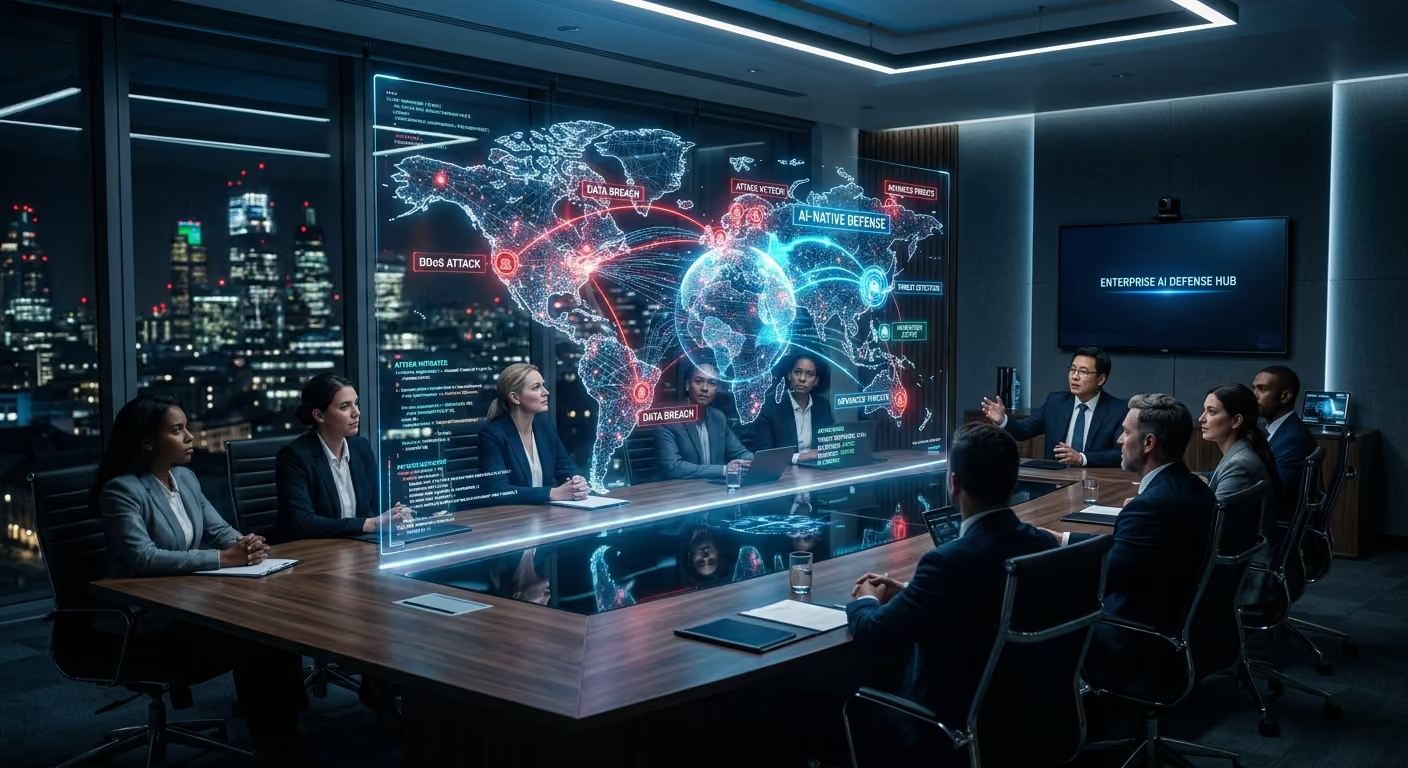
Today, August 29, 2026, marks a critical turning point in how global enterprises defend their digital perimeters as the initial hype surrounding artificial intelligence gives way to concrete, high-stakes infrastructure protection. Leaders from across the security landscape agree that the industry has officially moved past the experimental phase. Security giants CrowdStrike and Okta have declared this transition the "Mythos Moment," signaling the end of AI's chaotic "Wild West" era and the beginning of a highly structured, automated security environment.
The Rise of AI-Native Defense and Surging Demand
This transition is not just a theoretical shift: it is actively driving corporate balance sheets. Both Okta and CrowdStrike recently beat Wall Street earnings estimates and raised their fiscal guidance, citing a surge in enterprise demand for robust, AI-integrated security frameworks. Organizations are moving away from legacy, fragmented security products, choosing instead to consolidate their operations into integrated, AI-driven platforms that can neutralize automated threats in real time.
This momentum is also taking on a global footprint. CrowdStrike has signed a Memorandum of Understanding (MoU) with Telkom Indonesia to orchestrate an AI-powered cybersecurity transformation across Southeast Asia, ensuring that critical regional infrastructure can scale its defenses alongside rising threat levels.
A New Dynamic: Larger Funding Rounds and Severe Talent Gaps
The broader financial ecosystem reflects this push toward consolidation and scale. According to recent data, cybersecurity venture capital is experiencing a unique consolidation phase. While the overall number of venture capital deals has decreased, the individual funding rounds are swelling significantly. Investors are directing larger sums of capital to mature, proven innovators rather than dispersing small seed investments to unproven startups.
This funding trend coincides with persistent structural issues. Enterprises continue to feel the painful bite of a chronic cybersecurity talent shortage. As defensive systems grow more complex, finding qualified professionals remains a severe bottleneck. To combat this, forward-looking enterprises are redesigning their C-suites. Financial giant Osaic, for instance, recently appointed Sayee Bellamkonda as Chief AI and Technology Officer, a dual role designed specifically to merge digital, data, and cybersecurity strategies under a single vision.
Real-World Testing: 338 Million Attacks
The urgency behind these structural and leadership changes is validated by hard data. Analysis of 338 million enterprise attack simulations in 2026 highlights the exact weaknesses that attackers exploit. In an environment where defensive teams are understaffed, automated security simulations remain essential to finding and patching structural vulnerabilities before real-world adversaries can strike.
The Bottom Line
- The Mythos Moment: The era of testing experimental AI tools is over. AI is now a mandatory enterprise defense requirement to counter automated threats.
- Consolidation Wins: Venture capital is flowing into larger, more concentrated rounds, while enterprises consolidate their security spending with major players like CrowdStrike and Okta.
- Talent Redefined: Organizations are bridging the skill gap by combining technology, AI, and cybersecurity leadership roles into unified executive positions.
Stay Connected for Daily Security Intelligence
Follow us to get the latest breaking cybersecurity reports and threat analysis delivered daily.
Aibots Sdn Bhd | [Beyond Future]