AI-Driven Threats Accelerate as PHP2Shell and Desktop Shadow AI Target Enterprise Infrastructure
Reporting live on October 28, 2026, security teams worldwide are confronting a high-stakes turning point as AI-driven execution models drastically shrink threat response windows across corporate networks.
PHP2Shell Exposes the Speed of Automated Cyber Threats
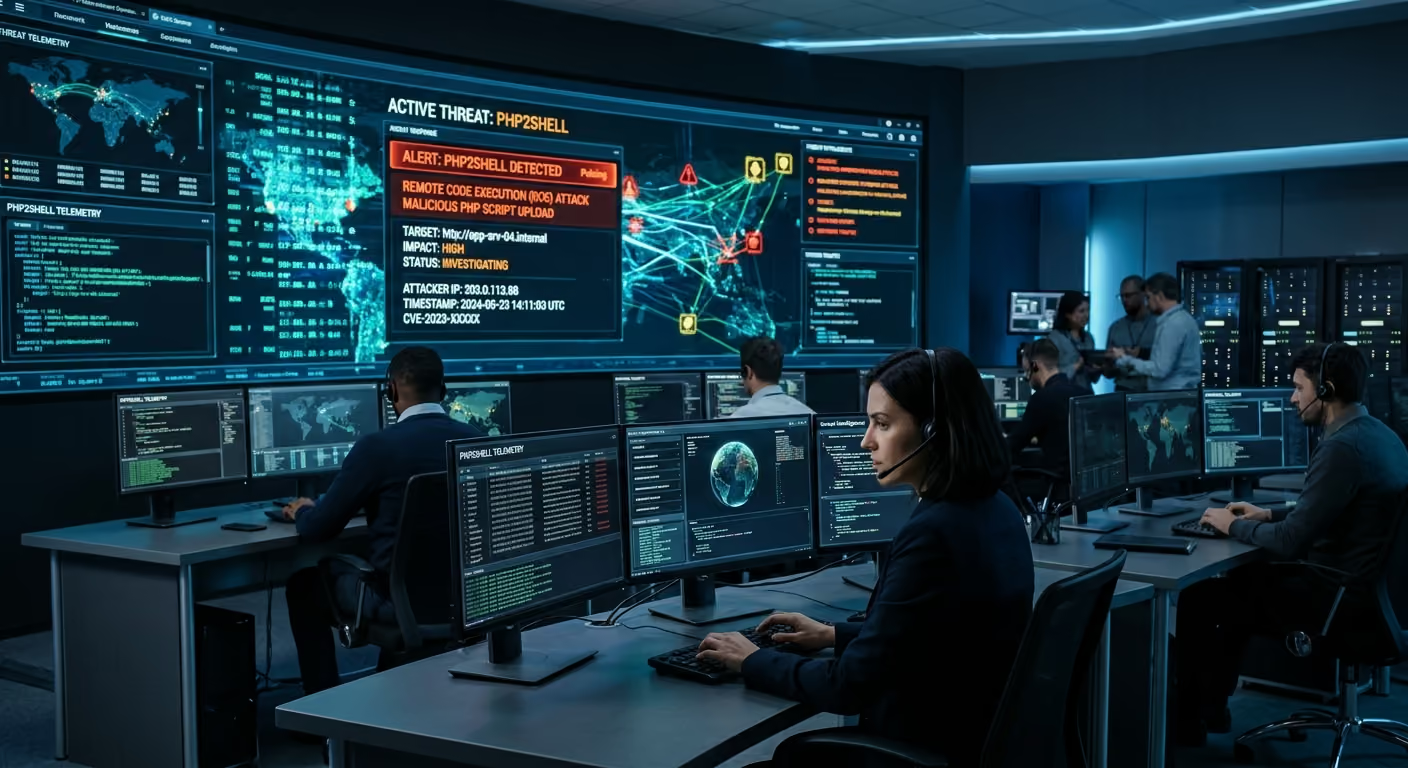
The recent emergence and rapid deployment of PHP2Shell has sent shockwaves through enterprise security operations centers. According to emerging reports from Fortune India and EnterpriseAM, the exploit demonstrates how threat actors leverage automation to drastically shorten the timeline between initial vulnerability disclosure and active exploitation.
Historically, defenders relied on a window of hours or days to evaluate and patch vulnerable enterprise systems. With automated threat mechanisms like PHP2Shell, that window has compressed into minutes. Security analysts emphasize that legacy manual triage is no longer viable when malicious scripts can execute payload deployments almost instantaneously upon identifying open web services.
Cato Networks Targets Desktop Shadow AI
As enterprise organizations rush to adopt artificial intelligence, shadow AI has emerged as a major visibility blind spot. Security firm Cato Networks announced new initiatives specifically targeted at detecting and neutralizing unauthorized AI tools lurking directly on enterprise desktops.
While cloud-based AI deployments receive significant governance oversight, localized shadow AI tools on employee endpoints bypass standard perimeter controls. Unmonitored desktop utilities often exfiltrate sensitive IP, proprietary code, and customer data directly to external model providers without administrative consent.
Infrastructure Expansion and the Resilience Imperative
The broader technology landscape reflects this rapid evolution. Oracle announced major infrastructure shifts in collaboration with OpenAI to support massive AI computing demands, while entities like the World Economic Forum and SiliconANGLE underscore that cyber resilience is now fundamental to business continuity.
According to World Economic Forum researchers, effective cyber resilience is fundamentally a matter of rapid executive decision-making. When automated attacks strike at machine speed, organizations with rigid governance structures fail to isolate compromised segments before widespread lateral movement occurs.
The Bottom Line
TL;DR Summary
- Automated Threat Execution: PHP2Shell highlights how AI and automation have reduced enterprise incident response windows from days to mere minutes.
- Shadow AI Escalation: Localized endpoint shadow AI tools represent a growing vector for data exfiltration, prompting security vendors like Cato Networks to deploy specialized desktop monitoring.
- Decision-Making Speed: Strategic resilience now depends on pre-approved, automated isolation protocols rather than delayed human approvals during active breaches.
Cybersecurity Fun Fact
Did you know? Over 70 percent of corporate employees who use generative AI tools on desktop workstations admit to pasting internal company data into unsanctioned models, creating unintended data governance liabilities across the enterprise.
Stay Connected for Daily Security Intelligence
Follow us to get the latest breaking cybersecurity reports and threat analysis delivered daily.
Aibots Sdn Bhd | [Beyond Future]