Physical Reality Models, Auditing Shadow Deployments, and Strategic Efficiency Drive AI Focus
Today, August 04, 2026, marks a crucial shift in the evolution of artificial intelligence as the technology transitions from digital chat interfaces into physical environments and rigorous corporate governance. Organizations are moving past the initial hype to confront the realities of deployment, cost efficiency, and security.
1. Physical AI: Interacting with the Real World
A major shift is underway as researchers develop a new class of AI systems capable of understanding physical reality. Unlike traditional large language models that merely process text, these spatial and physical AI models learn how gravity, light, and physical objects interact. This evolution, highlighted by recent industry analysis, could revolutionize robotics, autonomous manufacturing, and spatial computing by giving machines a genuine physical world model to safely navigate and manipulate real-world environments.
2. The Governance Dilemma: Finding and Structuring Your AI Strategy
Before an organization can govern its AI systems, it must first locate them. Operational experts note that the first step in effective AI governance is identifying all active deployments, including shadow AI tools used by employees without official authorization. To address these hurdles, MIT Sloan researchers have proposed six critical questions to guide corporate AI strategies, helping executives align technological integration with risk management and actual business value.
3. Corporate Realignment and Operational Integration
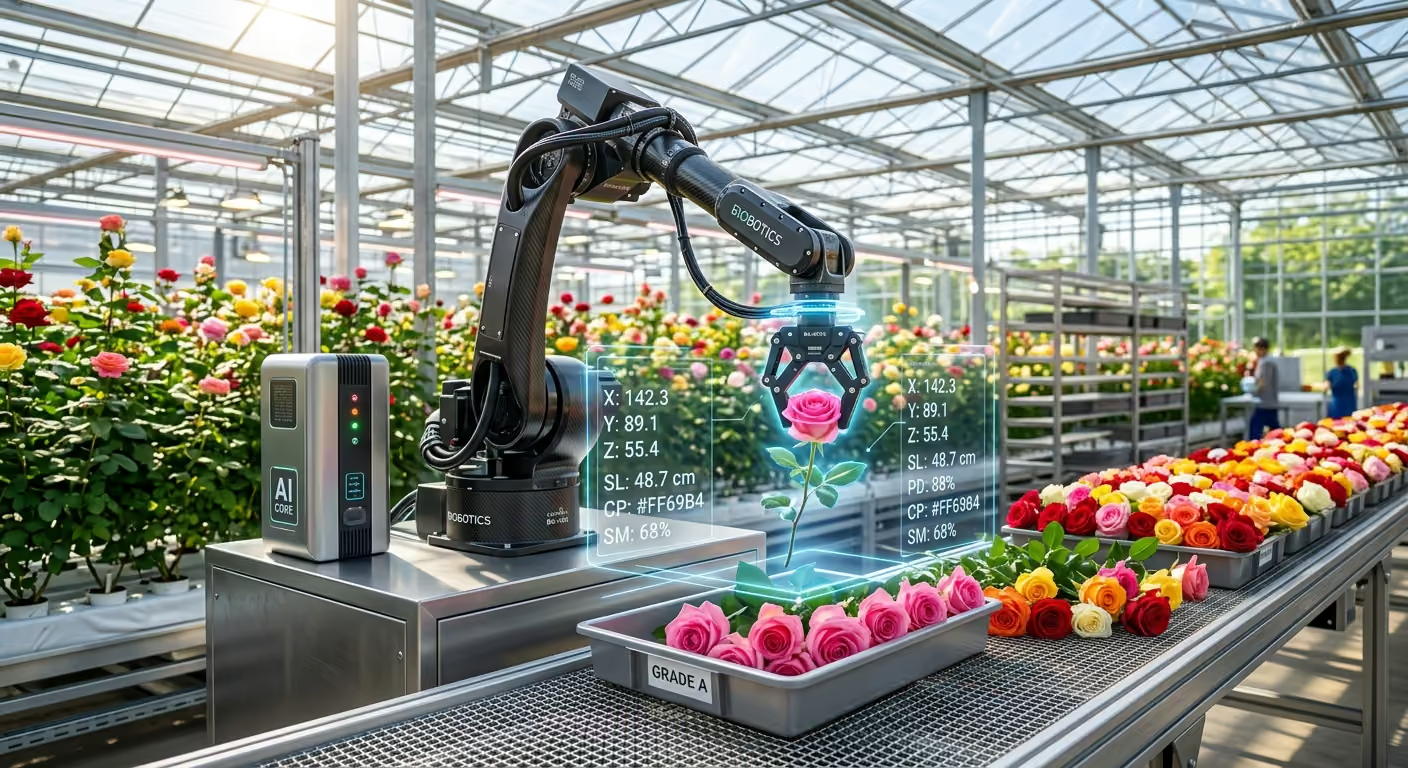
As the market matures, AI vendors are facing pressures to streamline their own operations. For example, Artificial Intelligence Technology Solutions (known as AITX) has announced targeted SG&A cash cuts of 2.4 million dollars, demonstrating a clear industry push toward financial sustainability. At the same time, AI is demonstrating its utility in highly specific sectors, such as greenhouse production where growers are now integrating machine learning algorithms to optimize cut flower harvesting and crop management.
4. Navigating Growing Biosecurity Concerns
The rapid democratization of advanced machine learning models has sparked fresh biosecurity concerns. Analysts warn that highly capable AI tools could lower technical barriers to designing dangerous biological agents. Establishing international guardrails and robust safety protocols is becoming a top priority for global policymakers seeking to mitigate these emerging biological risks without stifling scientific progress.
The Bottom Line
- TL;DR Summary: Today's landscape focuses on physical AI that understands spatial reality and tighter corporate alignment. While specialized sectors like agriculture adopt custom ML models, vendors are cutting costs, and governments are prioritizing AI identification and biosecurity guardrails.
- AI Industry Fun Fact: AI is now entering the floral industry, where computer vision and robotic arms are being trained to assess the health and stem length of cut flowers in real time to optimize greenhouse yield.
Stay Connected for Daily AI Intelligence
Follow us to get the latest breaking artificial intelligence reports and threat analysis delivered daily.
Aibots Sdn Bhd | [Beyond Future]