Tactical UAV Rescues Break New Ground as Mesh-Connected Edge AI and eSIM Mergers Transform Industrial Hardware
As of October 23, 2026, momentum across edge computing hardware, sensor platforms, autonomous UAVs, and connected device networks has accelerated dramatically over the past seven days. From historic battlefield aerial evacuations to next-generation mesh-connected edge compute nodes, physical hardware ecosystems are rapidly adapting to extreme real-world demands.
Heavy-Lift UAVs Achieve World First Autonomous Human Evacuation
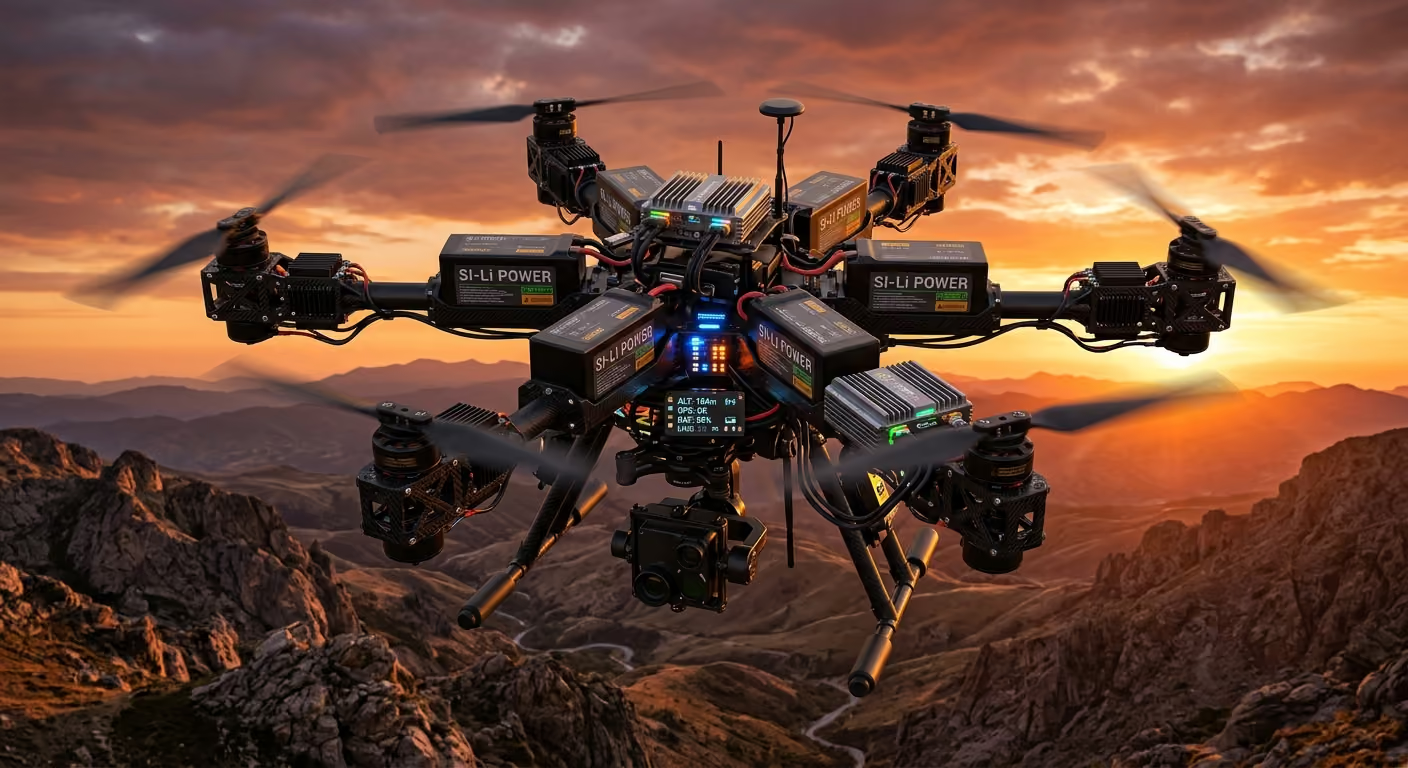
In a major breakthrough for tactical unmanned aerial systems, Ukrainian forces successfully executed the world's first recorded drone-assisted human medical evacuation. A heavy-lift hexacopter UAV carried an injured 176-pound (80 kg) soldier across 11 miles (18 km) of hazardous terrain from an active minefield back to safety. This milestone highlights the rapid evolution of heavy-thrust UAV propulsion systems and reliable flight controllers capable of sustaining heavy payload dynamics under contested tactical conditions.
Mesh-Connected Edge AI and Multi-LEO Compute Platforms Emerge
Edge computing hardware is moving beyond isolated nodes toward resilient, mesh-networked architectures:
- VSBLTY Groupe Technologies unveiled a new AI edge computing platform designed for defense and law enforcement. The hardware represents the industry's first mesh-connected, multi-pipeline edge device capable of running parallel real-time vision processing pipelines without relying on cloud availability.
- Orbius Communications teamed up with Armada to launch a Multi-LEO Edge Computing solution. The system merges low-Earth-orbit satellite data feeds directly with local edge compute modules, ensuring uninterrupted data processing for mobile assets in remote environments.
- Axelera AI demonstrated data-center level inference performance within the tight power envelopes of embedded hardware, providing microcontrollers and edge boards with high-density AI acceleration.
Cellular IoT Consolidation and On-Device Security Hardware
Connective silicon and security architectures saw key commercial and technological shifts this week:
- CSL Group completed its acquisition of US-based IoT eSIM provider SIMPL Wireless. The deal expands CSL's Critical Connectivity footprint across North America, accelerating managed eSIM deployment for smart building, industrial, and fleet applications.
- Goodix launched an integrated fingerprint and hardware security solution aimed at on-device identity authentication for IoT and AI hardware. By embedding biometric checks directly into secure silicon enclave architectures, the platform prevents unauthorized physical hardware access and spoofing attacks.
The Bottom Line
- Heavy-lift drones are now viable human transport vectors: The successful 11-mile evacuation proves that heavy-thrust multirotor platforms have reached flight stabilization and payload power density levels capable of critical life-saving missions.
- Edge processing is becoming mesh-reliant: Isolated edge nodes are giving way to multi-pipeline mesh architectures like VSBLTY's, ensuring zero-trust local compute continuity even if upstream satellite or cellular links fail.
- Biometric hardware security hits the edge: Goodix's latest silicon integration proves that hardware security is moving beyond static cryptographic keys toward integrated biometric authentication at the sensor level.
IoT Hardware Fun Fact: Operating a drone with a 176-pound payload over an 11-mile distance requires immense motor torque efficiency. Modern heavy-lift hexacopters rely on high-voltage 24S motor architectures and high-density battery chemistries to generate over 300 kilograms of peak thrust while maintaining thermal stability during extended forward flight.
Stay Connected for Weekly IoT & Edge Intelligence
Follow us to get the latest breaking Internet of Things, drone technology, sensor networks, and edge computing reports delivered weekly.
Aibots Sdn Bhd | [Beyond Future]