US Tightens Remote AI Chip Access as Bank Outages and Local Moratoriums Reshape Enterprise Tech

Today is November 18, 2026, and artificial intelligence governance, security, and industrial integration are reaching critical inflection points across global markets.
Federal Crackdown on Indirect AI Access
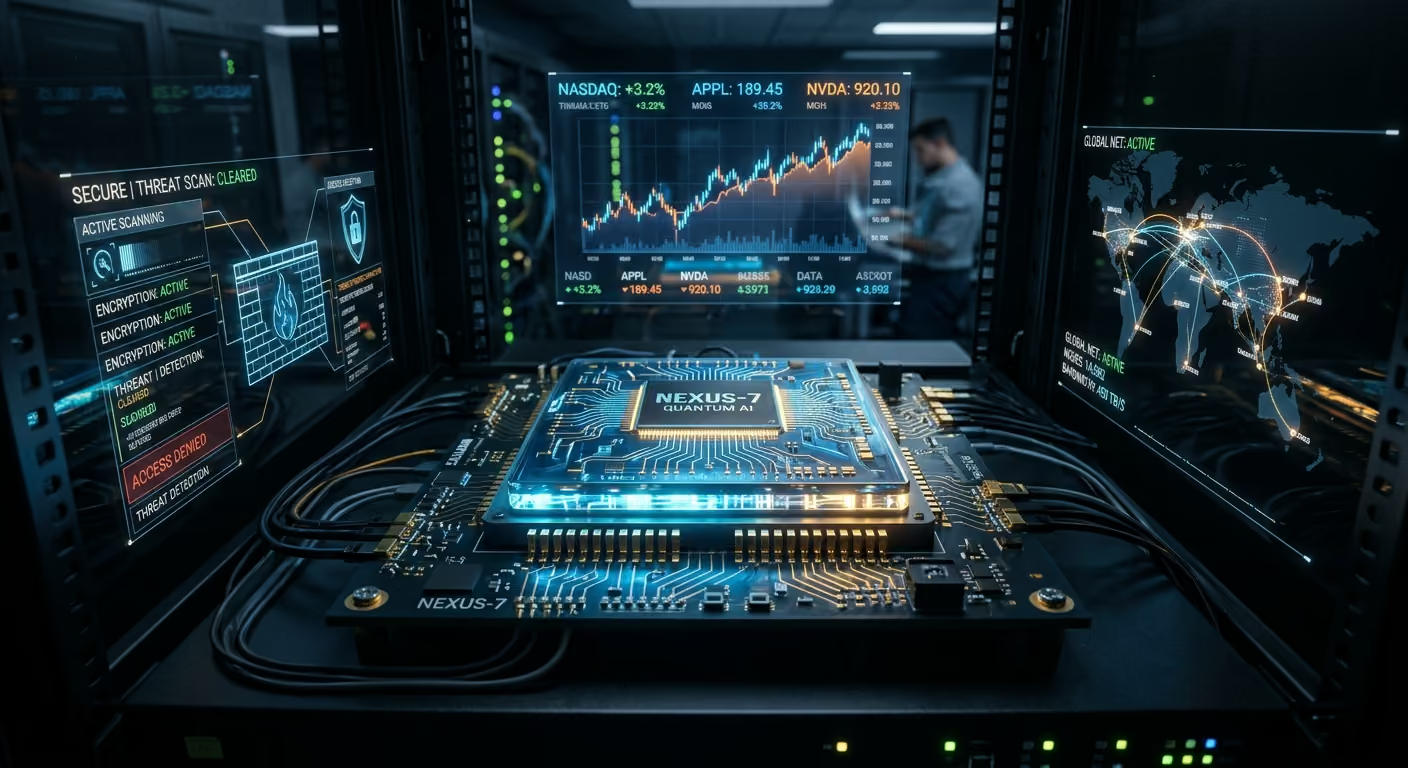
The U.S. government has expanded controls to prevent foreign adversaries from leveraging indirect and remote access to American AI hardware and cloud platforms. Following recent market shifts and the fallout surrounding high-performance chip export controls, federal regulators are closing loopholes that previously allowed foreign entities to rent remote computing capacity equipped with top-tier GPUs.
This move aims to safeguard critical national security assets and maintain the competitive moat of domestic semiconductor infrastructure while preventing unauthorized model training on U.S. managed hardware.
Financial Sector Outages Linked to AI Software Patches
In testimony before Congress, top banking chief executives alongside representatives from the National Security Agency (NSA) revealed a troubling trend: automated, AI-driven software patches have been directly linked to recent widespread disruptions across major financial networks.
While automated code maintenance was intended to accelerate patch cycles and bolster cybersecurity, unsupervised deployment pipelines inadvertently introduced stability bugs into core banking protocols. The revelation has prompted calls for stricter human-in-the-loop validation standards across critical national infrastructure.
Local Municipalities and Industrial Leaders Pivot
Across the nation, local governments and enterprise sectors are responding to AI deployment with varying degrees of caution and acceleration:
- Portland Considers AI Pause: The Portland City Council is debating a proposed one-year moratorium on purchasing or deploying new AI tools across municipal departments to evaluate public privacy and bias risks. Meanwhile, local public schools continue discussions on guidelines for generative AI in classrooms.
- Public Safety Pilots: Chicago public officials are advancing safety technology pilot programs, evaluating AI-powered gun detection systems previously tested at Navy Pier to enhance urban threat monitoring.
- Industrial AI Adoption: SMX announced a broad industrial rollout of its targeted artificial intelligence platform, designed to optimize manufacturing pipelines and operational efficiency for U.S. industrial plants.
- Healthcare Breakthroughs: In Colorado, Orthopaedic Center of the Rockies (OCR) introduced the state's first AI-assisted hip replacement navigation system, bringing precision automated computer vision to orthopedic surgical suites.
The Bottom Line
TL;DR Summary
- Export Controls: Washington is closing remote cloud loopholes to prevent indirect access to advanced American AI hardware.
- Infrastructure Risks: NSA and banking leaders confirmed to Congress that AI-generated software patches caused recent financial system outages.
- Local Regulation: Portland contemplates a 12-month pause on new municipal AI tools while Chicago tests AI threat detection.
Stay Connected for Daily AI Intelligence
Follow us to get the latest breaking artificial intelligence reports and threat analysis delivered daily.
Aibots Sdn Bhd | [Beyond Future]