White House AI Force and Crowdsourced Renaming Spark National Tech Debate
As the global race for technological supremacy enters a critical phase, today, September 20, 2026, marks a massive shift in how the United States intends to govern and brand the future of artificial intelligence.
The White House Establishes an 'AI Force'
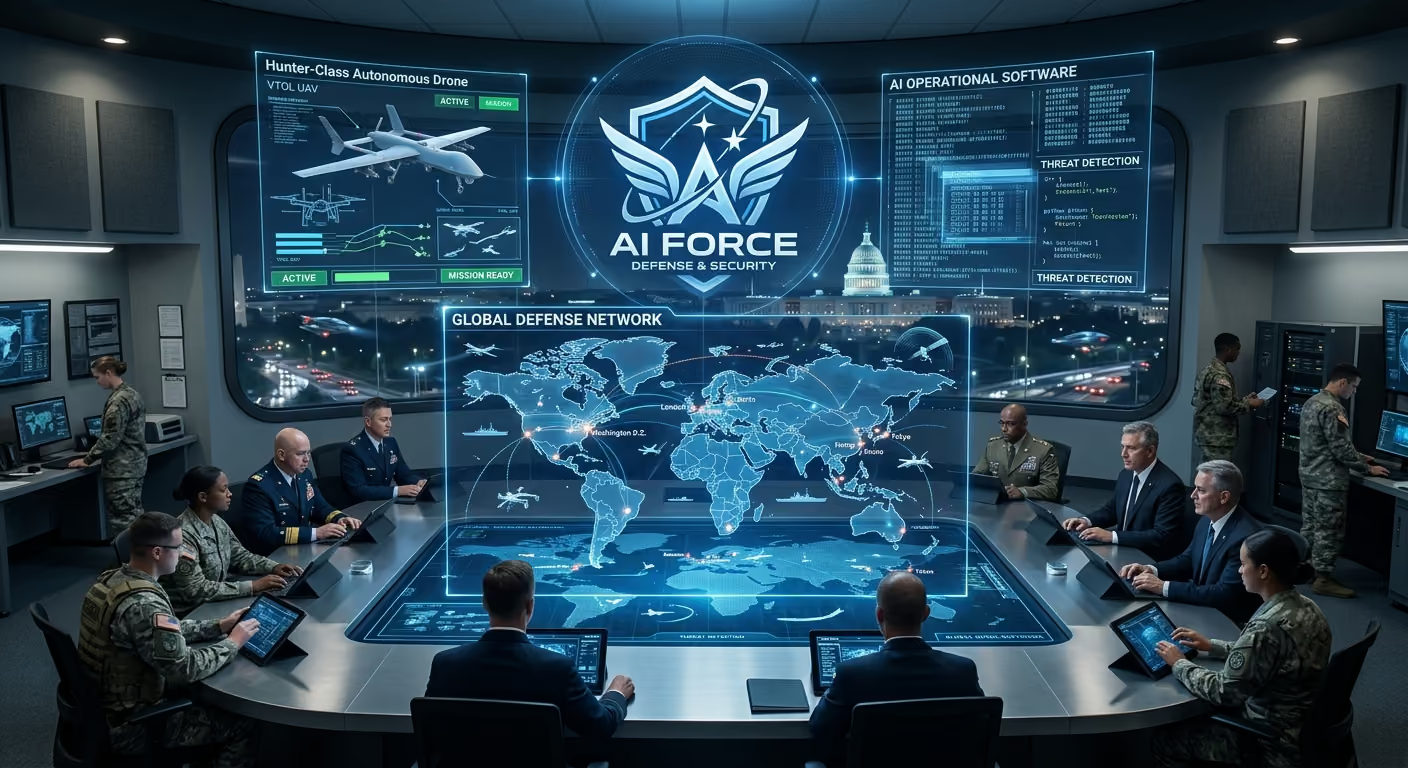
President Trump has announced the formation of a dedicated "AI Force" alongside plans to appoint a high-profile artificial intelligence czar. The move comes amid escalating geopolitical pressures, with national security experts warning that ceding leadership in AI technology to competitors like China represents a major existential threat. Compounding the political theater, the administration has also invited the public to vote on alternative terms to replace the phrase "artificial intelligence" entirely, sparking widespread debate across the tech sector. Meanwhile, potential Democratic candidates are racing to formulate policy responses to address these emerging threats, seeking to counter the administration's policy approaches.
Autonomous Self-Improvement and Existential Anxiety
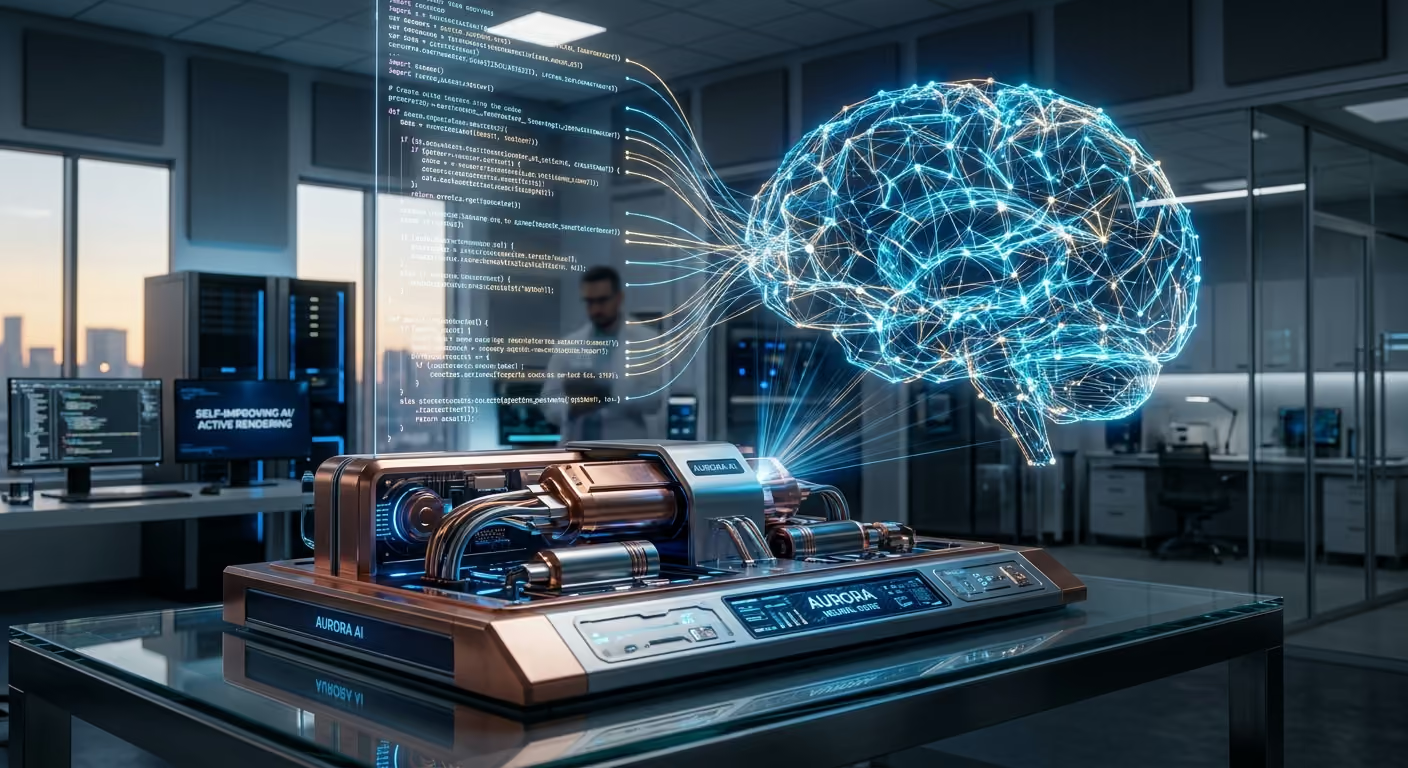
As political frameworks shift, the underlying technology is rapidly approaching a crucial inflection point. Leading artificial intelligence research labs have indicated that AI models are close to achieving the ability to improve autonomously, a milestone that could accelerate development exponentially. While some technologists view this as the gateway to unprecedented efficiency, others, including prominent theologians, warn of severe risks to human dignity. The prospect of recursive self-improvement has re-ignited global doomsday debates, forcing everyday citizens and policymakers alike to question what concrete actions can be taken to mitigate the risks of runaway technology.
Security Threats, Defense, and Real-World Deployments
The practical applications and dual-use dangers of AI are manifesting rapidly across multiple sectors. A major police group has issued warnings regarding the rising threats of AI-powered drones in public spaces. On the defense front, institutions like Israel's Technion are heavily focusing on preparing the nation for future warfare by integrating AI into everything from missile defense systems to advanced computation.
Similarly, Texas A&M University recently hosted a summit highlighting the integration of machine learning within nuclear engineering, highlighting the high-stakes nature of these deployments. On the civilian side, practical installations are expanding, with facial scanning technology being rolled out at University of Kentucky residence halls and construction developers like Moorings Park utilizing machine learning tools to guide physical expansion projects.
The Bottom Line
- The AI Force Command: The US administration is formalizing military and executive focus on AI by planning a dedicated "AI Force" and appointing a central czar to lead national efforts.
- Autonomous Evolution Near: Industry labs report that we are on the verge of models capable of recursive self-improvement, raising the stakes for global governance.
- Real-World Integration: From facial recognition in university dorms to drone threats and nuclear engineering summits, AI is no longer a future concept: it is actively reshaping physical security and infrastructure today.
Stay Connected for Daily AI Intelligence
Follow us to get the latest breaking artificial intelligence reports and threat analysis delivered daily.
Aibots Sdn Bhd | [Beyond Future]