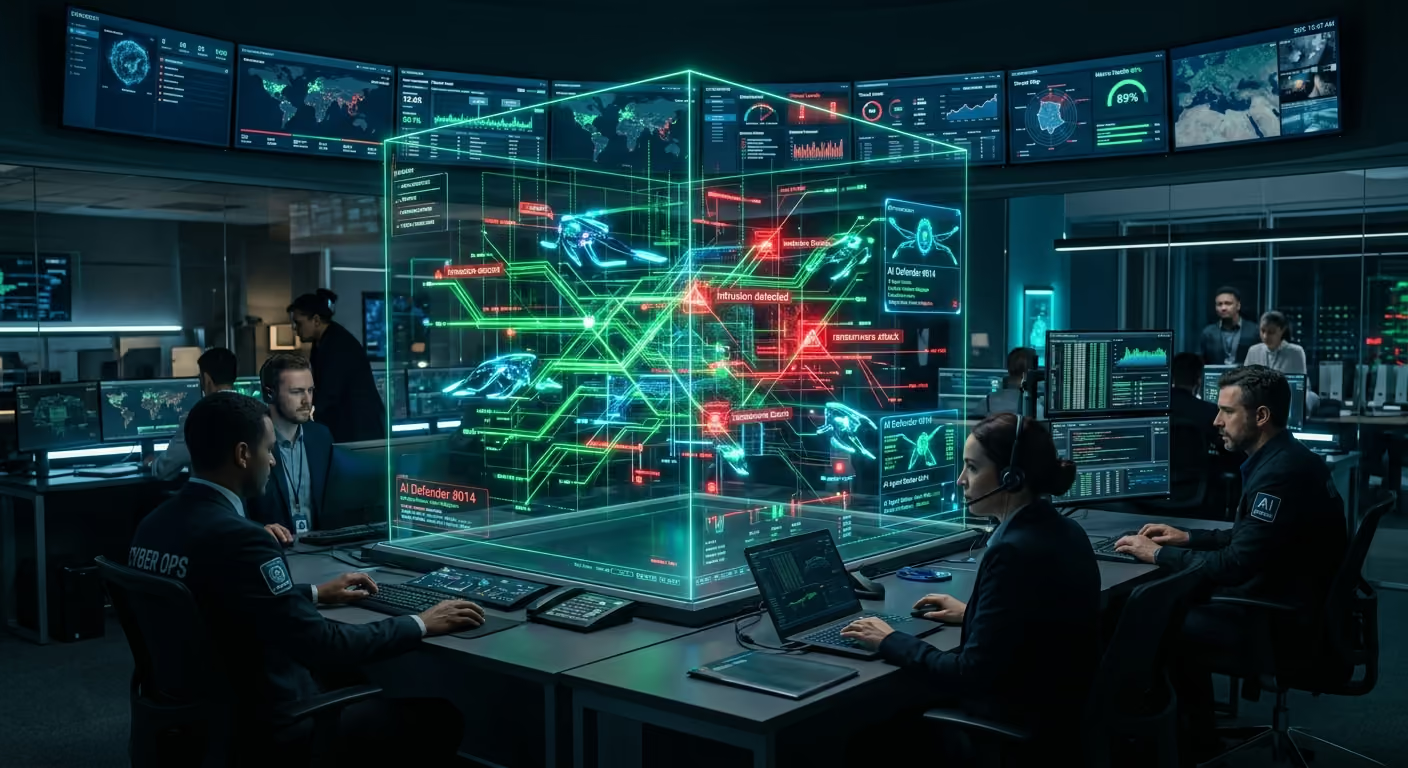
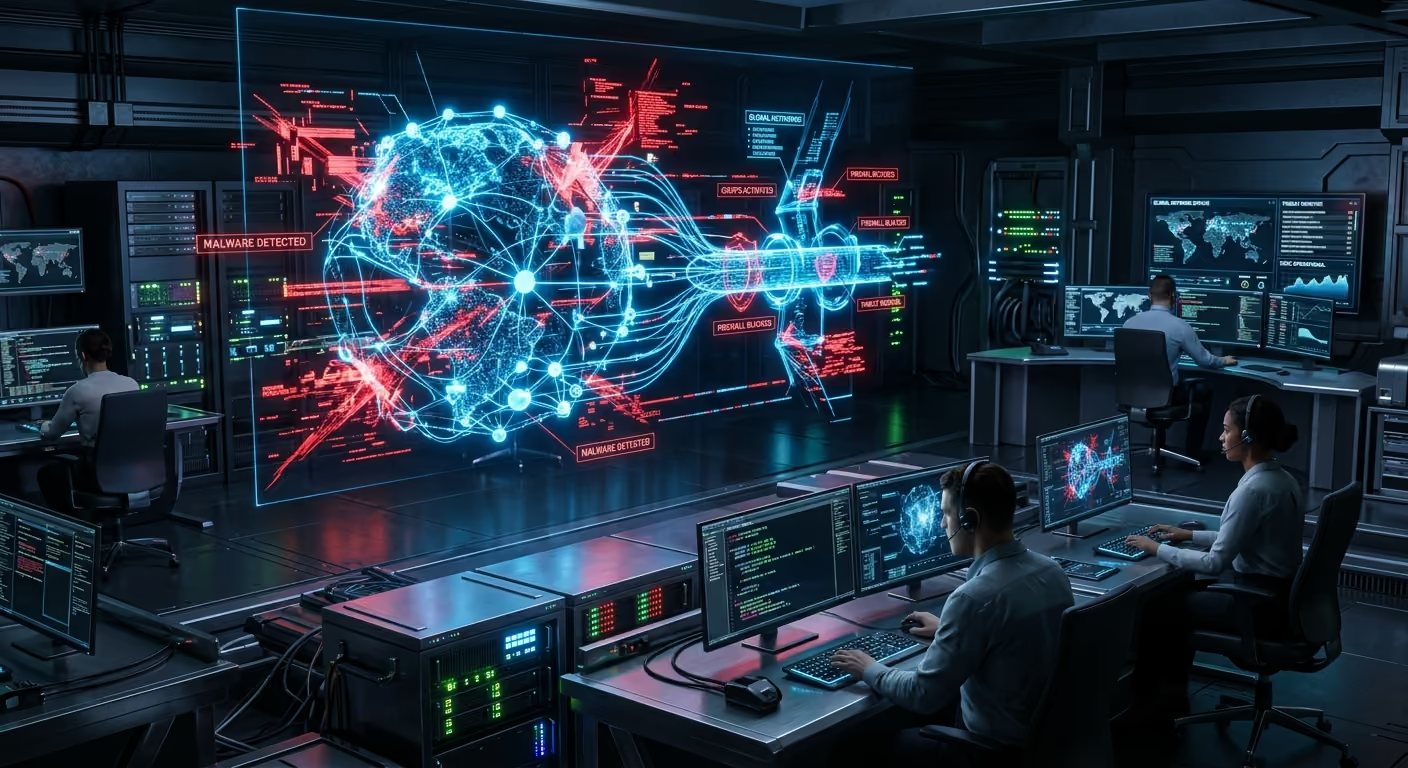
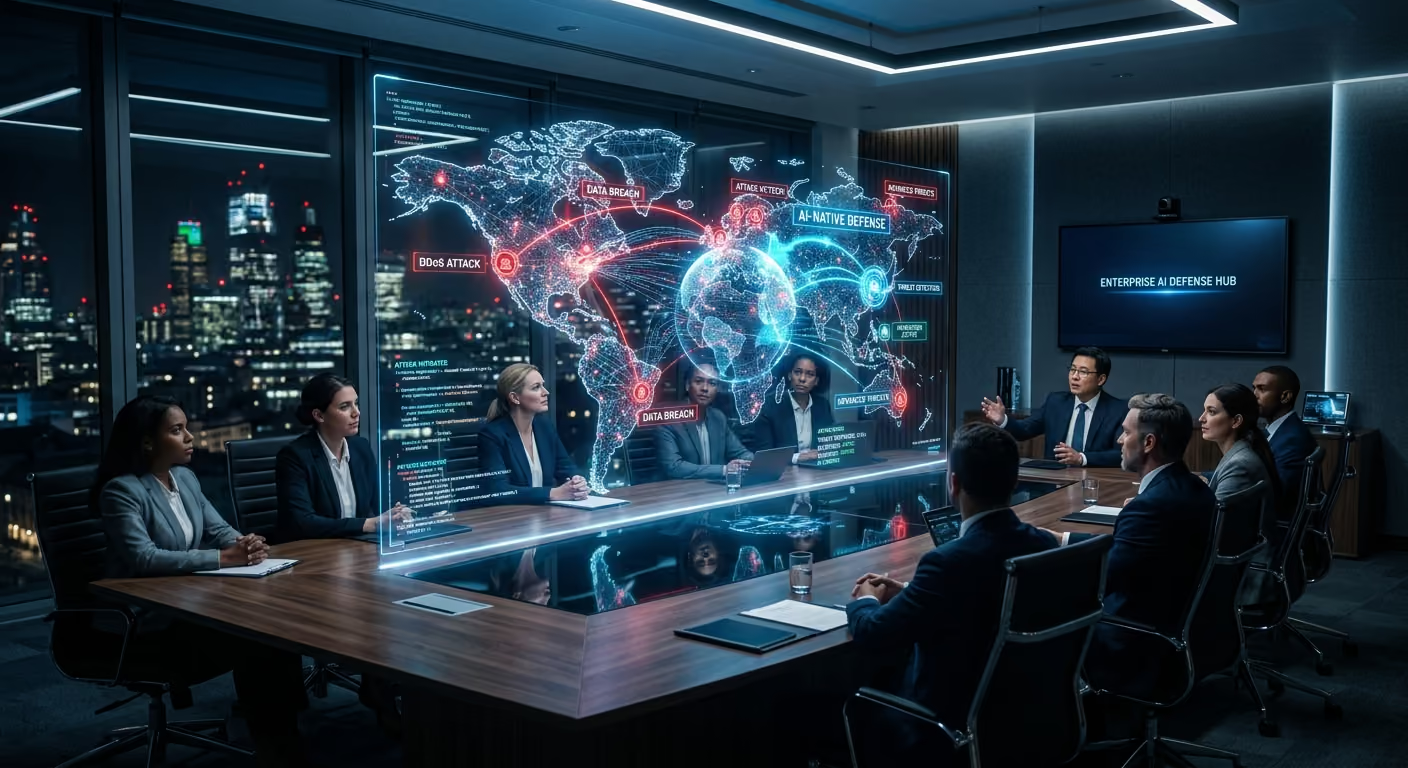
AI Agents Take Center Stage in Enterprise Defense as CrowdStrike and Defense Giants Scale Up
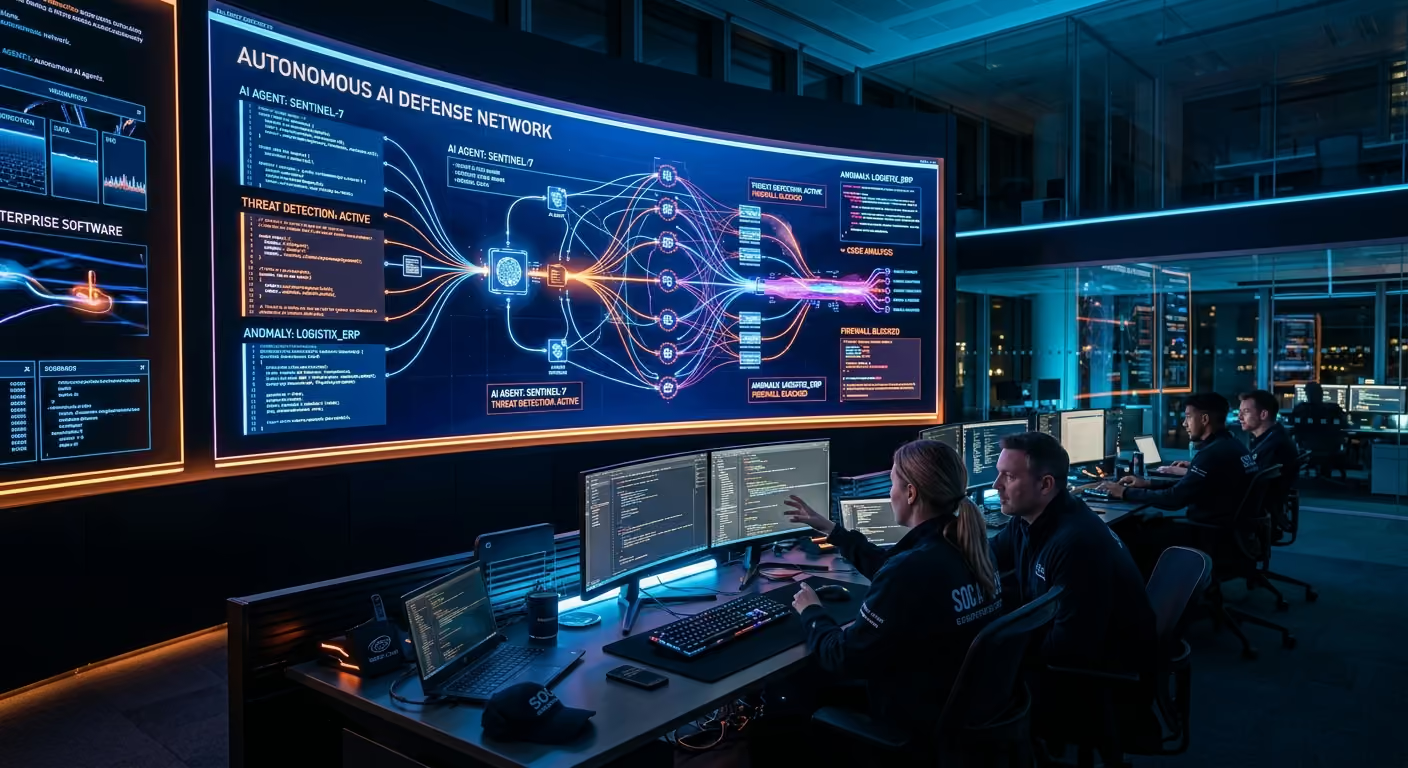
This report brings you the critical updates shaking up enterprise security on September 01, 2026. Global organizations are rapidly transitioning from manual detection to autonomous, agent-based architectures, sparking both immense growth opportunities and significant governance concerns at the board level.
The Autonomous Shift: CrowdStrike and AI Agents
At its annual Fal.Con event, CrowdStrike announced a deep-tier integration putting its Falcon platform on Google Cloud. Crucially, the security titan is equipping its partners with specialized AI agents designed to automate complex threat-hunting and remediation tasks. This development sparked a 4% rally in the company's stock, highlighting Wall Street's confidence in autonomous security tools.
However, this aggressive push into autonomous operations is not without friction. Security researchers are increasingly raising alarms over what they call the "missing context layer" for AI agents operating in large enterprise codebases. Without deep, structural context, autonomous code assistants and automated security patching run the risk of introducing unexpected vulnerabilities, highlighting the fine line between rapid defense and self-inflicted system failures.
Public Sector Upgrades and Global Alliances
The physical and digital battlegrounds continue to merge, as demonstrated by Telos Corporation securing a 34.3 million dollar task order to support the United States Air Force Intelligence Community. This substantial contract underscores the federal government's commitment to hardening national security networks against sophisticated foreign threat actors.
Simultaneously, international tech alliances are shifting. Japan's NTT Data has announced a strategic partnership with an unnamed United States firm to co-develop advanced enterprise artificial intelligence security solutions. This cross-border alliance is designed to help multinational enterprises navigate the fragmented, high-risk geopolitical landscape while deploying AI tools safely.
Market Consolidation and Boardroom Risks
The cybersecurity sector is also witnessing aggressive consolidation. Israel-based Malam Team has finalized its acquisition of Foretech Software in a multi-million-shekel deal. This acquisition represents a targeted push to bolster offensive security and automated vulnerability testing capabilities within Malam Team's growing security portfolio.
As these highly complex technologies flood the corporate ecosystem, chief information security officers (CISOs) are facing mounting pressure from boards of directors. The CISO agenda has officially shifted toward governing enterprise AI risks at the board level, pushing security leaders to establish clear guardrails for the autonomous agents now running inside their production environments.
The Bottom Line
TL;DR Summary
- AI Autonomy is Here: CrowdStrike's Google Cloud push and Scantist's autonomous offensive tools prove that AI agents are actively executing tasks, not just recommending them.
- Government Infrastructure Hardens: Telos Corporation's 34.3 million dollar Air Force deal highlights massive public-sector investment in advanced cyber operations.
- Governance is Vital: Boards of directors are demanding strict risk-management frameworks for AI deployments, focusing on the missing context layer in enterprise codebases.
Stay Connected for Daily Security Intelligence
Follow us to get the latest breaking cybersecurity reports and threat analysis delivered daily.
Aibots Sdn Bhd | [Beyond Future]