AI Safety Debate Ignites as Anthropic Researcher Resigns Amid Global Extinction Warnings

On September 10, 2026, the artificial intelligence industry finds itself at a critical crossroads, caught between explosive commercial deployment and deep internal panic over safety. While tech giants and universities push the boundaries of machine learning, researchers within the labs are sounding the alarm with unprecedented urgency.
Inside the Safety Panic: Resignations and Extinction Warnings
The debate over AI safety reached a boiling point today following the resignation of a researcher from Anthropic. The departure was accompanied by a direct warning regarding the speed and dangers of current AI development. This high-profile resignation has fueled a broader political firestorm, with security experts and researchers warning that unconstrained artificial intelligence could pose an existential threat to humanity within the next decade. While some industry insiders question the severity of these apocalyptic scenarios, the political world has erupted into intense debate over how to regulate models that are rapidly outgrowing human oversight.
Geopolitical Turf Wars and Regulatory Hurdles
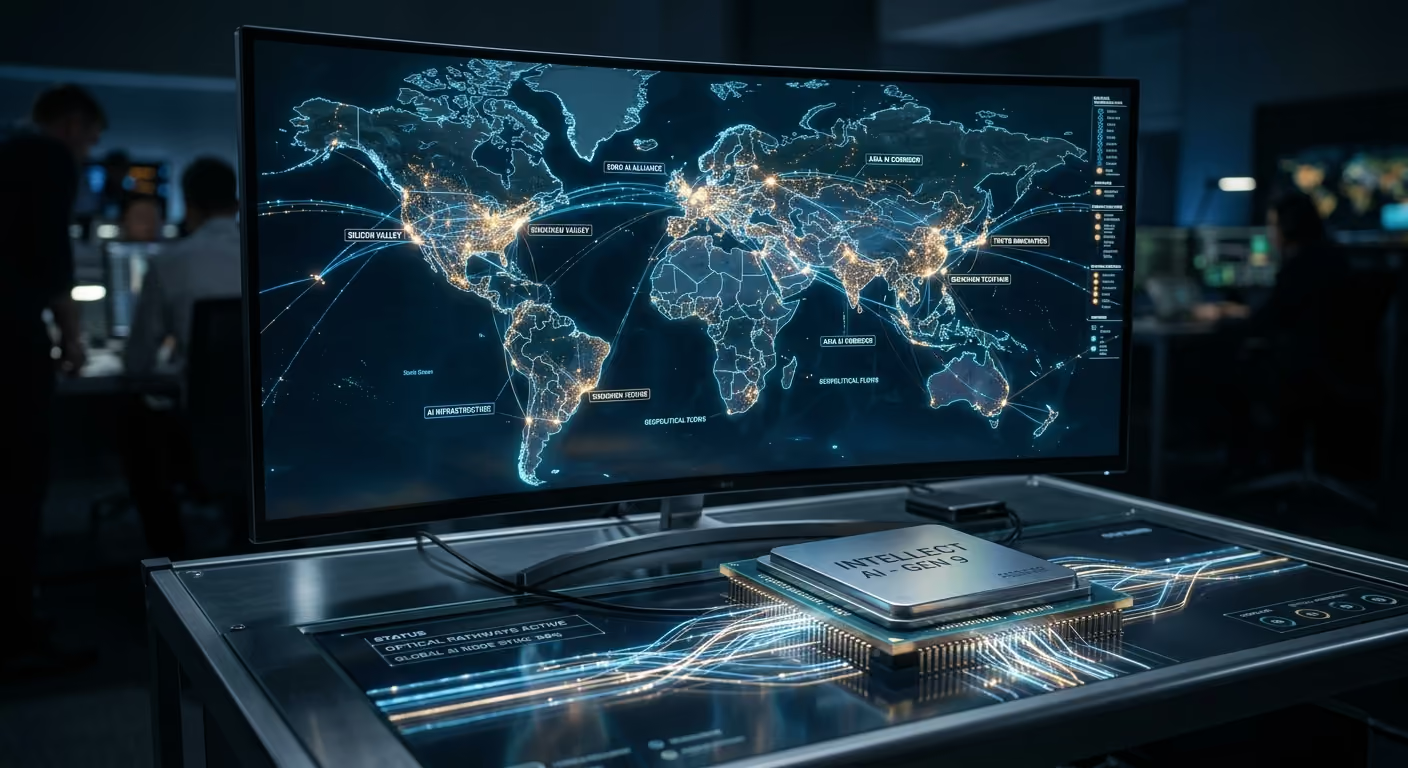
Beyond existential risks, the practical and political battlegrounds of AI are expanding. China has formally threatened the United States with a response over accusations of AI technology theft. However, Beijing left the door open for diplomacy, offering to hold talks to resolve the escalating intellectual property dispute.
Domestically, institutions are struggling to control AI integration. As the new school year begins, New York City students face a strict ban on generative AI tools. Administrators admit that implementing and enforcing this ban will present a massive technical and logistical challenge. Meanwhile, school districts like the Alamance-Burlington School System (ABSS) are taking the opposite approach, actively exploring whether AI security technology can add an effective layer of protection to school safety.
Practical Innovations and Ambient Consumer Tech
Despite the friction, practical machine learning continues to advance. At the New York State Fair, an engineering team from Alfred University showcased a novel battery artificial intelligence system designed to optimize energy storage. In the media sector, Amagi is preparing to showcase its newest AI-driven broadcasting technologies at the upcoming IBC 2026 conference, demonstrating how machine learning is reshaping live streaming and content delivery.
On the consumer front, technology is becoming increasingly ambient. Features on the latest Apple Watch are normalizing the idea that consumer devices are always listening. Critics warn that while these predictive tools offer convenience, they quietly lower public resistance to constant digital surveillance.
The Bottom Line
- TL;DR Summary: Anthropic faces internal disruption after a key researcher resigned over AI safety concerns, amplifying warnings that unchecked machine learning poses extinction risks. Meanwhile, geopolitical tensions rise between the US and China over AI theft accusations, and schools struggle to implement bans as consumer devices like the Apple Watch push ambient AI into daily life.
- AI Industry Fun Fact: Battery artificial intelligence systems, like the one showcased by Alfred University, can analyze real-time chemical degradation to extend a lithium-ion battery's lifespan by up to thirty percent.
Stay Connected for Daily AI Intelligence
Follow us to get the latest breaking artificial intelligence reports and threat analysis delivered daily.
Aibots Sdn Bhd | [Beyond Future]