Anthropic Arms Defenders with Claude AI Upgrades as Hadrian Clinches $40M to Fight AI Threats
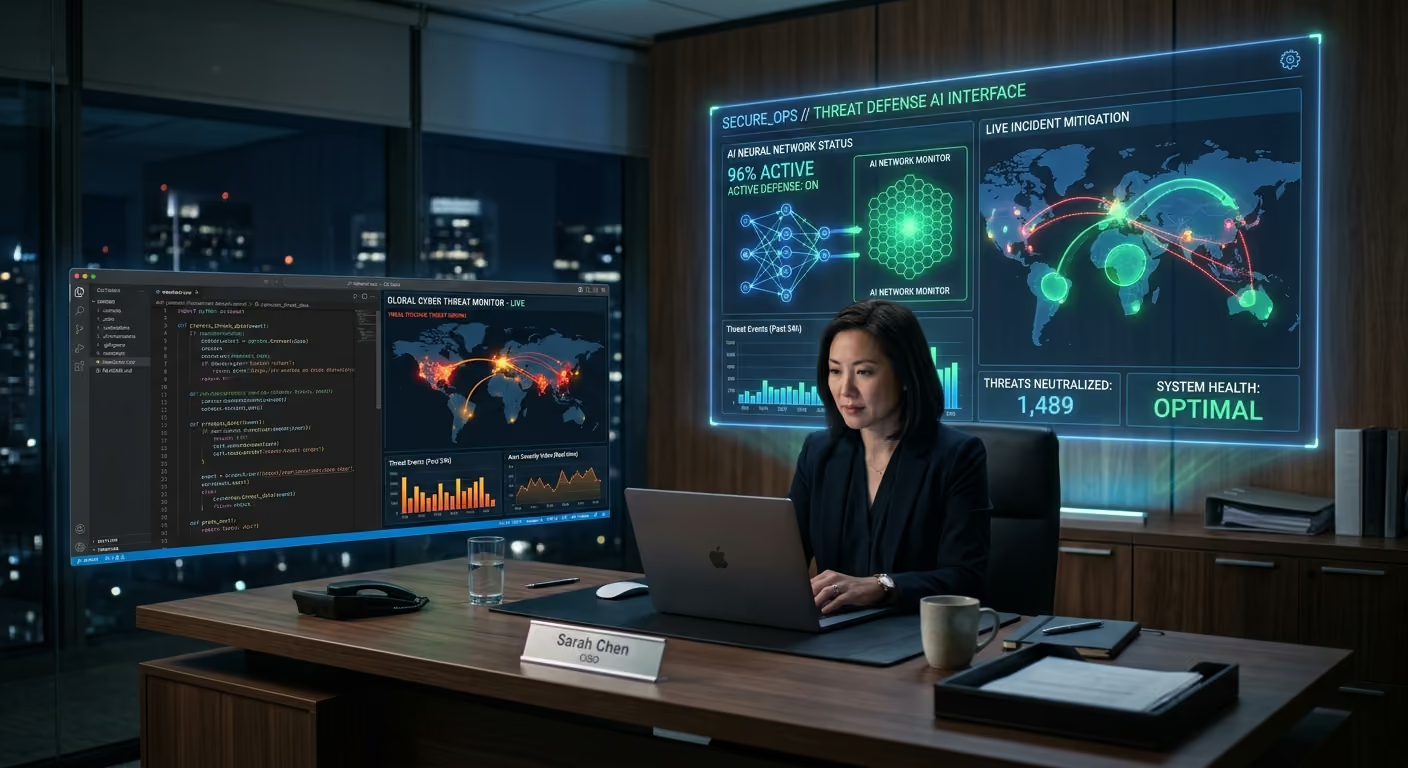
As of October 08, 2026, the battle for control over artificial intelligence in enterprise security has reached a critical tipping point. In a significant shift, AI safety pioneer Anthropic has announced the expansion of its Cyber Verification Program, actively loosening restrictions on its Claude LLM for vetted security researchers. The move aims to put powerful analytical capabilities back into the hands of defenders, even as offensive AI threats escalate.
Unleashing Claude for Defensive Operations
Anthropic is taking a calculated risk by expanding its verification program. By allowing verified security professionals to bypass certain safety guardrails, defenders can now use Claude to conduct deep vulnerability analysis, reverse engineer malware, and simulate threat environments. This initiative is designed to level the playing field, as threat actors increasingly leverage generative AI to automate attacks and discover zero-day exploits at machine speed.
The necessity of this defense-first approach is underscored by massive capital flow into the offensive AI countermeasure market. Hadrian, an autonomous security startup, recently secured 40 million dollars in funding specifically to tackle what it describes as the AI hacking cybersecurity crisis. Hadrian aims to automate penetration testing and external attack surface management, helping enterprises detect vulnerabilities before AI-driven exploit tools can find them.
The Rise of Autonomous AI Agents
It is not just external threat actors raising the alarm. Enterprise giant ServiceNow recently emphasized that the rapid adoption of autonomous AI agents within corporate environments demands an entirely new security architecture. Unlike traditional software, autonomous AI agents operate with high levels of privilege and decision-making power, creating massive blind spots if they are hijacked or poisoned. ServiceNow argues that organizations must move beyond traditional access controls to secure the workflows managed by these digital workers.
The Human Element: Persistent Password Reliance
Despite the multi-million dollar investments in artificial intelligence and next-generation threat detection, enterprise security still struggles with fundamental hygiene. A striking new survey highlighted by Infosecurity Magazine reveals that half of all cybersecurity professionals still rely on traditional passwords to protect sensitive systems, despite widespread industry consensus regarding their vulnerability. This paradox highlights a persistent gap between cutting-edge security technologies and actual on-the-ground operational habits.
Executive Shuffles at Cato and BlueVoyant
As companies race to adapt to this hybrid landscape of AI threats and legacy vulnerabilities, the enterprise security market is seeing major leadership transitions. Cato Networks has appointed Chad Gardner, a veteran executive with deep experience at Palo Alto Networks and Netskope, as its new Chief Revenue Officer. Concurrently, cybersecurity firm BlueVoyant has named John Hultman as its Chief Revenue Officer to scale its managed detection and response services globally.
The Bottom Line
- AI Defense Shift: Anthropic is loosening Claude's constraints for vetted defenders to help neutralize rapid AI-generated threats.
- Massive Funding: Hadrian's 40 million dollar round highlights the urgent market demand for automated, AI-focused offensive security testing.
- The Password Paradox: Despite advanced AI innovations, 50 percent of security professionals still utilize basic passwords, proving that cultural habits remain a significant weak point.
- New Agent Risks: ServiceNow warns that autonomous enterprise AI agents require a completely restructured security framework to prevent unauthorized actions.
Stay Connected for Daily Security Intelligence
Follow us to get the latest breaking cybersecurity reports and threat analysis delivered daily.
Aibots Sdn Bhd | [Beyond Future]