China's AI 'Dragons' Pressure Nvidia's Moat as Global Silicon Sanctions Falter
As we open our notebooks on September 07, 2026, the global artificial intelligence sector is experiencing a turbulent evolution marked by geopolitical hardware battles, industrial milestones, and shifting educational policies. Despite intense trade restrictions, global supply chains and domestic innovation continue to reshape the balance of power in high-tech markets.
The Battle for Silicon Dominance
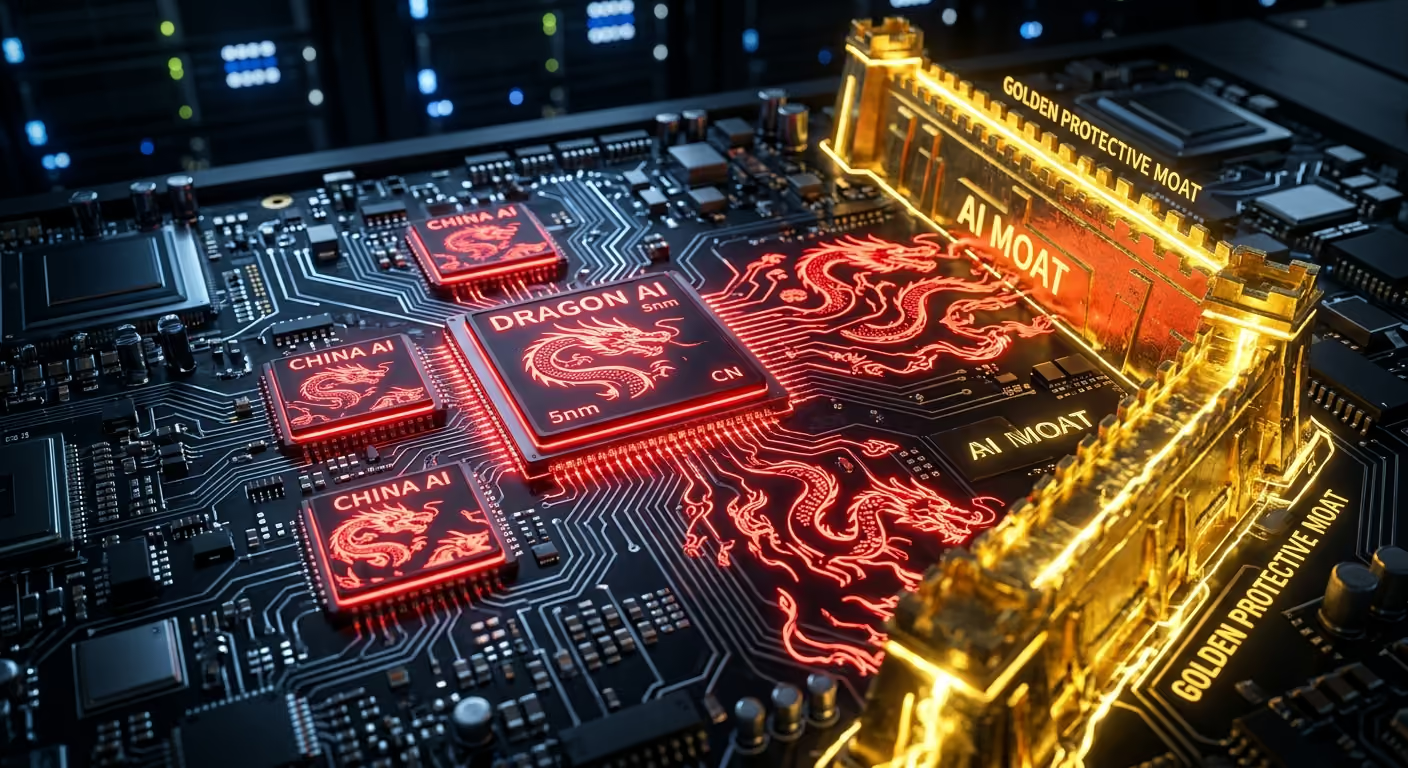
According to a detailed investigation by The New York Times, a blacklisted Chinese technology giant has successfully navigated international trade restrictions to continue purchasing top-tier American AI chips. This revelation underscores the extreme difficulty of enforcing technological blockades in a highly interconnected global economy. At the same time, domestic tech firms, often referred to as China's AI dragons, are actively developing alternative architectures to challenge Nvidia's long-standing hardware moat. This hardware pressure is accompanied by a strategic shift in national training programs, with researchers at a prominent Chinese military university advocating for a revised AI curriculum designed specifically to educate for war, highlighting the deepening militarization of autonomous systems.
Industrial Adoption and Infrastructure Milestones
Away from the geopolitical arena, enterprise AI is proving its pragmatic value on the physical factory floor. At the International Manufacturing Technology Show (IMTS 2026), industrial leaders demonstrated how machine learning is optimizing precision engineering and automated medical manufacturing. Complementing these edge developments, CETA System announced a milestone year in data-centre AI operations, demonstrating significant breakthroughs in processing efficiency and cooling overheads to support next-generation large language models.
The Classroom Conundrum
As the new academic year begins, local school districts are facing intense pushback over classroom AI integration. A recent public opinion report highlights a rare point of consensus among parents: a demand to strictly limit AI usage in student learning environments. In response to these debates, Elysia Nicolas announced that EDTV's proprietary technology offers a balanced platform to resolve key concerns in classroom instruction. Meanwhile, academic institutions are hosting broader philosophical debates, such as a major symposium at Benedictine College that questioned whether the rapid rise of AI represents an impending apocalypse or a cultural renaissance.
The Bottom Line
- Silicon Leakage: Sanction enforcement remains complex as blacklisted entities continue to secure premium chips, while local Chinese competitors actively erode Nvidia's market dominance.
- Physical Integration: Industrial events like IMTS 2026 and infrastructure milestones from CETA System show that enterprise adoption is moving from theoretical software to hard physical engineering.
- Educational Friction: Schools remain a key battleground, with developers like EDTV attempting to find middle ground between parental demands for restrictions and the inevitable march of classroom technology.
Stay Connected for Daily AI Intelligence
Follow us to get the latest breaking artificial intelligence reports and threat analysis delivered daily.
Aibots Sdn Bhd | [Beyond Future]