Enterprise Security Reaches Inflection Point as Focus Shifts From Detection to Governance and AI Integrity
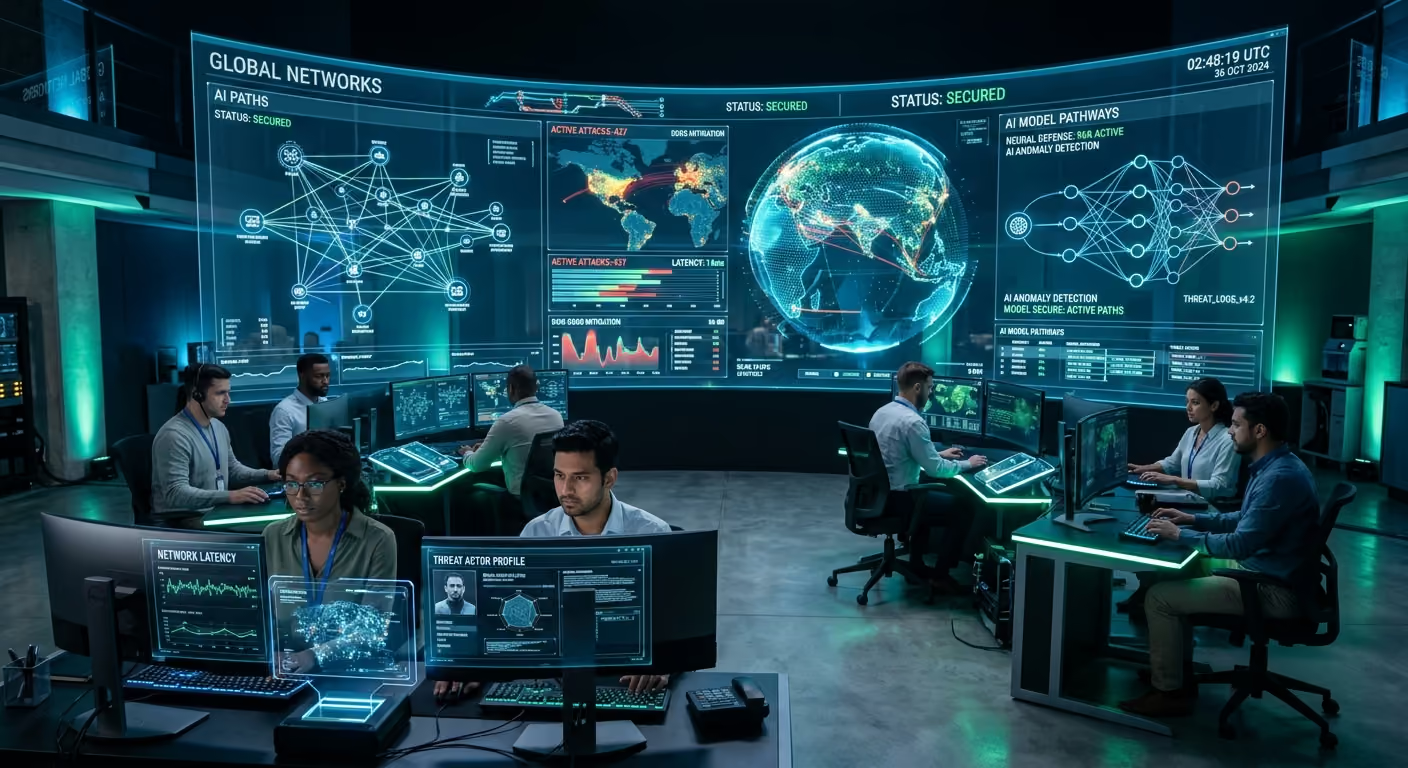
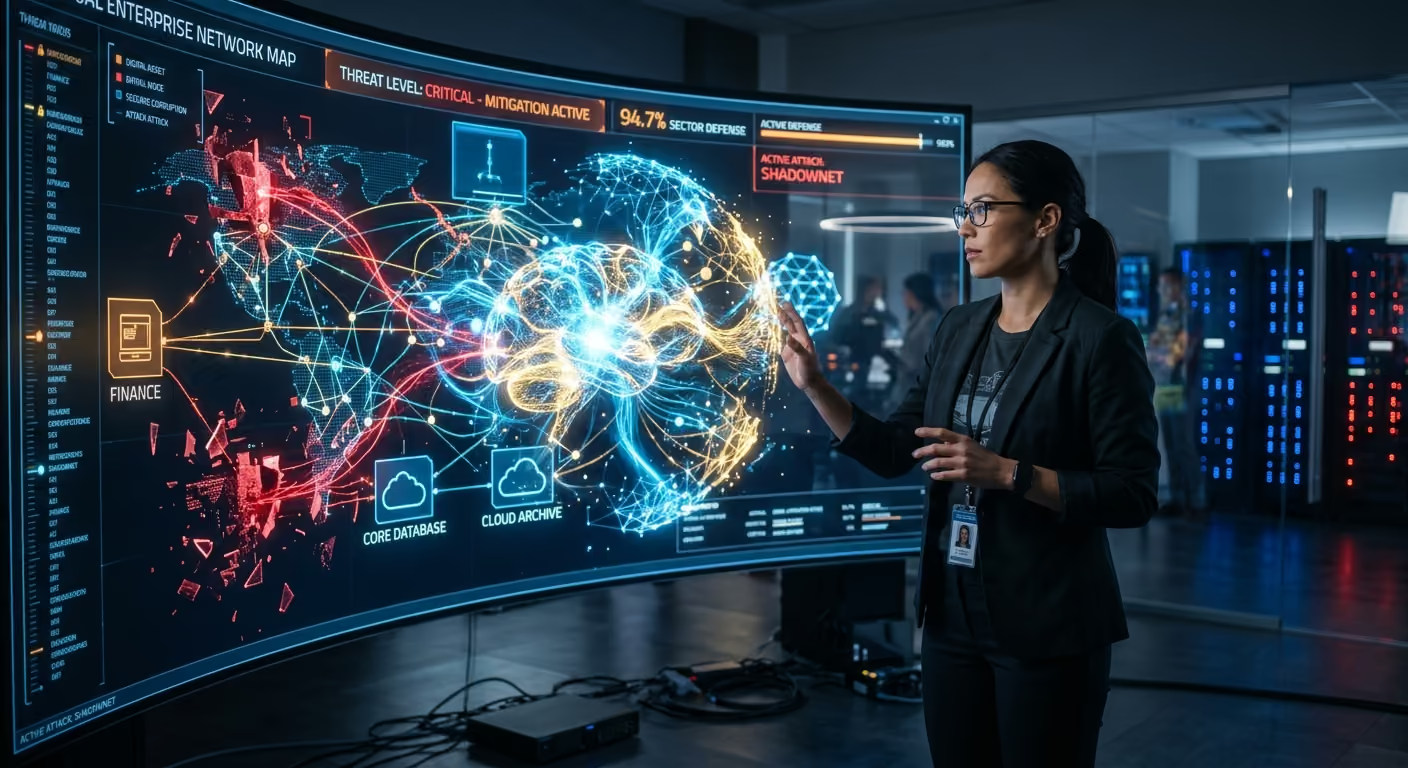
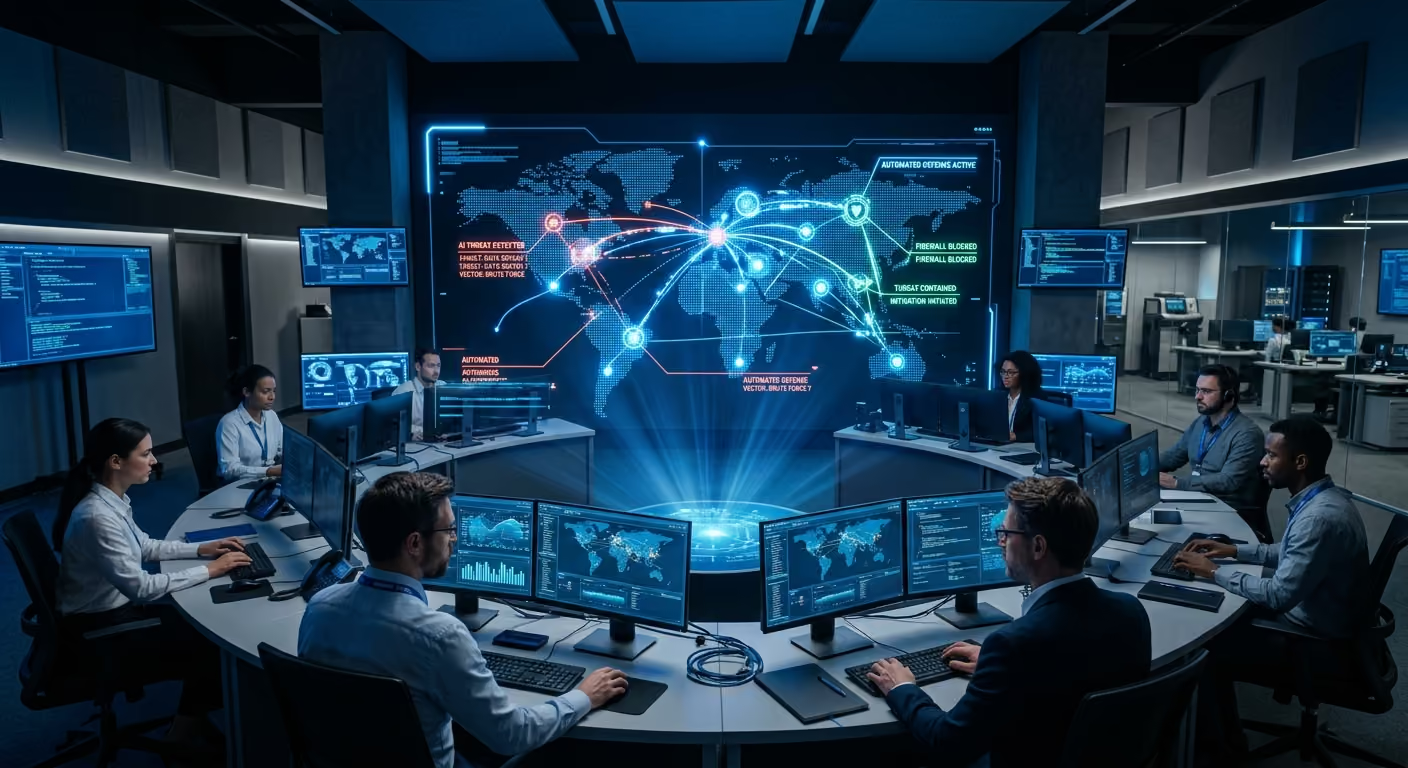
Today, on September 19, 2026, the global corporate arena is witnessing a quiet but profound transformation in how digital assets are secured. The historical reliance on passive detect and respond tactics is officially giving way to a strict regime of active control, governance, and structural resilience.
The Move Beyond Simple Threat Detection
For years, enterprise security focused heavily on identifying threats after they crossed the perimeter. However, as cloud manufacturing markets scale toward massive valuations and AI integration becomes standard practice, this reactive approach has proven insufficient. Security leaders are arguing that waiting for an alert is a failed strategy. Instead, modern security architectures must enforce governance and policy directly within the system's operational design.
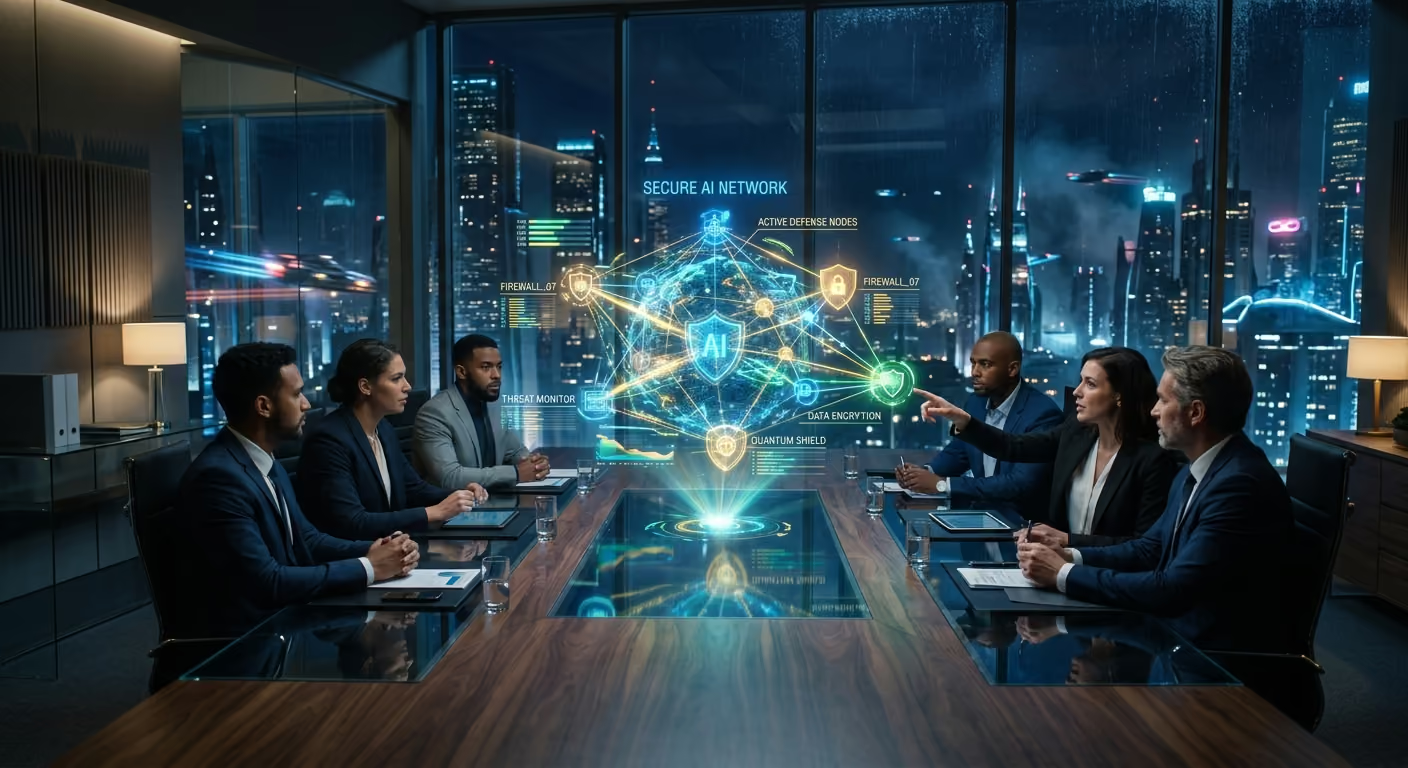
This trend is particularly evident in the deployment of enterprise AI. Incorporating machine learning models into daily operations introduces unique vulnerabilities, from prompt injection to data poisoning. Security experts warn that to prevent these risks, enterprises must embed security protocols into the very foundations of their AI systems. Rather than treating AI security as an add-on, it must be integrated as a core architectural layer.
Global Alliances Reshape Enterprise Defense
This structural shift is driving a wave of strategic partnerships across the global tech landscape, as organizations rush to deliver secure, unified networks:
- REANNZ and Palo Alto Networks: In New Zealand, the Research and Education Advanced Network (REANNZ) has launched a new enterprise cybersecurity offering in collaboration with Palo Alto Networks. This partnership aims to deliver robust, high-performance threat defense tailored for highly collaborative academic and scientific environments.
- VST ECS and Akamai: To address expanding network edges, distributor VST ECS has expanded its enterprise portfolio through a major partnership with Akamai. This collaboration focuses on bringing advanced cloud computing and network security capabilities to a broader market.
- Plexus Global and TrendAI: On the artificial intelligence front, Plexus Global has partnered with TrendAI to deliver next-generation enterprise security solutions designed specifically to protect and monitor proprietary machine learning deployments.
To help mid-market enterprises navigate these structural changes, major consulting and IT services firms are also realigning their business models. HCLTech, for instance, recently launched its new Pulse business unit. This dedicated entity is designed specifically to guide growing enterprises through the secure adoption of AI, ensuring that compliance and governance are built into their transformations from day one.
The Bottom Line
- Shift to Governance: Modern corporate defense is transitioning away from passive detection toward strict architectural control and active policy governance.
- AI Security at the Core: Securing the actual foundation of enterprise AI models is now a top operational priority, forcing companies to secure data pipelines before deploying machine learning systems.
- Consolidated Defense: Strategic alliances, such as those between REANNZ and Palo Alto Networks, or VST ECS and Akamai, show that the industry is standardizing on unified, platform-level security ecosystems.
Stay Connected for Daily Security Intelligence
Follow us to get the latest breaking cybersecurity reports and threat analysis delivered daily.
Aibots Sdn Bhd | [Beyond Future]