The End of 'Ship and Forget': EU Drops Final CRA Guidance as Blockchain-Powered Botnets Target 200,000 IoT Devices

Today is July 31, 2026, and the global hardware ecosystem has seen massive shifts in regulatory compliance, edge-to-voice routing, and decentralized cyber defenses over the past seven days. Following a week of intense discussion on physical security and drone propulsion, the industry is now confronting a new compliance era while battling sophisticated decentralized botnets.
The End of "Ship and Forget" as EU Finalizes CRA Guidance
For years, the IoT manufacturing sector has relied on a high-velocity production model, often releasing devices with minimal long-term support plans. This week, that paradigm met its official end. The European Union has released its final guidance on the landmark EU Cyber Resilience Act (CRA).
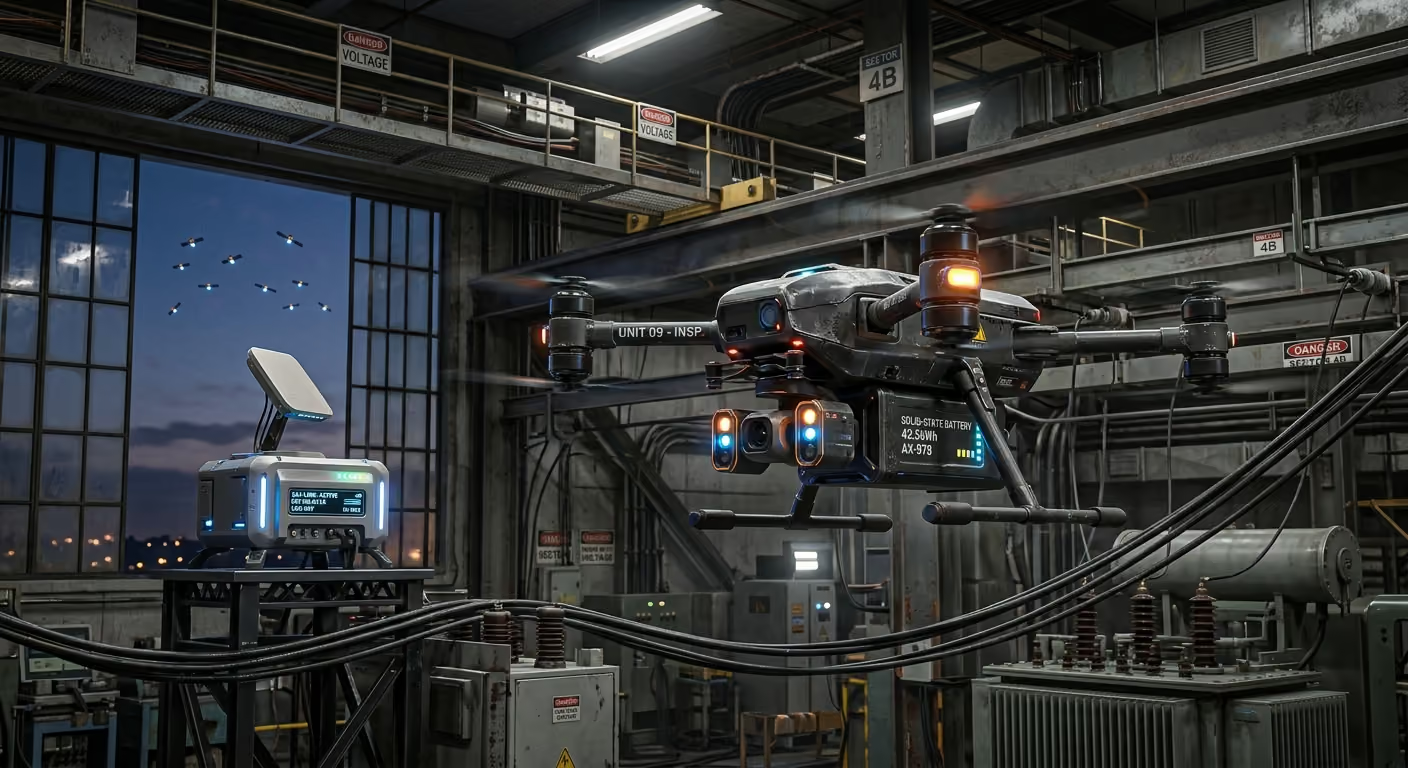
The new rules mandate that any hardware manufacturer wishing to sell connected products within European markets must build active vulnerability monitoring, secure-by-design architectures, and long-term security patching schedules into their product lifecycles. Leading embedded design firms like Lemberg and media organizations like Elektor have quickly pivoted, launching compliance webinars to help microchip programmers and device builders understand how to design "CRA-ready" devices from the ground up to prevent costly market bans.
Dysphoria Botnet Utilizes Blockchain to Hide 200,000 Bots
Underscoring the critical need for the CRA, a highly resilient new malware campaign has emerged. The "Dysphoria" IoT botnet has rebounded aggressively following the recent international disruption of the JackSkid network. Dysphoria has integrated decentralized blockchain domains into its Command and Control (C2) infrastructure, rendering standard IP blocking techniques largely obsolete.
By routing control commands through immutable blockchain ledgers and utilizing compromised victim devices as relays, the botnet has successfully shielded more than 200,000 active IoT bots from law enforcement. Security researchers warn that this evolution represents a significant leap forward in malware resilience, as traditional internet service providers cannot simply shut down blockchain-based domain names.
Soracom Links SIM Identity directly to AI Voice Agents
On the connectivity front, Soracom introduced its Air RTC (Real-Time Communication) Gateway, a technology that bridges the gap between cellular hardware and artificial intelligence. The Air RTC Gateway links a device's physical SIM card identity directly to voice routing platforms. This allows embedded systems, smart appliances, or industrial intercoms to route cellular voice calls straight to conversational AI agents, custom contact centers, or automated voice response networks without requiring complex middle-tier authentication.
Soracom also targeted the connected-transportation market by launching its new Automotive Suite. This platform offers vehicle manufacturers a unified framework to manage the entire lifecycle of connected-car connectivity, from production testing on the assembly line to multi-country roaming across various cellular standards.
Global Industrial Tracking: Iridium and Skywave Form Alliance
In the industrial tracking space, satellite operator Iridium has officially partnered with Skywave, an ORBCOMM company, to bolster heavy equipment telematics. The collaboration introduces the Iridium SBS Data Service into Skywave's industrial IoT hardware catalog.
This hybrid integration gives original equipment manufacturers (OEMs) of construction, agricultural, and maritime machinery a highly reliable, globally redundant data link. Heavy machinery can now seamlessly transmit critical engine telemetry and location metrics from deep within remote environments where terrestrial cellular signals do not reach.
Record-Breaking Drones and Defensive Interceptors
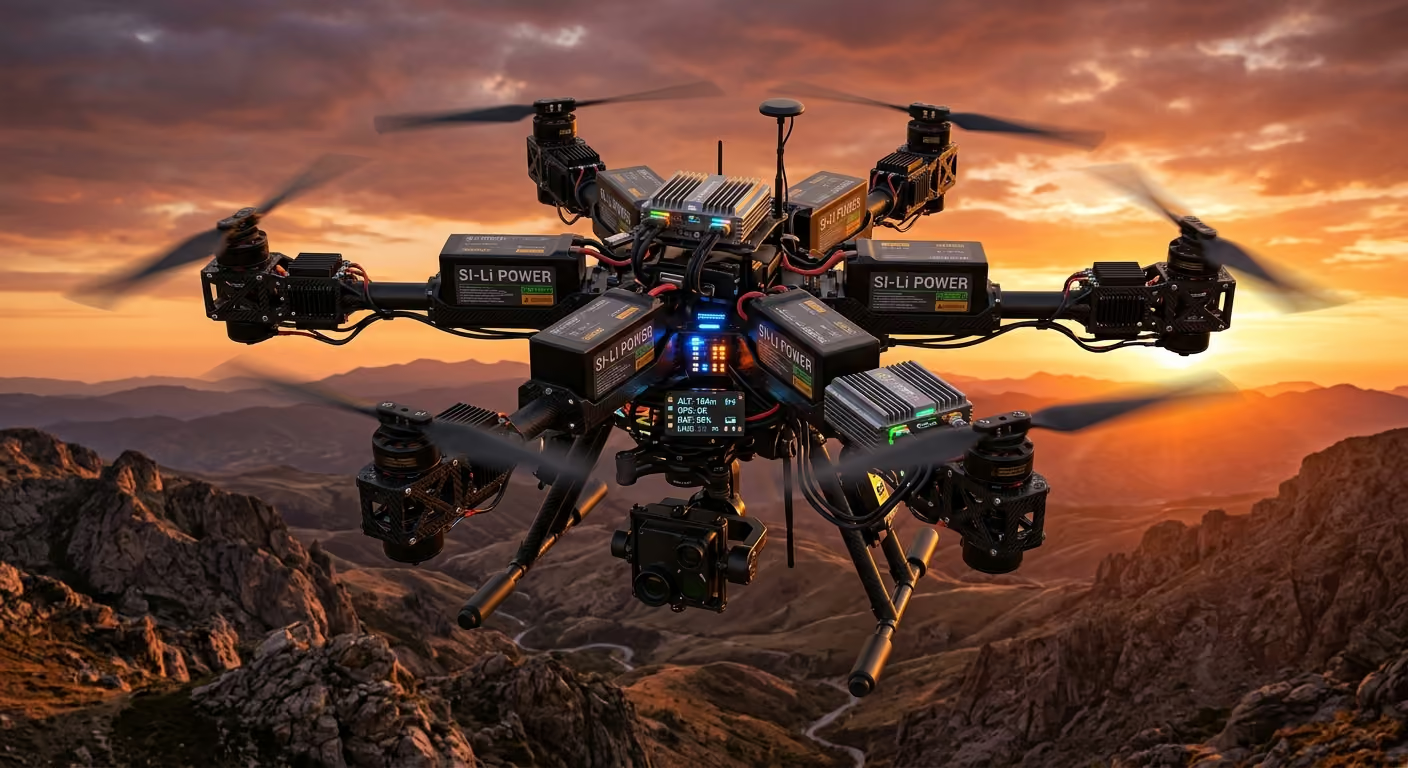
Aviation technology experienced significant advancements this week. In civilian aviation, engineering teams in China successfully flight-tested the first heavy civilian drone capable of staying airborne for 24 hours non-stop while carrying a full payload.
Meanwhile, tactical unmanned aerial vehicle (UAV) designs are rapidly shifting to counter aerial threats. Ukrainian forces revealed a new falcon-like explosive interceptor drone specifically designed to locate, chase, and destroy hostile Russian surveillance aircraft. This tactical shift was highlighted by the downing of a rare Russian Forpost-R UAV over the Kursk region, showing the growing reliance on automated FPV interceptors to neutralize aerial threats.
The Bottom Line
- CRA Deadline Approaches: The European Union's final Cyber Resilience Act guidance signals a permanent transition to active lifecycle management for all connected hardware.
- Blockchain-Backed Threats: The Dysphoria botnet highlights how threat actors are using blockchain architecture to protect over 200,000 vulnerable IoT nodes from disruption.
- Voice-to-AI Edge Routing: Soracom's Air RTC Gateway makes it possible for simple IoT hardware to initiate secured, SIM-authenticated voice calls to AI models.
- Non-Stop Cargo Flights: China's successful 24-hour non-stop flight of a fully loaded civilian drone paves the way for ultra-long-endurance autonomous logistics.
IoT Hardware Fun Fact: The use of blockchain domains by the Dysphoria botnet means that even if a security firm discovers the Command and Control IP addresses, they cannot delete the domain registration from the decentralized ledger, making the botnet virtually impossible to kill without patching the physical edge devices directly.
Stay Connected for Weekly IoT & Edge Intelligence
Follow us to get the latest breaking Internet of Things, drone technology, sensor networks, and edge computing reports delivered weekly.
Aibots Sdn Bhd | [Beyond Future]