Geopolitical Shifts and Government Integration Redefine the Global AI Landscape
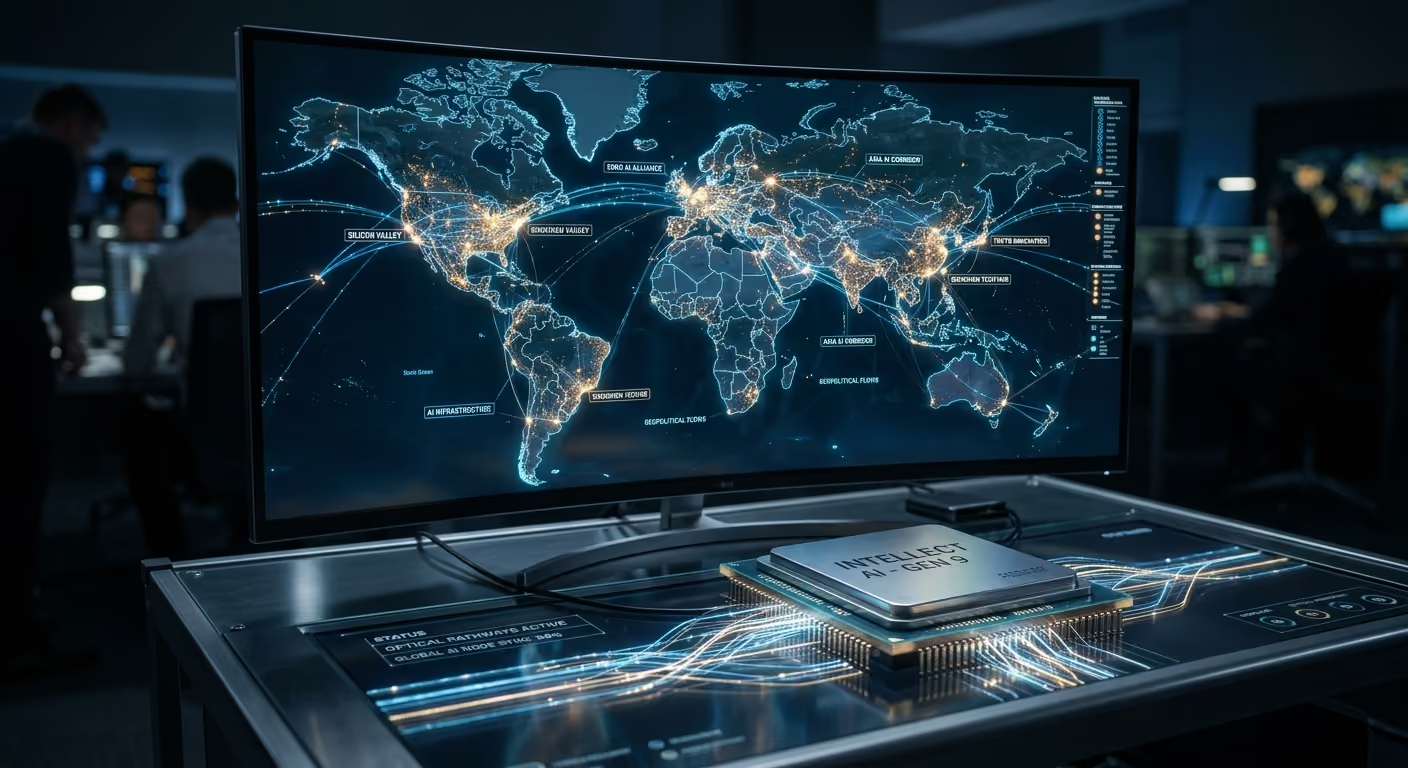
Today, on September 08, 2026, the artificial intelligence landscape is witnessing a dramatic collision between geopolitics, national security, and local adoption. As superpowers push for technological dominance, the rest of the world is forced to make tough choices. The friction between national security blockades and the global hunger for high-performance compute is reshaping international diplomacy and local government operations alike.
The Growing Geopolitical Divide and the Chip Battle
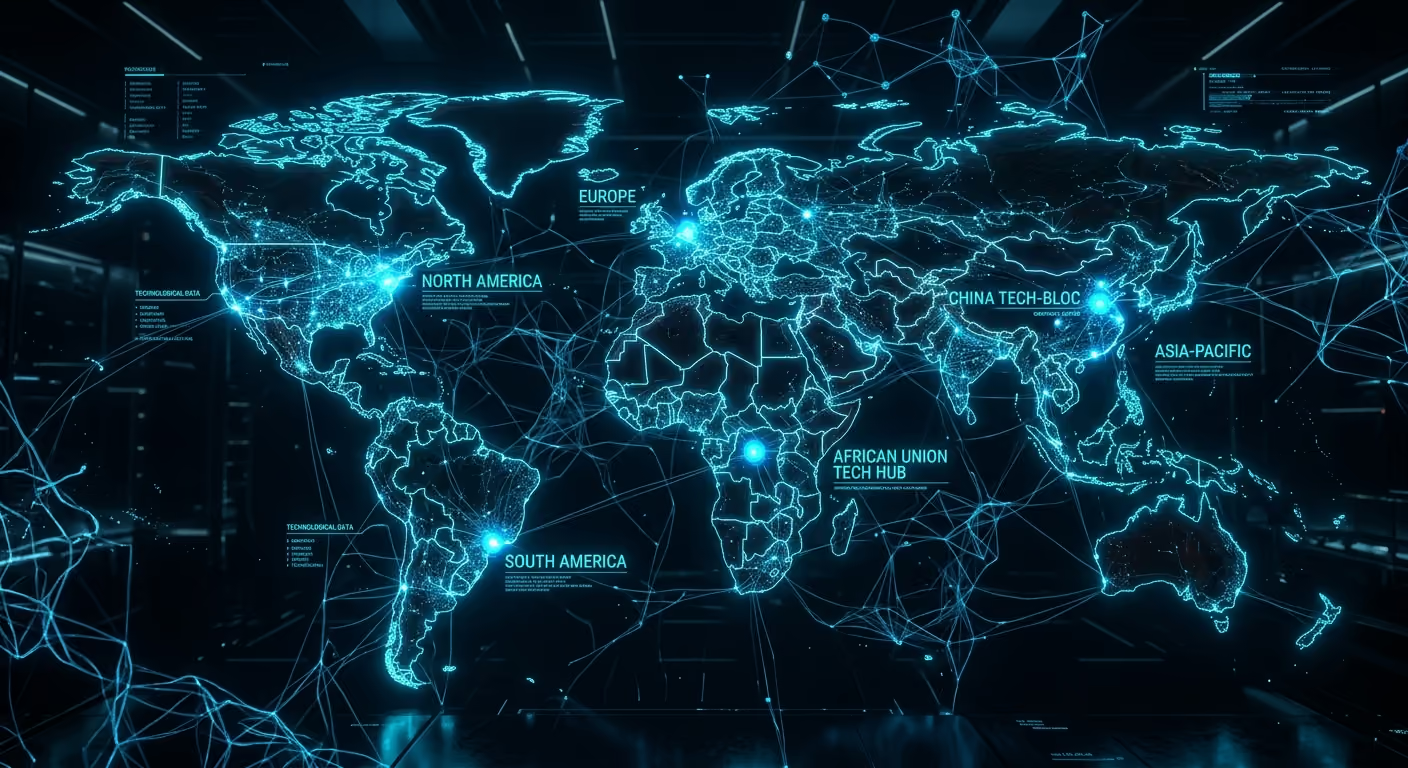
A deep global artificial intelligence divide is opening up as the United States aggressively pushes to isolate its technological rivals. According to reports from Bruegel, nations are facing increasingly difficult choices as they are pressured to align with either American or Chinese tech ecosystems.
This pressure is highlighted by recent developments in Malaysia. Despite explicit warnings from Washington, Malaysia is currently eyeing Huawei chips for a major domestic AI project. This move underscores the growing agency of nations in the Global South, many of whom are leveraging support from BRICS partners to harness technology on their own terms rather than relying solely on Western pipelines.
Meanwhile, export restrictions continue to face heavy enforcement challenges. A recent investigation by The New York Times revealed how a blacklisted Chinese tech giant successfully managed to bypass stringent US embargoes to repeatedly purchase America's most advanced AI chips. In response to this complex landscape, South Korea is actively elevating its science diplomacy to navigate what local experts call the new age of technopolitics.
Sovereign AI Models and Domestic Literacy
Outside the chip wars, regional players are focusing heavily on localized AI models and public literacy. In the Middle East, Jordan has signed a landmark Memorandum of Understanding (MoU) with HUMAIN. This partnership aims to advance native Arabic AI models and cultivate localized tech talent, ensuring that regional languages and cultures are represented in the next generation of foundational models.
At the grassroots level, educational institutions are stepping up to bridge the digital divide. The University of Hawaii has launched a free AI literacy course aimed at building widespread understanding across the islands. On the corporate and research front, South Korea's Pusan National University has announced collaborative partnerships with AI and healthcare companies to pioneer medical machine learning solutions. Even tech legends are lending their support to emerging startups, with Apple co-founder Steve Wozniak recently giving his official blessing to Vairnport, a rising tech player.
Government Integration and Existential Concerns
While global diplomacy shifts, domestic policy is embracing AI at an unprecedented scale. The US government is preparing to deploy AI-powered virtual agents to assist in its interviewing and hiring processes, according to reports. This shift towards automated federal recruitment marks a milestone in state-level AI adoption, although it arrives amidst intensifying concerns.
These rapid developments have not escaped international scrutiny. The United Nations rights chief issued a stark warning, stating that unchecked artificial intelligence could pose an existential risk to humanity. This warning highlights the ongoing tension between rapid technological deployment and the preservation of human rights and safety.
The Bottom Line
- Geopolitical Splitting: Developing nations are caught between US chip export blockades and attractive technology offers from Chinese giants like Huawei, forcing tough diplomatic decisions.
- Federal AI Adoption: The US government is actively implementing AI virtual agents to manage recruitment and hiring, showcasing deep integration into federal infrastructure.
- Sovereign and Localized AI: From Jordan's Arabic language models to Hawaii's statewide literacy program, localized initiatives are rising to counter the monoculture of major tech hubs.
- AI Industry Fun Fact: Apple co-founder Steve Wozniak has officially thrown his support behind Vairnport, reminding the tech community that grassroots innovation still captures the attention of industry pioneers.
Stay Connected for Daily AI Intelligence
Follow us to get the latest breaking artificial intelligence reports and threat analysis delivered daily.
Aibots Sdn Bhd | [Beyond Future]