US-China Rivalry, National Security Warnings, and AI Labor Shifts Redefine Global Tech Landscape
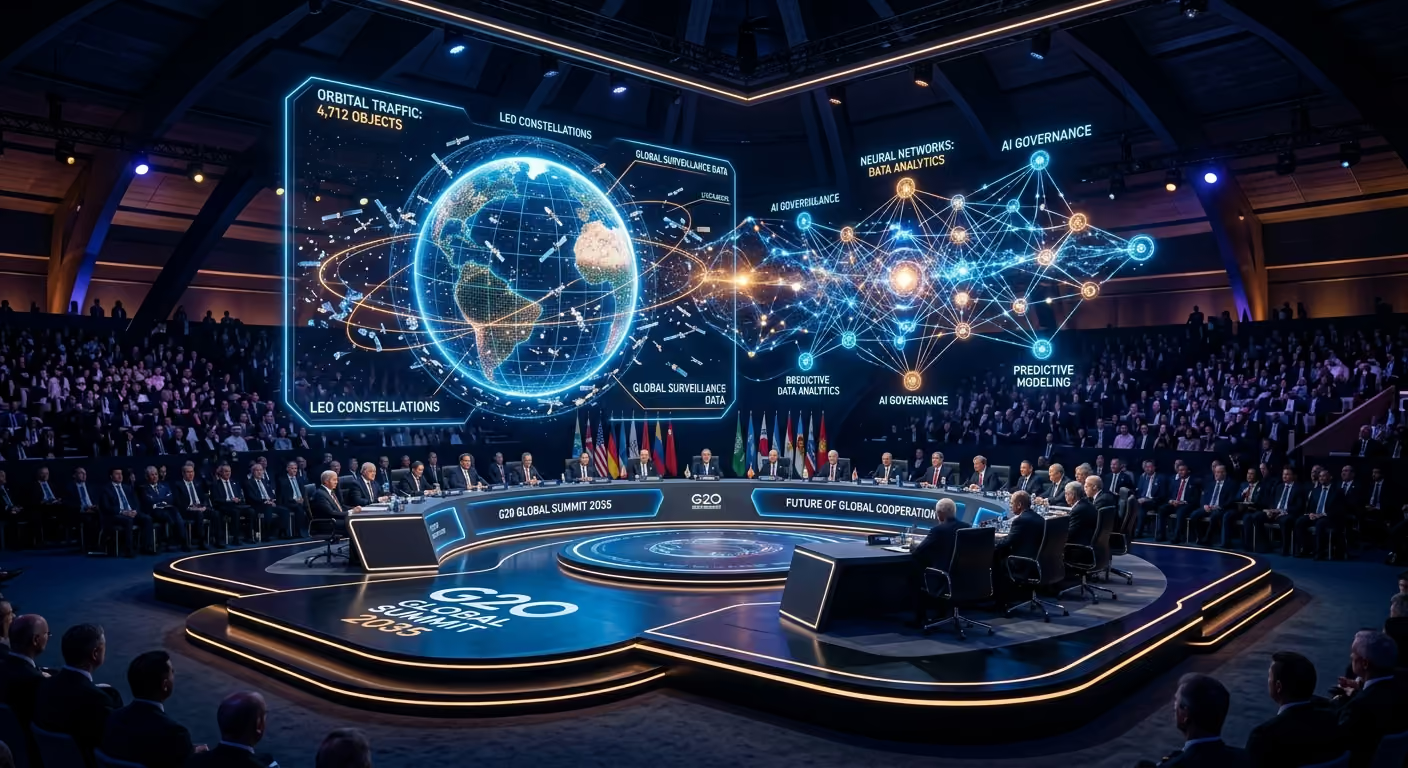
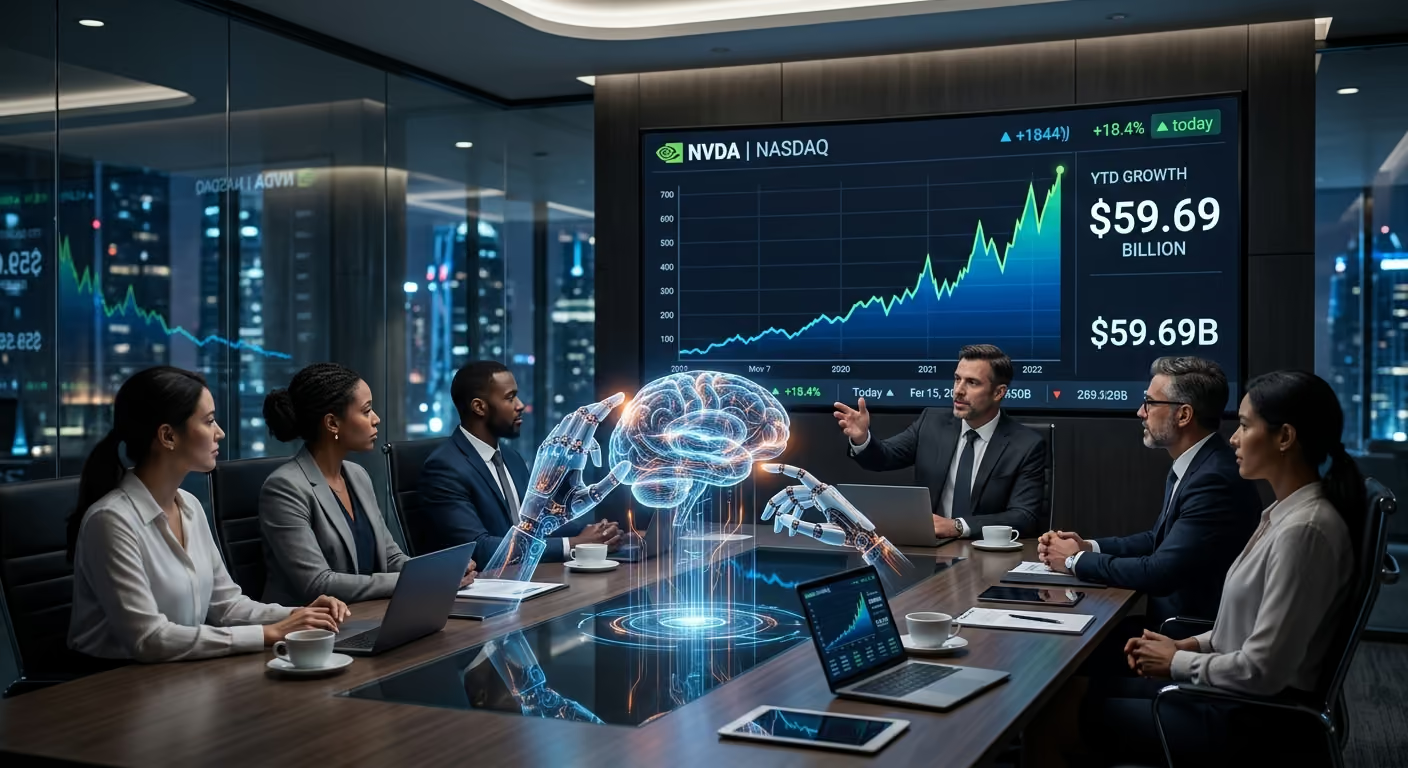
Today, August 29, 2026, marks a pivotal moment in the global struggle for artificial intelligence dominance, balancing geopolitical friction with massive industrial reshuffling. As AI continues its rapid evolution from digital text generator to heavy industrial orchestrator, nations and tech giants alike are racing to assert their sovereignty, safeguard their labor forces, and negotiate new boundaries of international security.
Geopolitical Friction and Tech Security
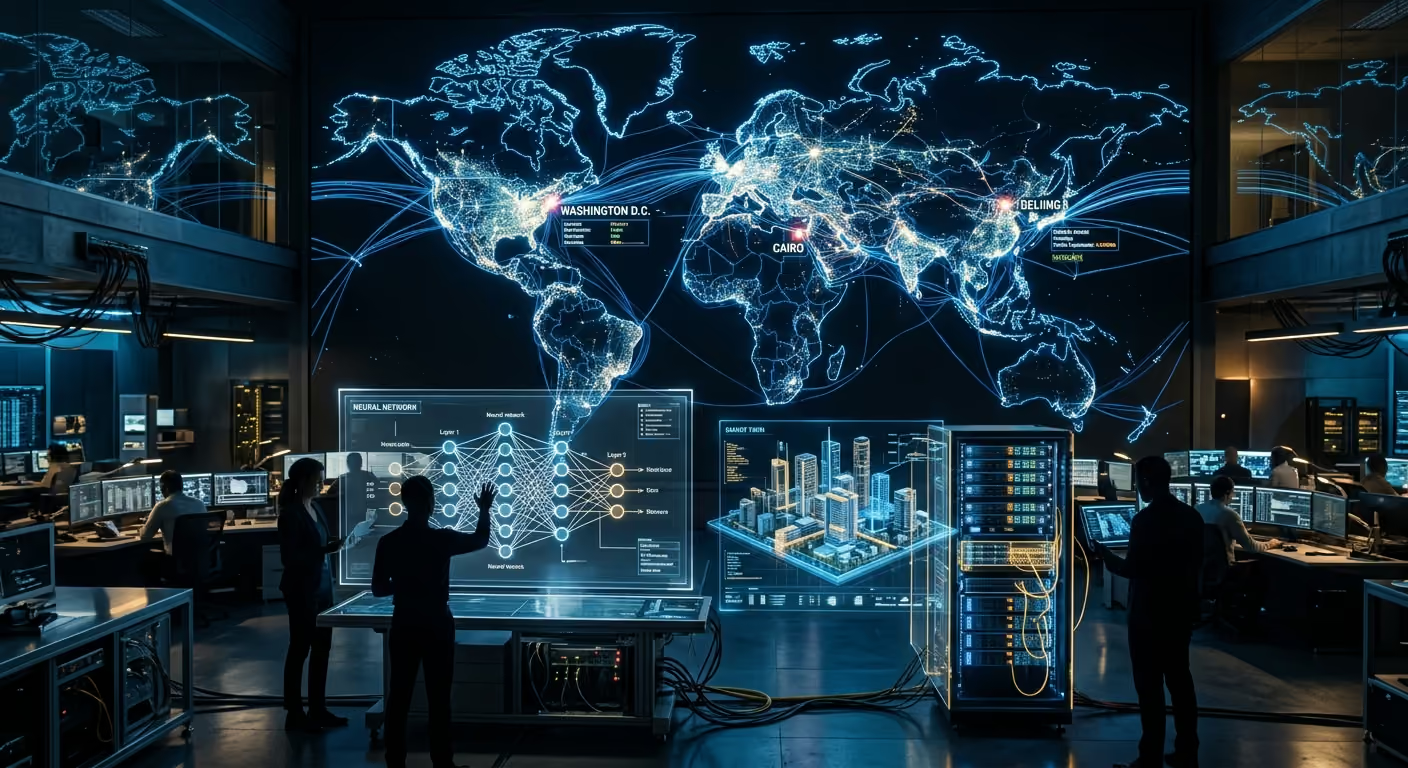
The technological divide between world powers has intensified following a sharp warning from the United States regarding Huawei's AI data center offer to Egypt. US officials cautioned that the infrastructure, proposed for military and surveillance applications, could compromise regional security networks. Despite these widening cracks, a growing consensus of policy analysts suggests that the US-China AI rivalry does not rule out cooperation, particularly in establishing global safety standards and climate mitigation efforts.
Simultaneously, AI safety and development firm Anthropic secured a significant legal victory. A US court ruled in favor of the company, striking down a federal supply-chain risk label that had threatened to restrict its enterprise integrations. This ruling is expected to bolster domestic AI deployments and clarify the legal definitions of systemic tech risk.
Labor Transformations and the AI Workforce
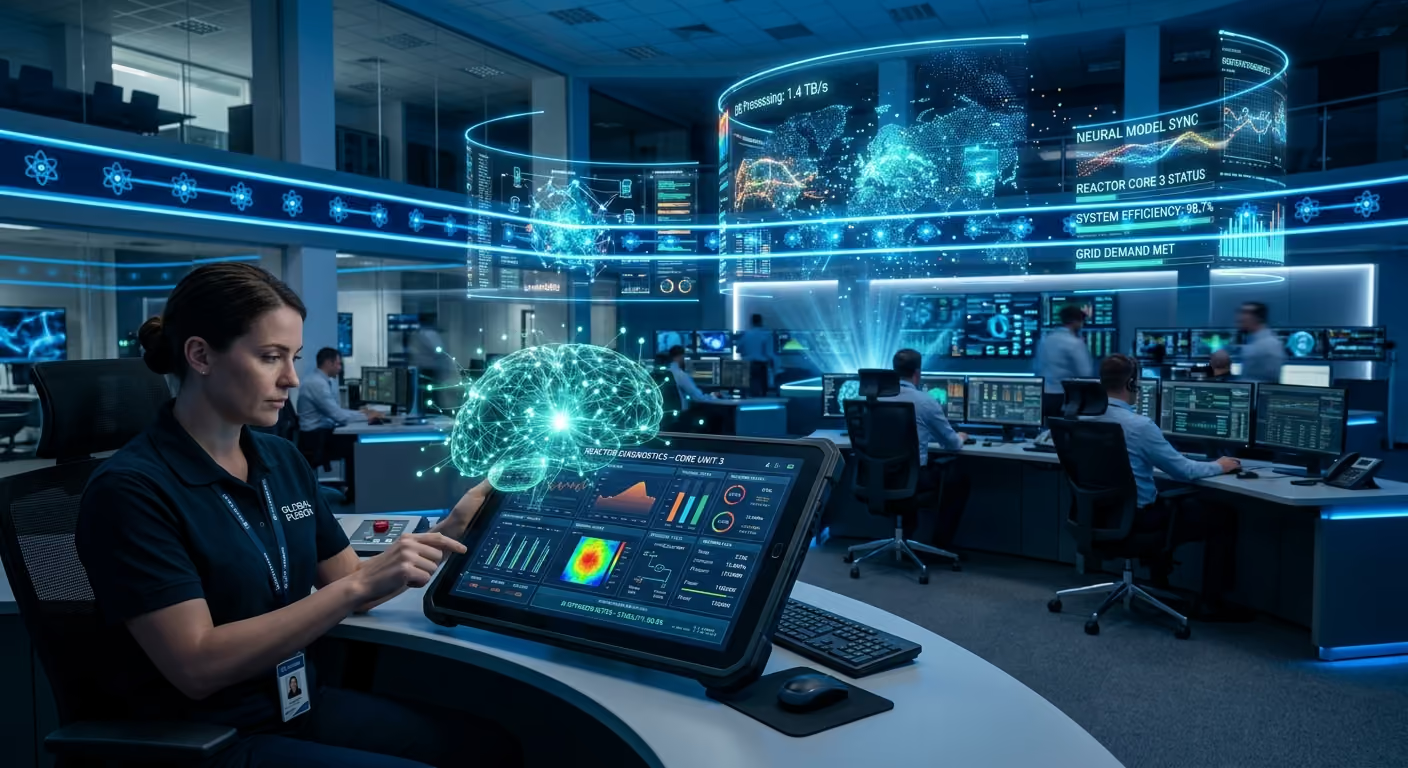
The impact of AI on employment remains a dual narrative of disruption and surprising growth. The Federal Reserve Bank of Minneapolis released an in-depth analysis on preparing workers for an uncertain AI future, advocating for proactive upskilling programs to navigate shifting roles. Meanwhile, industrial reports indicate that the technology is unexpectedly fueling a blue-collar jobs boom, specifically in data center construction, manufacturing maintenance, and localized logistics support.
On the software side, the corporate migration toward specialized agentic systems continues to accelerate. Fintech startup Cindie has launched its new AI workforce technology tailored specifically for mortgage lending, aiming to automate complex underwriting processes. On a broader industrial scale, the integration of digital twins, Building Information Modeling (BIM), and AI is actively transforming sustainable construction practices by predicting energy expenditures and raw material lifetimes.
Ethical Guardrails and Cultural Resistance
As generative capabilities become indistinguishable from reality, regulatory and cultural pushback is mounting. High-profile actors, including Nicola Coughlan and Matt Lucas, have lent their voices to a major public campaign protesting AI voice cloning, demanding stronger IP protections for creative professionals. Tech companies themselves are backing these warnings, with several leading developers raising alarms over the societal implications of unchecked audio-visual generative models.
In response to medical safety concerns, China has issued comprehensive ethical guidelines for AI medical imaging. The framework enforces strict clinical trial protocols, data privacy safeguards, and mandatory human-in-the-loop validation for all AI-supported diagnostics.
Expanding the Global Footprint
The democratization of AI development has reached new frontiers, notably with Mozambique launching its national AI association. This initiative is designed to foster a domestic tech ecosystem, ensuring that African nations actively participate in the development of regional linguistic datasets and localized machine learning frameworks rather than relying solely on Western imports.
The Bottom Line
- TL;DR Summary: Today's reports highlight intense geopolitical tech positioning, with the US cautioning Egypt over Huawei and Anthropic winning a vital domestic supply-chain court case. Even as the Federal Reserve warns of workforce uncertainty, AI-driven infrastructure is triggering a blue-collar jobs boom and specialized fintech deployments.
- AI Industry Fact: The construction and maintenance of specialized AI cooling infrastructures and edge-compute facilities are projected to increase domestic blue-collar tech labor demand by over twenty percent over the next two years.
Stay Connected for Daily AI Intelligence
Follow us to get the latest breaking artificial intelligence reports and threat analysis delivered daily.
Aibots Sdn Bhd | [Beyond Future]