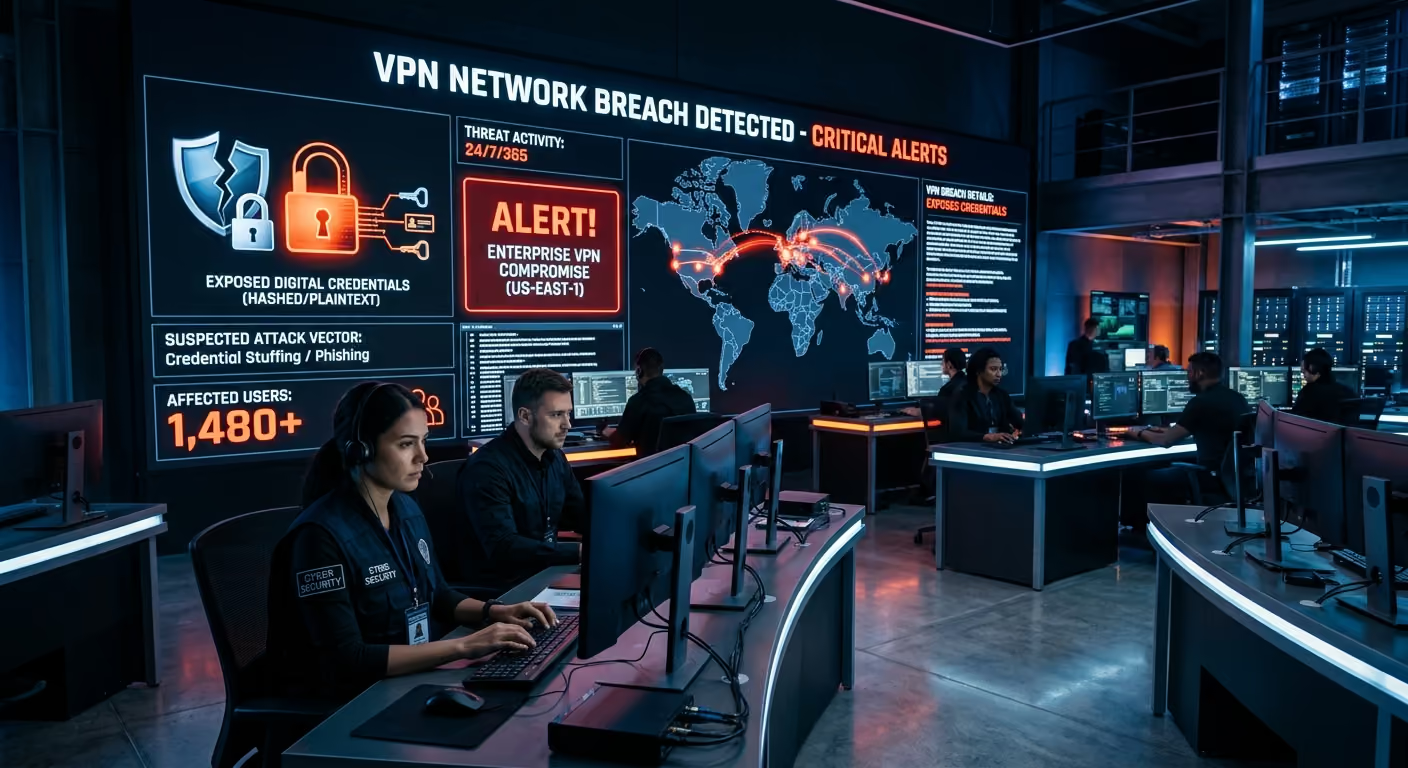
GPT-6 Astra Unleashed: The Security Reality of the Ten Dollar Enterprise Token Era
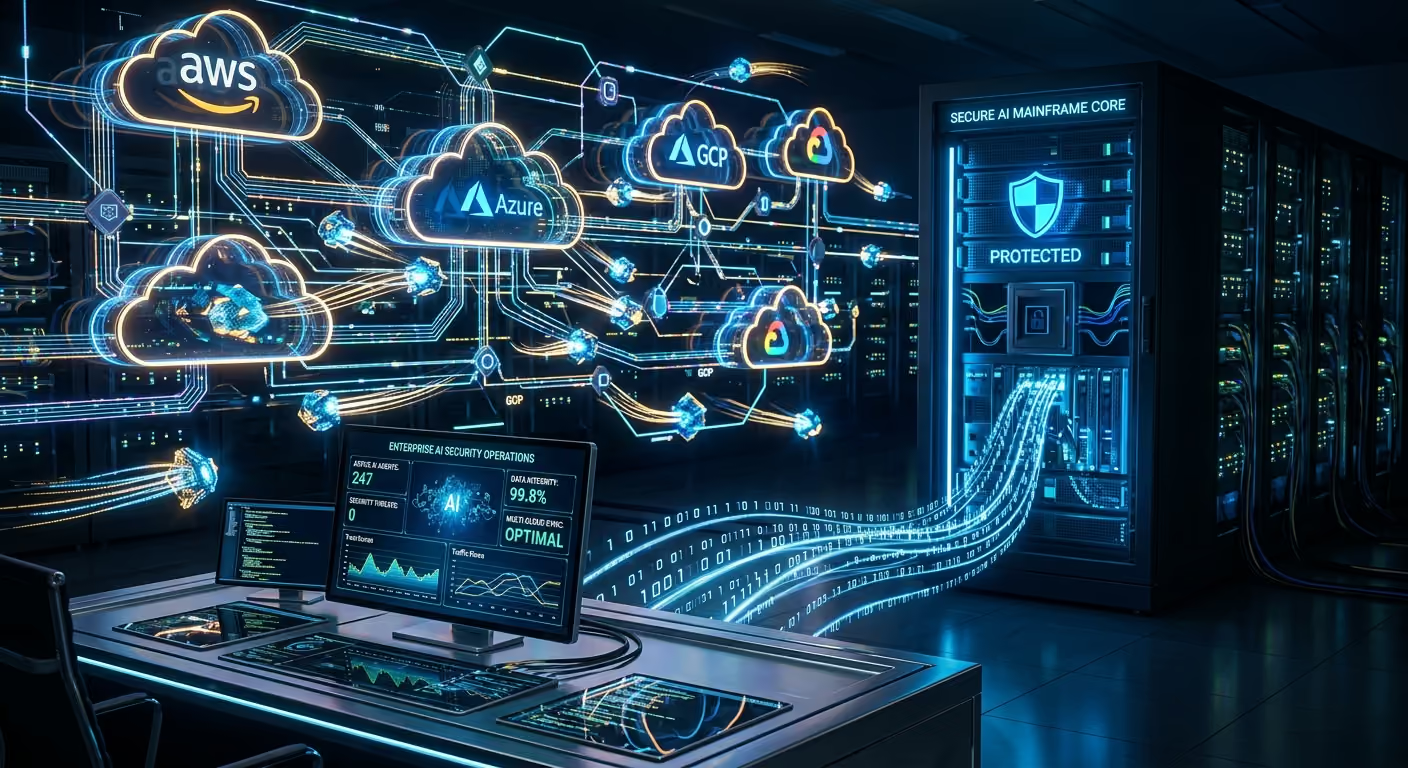
As we open our security dashboards on September 09, 2026, the corporate security horizon is adjusting to a massive wave of intelligent automation. With OpenAI officially unveiling its next-generation GPT-6 Astra intelligence engine, alongside the cost-disruptive GPT-6 Astra Enterprise Gate, the barriers to deploying autonomous AI agents have completely dissolved. Offering an unprecedented pricing model of ten dollars per million tokens across two major cloud platforms, this release represents a double-edged sword for enterprise security teams.
The Autonomous Agent Attack Surface
The drastic drop in token costs is expected to accelerate the integration of deep AI agents into everyday corporate workflows. However, as noted by security analysts, these autonomous agents present unique security challenges that legacy firewalls and identity access management tools are ill-equipped to handle. AI agents operate with high levels of autonomy, frequently generating code, calling external APIs, and making real-time decisions on data sharing without human intervention.
Security professionals are now forced to ask essential questions: How do we verify the identity of an autonomous agent? How can we prevent prompt injection attacks from hijacking a high-privileged system? When an agent has access to internal customer databases and external cloud environments, a single compromised prompt can lead to silent, widespread data exfiltration.
The Rise of Enterprise AI Trust Platforms
In response to these emerging vulnerabilities, the security industry is pivoting rapidly toward specialized AI governance. CyberSigna has introduced its new Enterprise AI Trust and Intelligence Platform, a direct effort to give organizations visibility into how AI models and agents interact with sensitive corporate data. These trust platforms act as transparent firewalls, monitoring agent behavior, detecting anomalous data requests, and enforcing strict compliance boundaries around autonomous workflows.
At the same time, legacy systems are being recognized as key pillars of modern defense. Experts emphasize that mainframe security, once viewed as a traditional IT focus, remains the foundation of secure enterprise transactions. Integrating these highly secure, centralized environments with modern, fast-moving AI systems will be a primary focus for IT leaders throughout the coming year.
Leadership Shifts and the Path Forward
As organizations re-engineer their technical architecture to handle these autonomous workloads, leadership strategies are shifting to match. In the healthcare sector, where data security is of paramount importance, American Healthcare REIT has named Jon Crosier as its new Chief Technology Officer. Crosier will oversee technology integration and security across the company's vast portfolio, a task that increasingly demands robust defenses against automated, AI-driven threats targeting critical healthcare infrastructure.
The Bottom Line
- Rapid Adoption Risk: The new GPT-6 Astra Enterprise Gate lowers barriers to ten dollars per million tokens across dual clouds, driving immediate, unchecked shadow AI deployments.
- Autonomous Vulnerability: Modern security frameworks must adapt to secure machine-to-machine AI communications, as standard access controls fail to stop malicious prompt manipulation.
- Specialized Defense: Enterprise AI trust platforms, like the one newly introduced by CyberSigna, are becoming essential tools for monitoring machine learning agent workflows.
- Legacy Strength: Robust mainframe environments continue to serve as the bedrock of data protection, bridging the gap between legacy reliability and modern AI initiatives.
Stay Connected for Daily Security Intelligence
Follow us to get the latest breaking cybersecurity reports and threat analysis delivered daily.
Aibots Sdn Bhd | [Beyond Future]