Industrial Edge Gateway Bypasses, $40M Satellite IoT Funding, and Naval UAV Carriers Take Center Stage

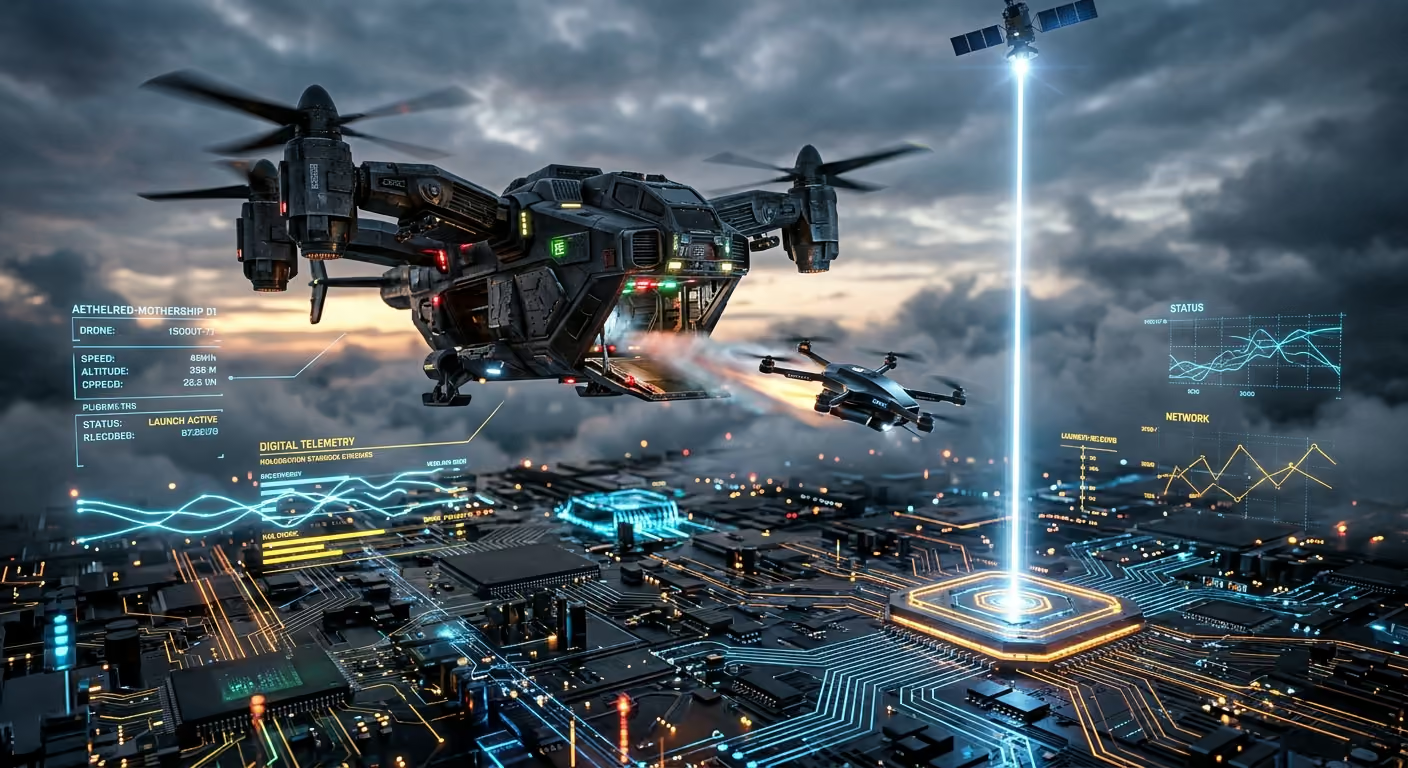
As of November 27, 2026, momentum across the edge hardware, sensor networks, autonomous drones, and connected device ecosystem is accelerating at a rapid pace. Industrial automation architectures are shedding legacy complexity, satellite networks are attracting massive expansion capital, and military and civil aerial platforms are redefining field autonomy.
Industrial Edge AI and Gateway Elimination
In factory automation, reducing latency and hardware friction between physical control systems and cloud infrastructure has become a central mandate. Schneider Electric and AWS announced a strategic push to eliminate intermediate hardware gateways connecting operational control networks directly to cloud-native predictive AI. By streamlining data pipelines straight from programmable logic controllers (PLCs) to cloud endpoints, industrial operators can deploy real-time anomaly detection without maintaining complex edge hardware layers.
Simultaneously, automotive manufacturing is forcing rapid robotic integration. General Motors launched an initiative requesting key suppliers to demonstrate explicit 20 percent automation increases within their bidding proposals. To support this demand for reliable telemetry, Treon Flow partnered with AWS IoT Core to scale vibration and thermal predictive maintenance sensors across heavy industrial machinery, targeting operational downtime prevention.
Satellite IoT Funding and Hardened Edge Storage
Industrial satellite connectivity received a substantial financial boost this week. Satellite IoT provider Myriota successfully closed a $40 million funding round designed to scale its low Earth orbit (LEO) constellation and expand worldwide sensor coverage. The investment highlights growing enterprise demand for low-cost, direct-to-orbit messaging across global logistics, asset tracking, and remote environmental monitoring.
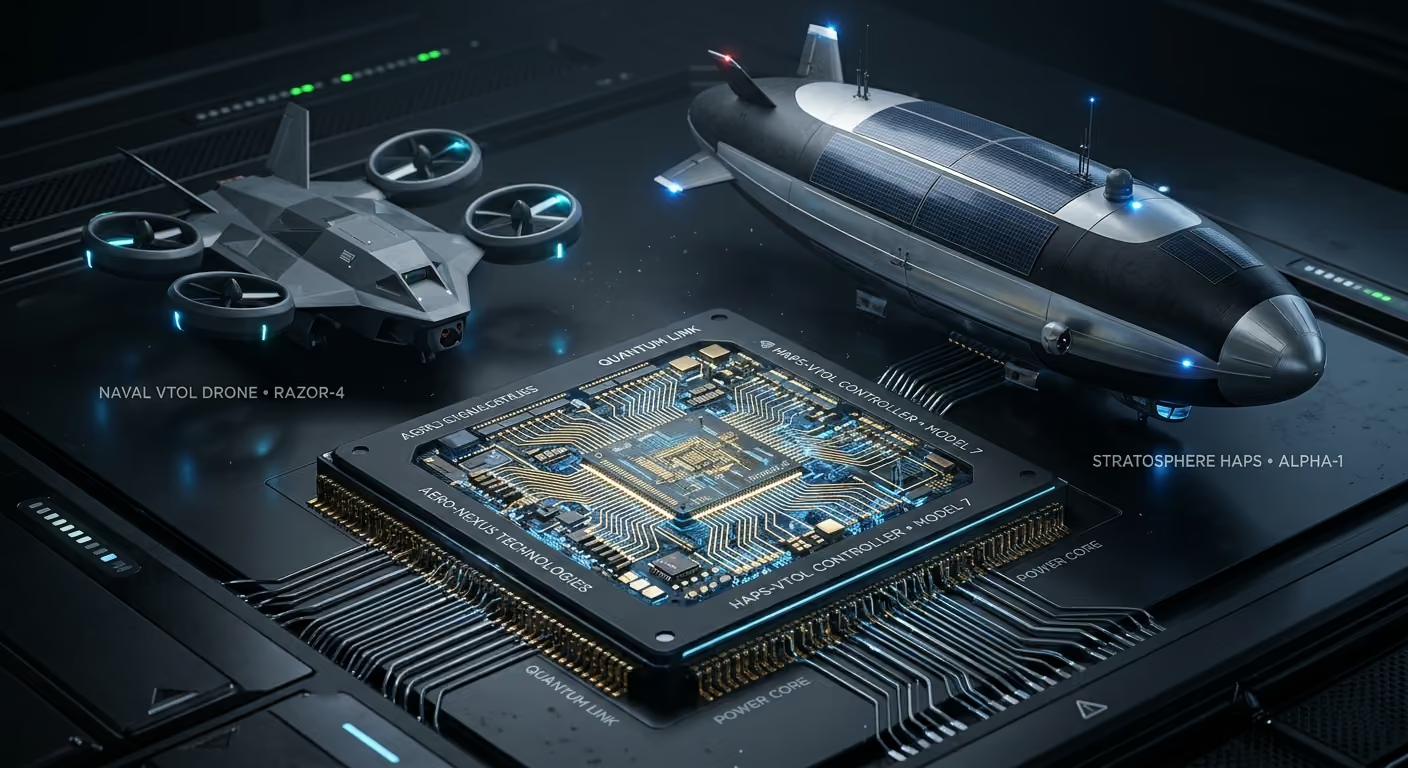
On the hardware front, TEAMGROUP INDUSTRIAL unveiled its S845 embedded storage series engineered specifically for high-stress edge computing installations. Designed to operate under severe thermal variance, extreme vibration, and power instability, the solid-state storage solution targets vehicle computing nodes, remote sensor aggregators, and outdoor smart city hubs. Supporting this silicon evolution, cellular IoT is rapidly transitioning to eRedCap (5G Reduced Capability) and eSIM technologies, equipping low-power field sensors with direct AI-ready connectivity pipelines.
Naval UAV Carriers and GPS-Denied Airframes
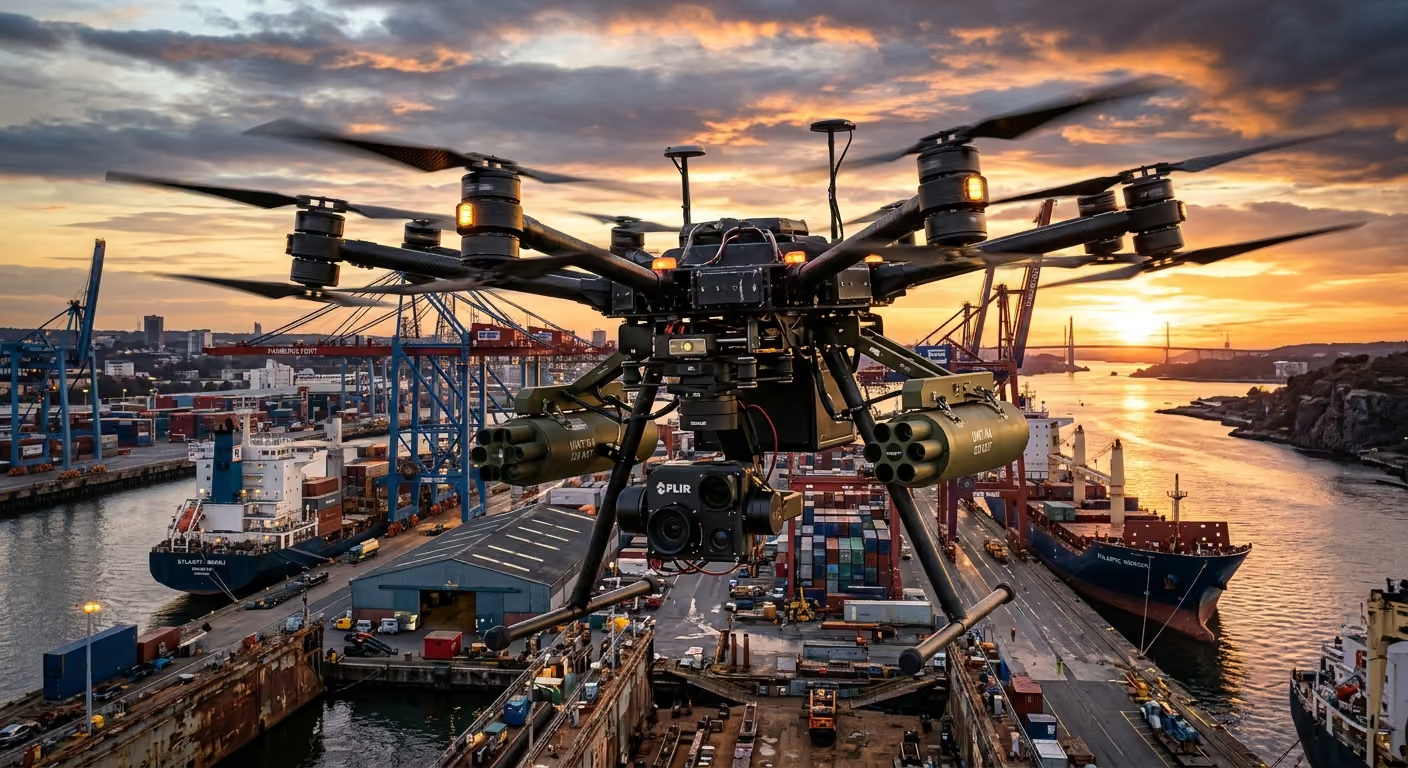
Naval warfare and tactical UAV operations marked major structural milestones this week. The Turkish Navy detailed operational plans for the TCG Anadolu, establishing the platform as the world's first dedicated unmanned aerial vehicle carrier ship designed to deploy fixed-wing combat drones from sea.
Cross-border defense technology transfers also expanded as Ukraine-based TAF Industries executed a transatlantic integration deal with Canada's Draganfly to combine flight control algorithms and ruggedized airframes. In aerial navigation research, a high school developer in Ukraine introduced an AI-powered visual navigation module for tactical UAVs that calculates flight paths entirely without GPS signals, effectively mitigating electronic warfare jamming. Additionally, NTT demonstrated indoor and subterranean drone navigation capabilities, testing autonomous quadcopters for dark, narrow sewer pipe inspections.
The Bottom Line
- Direct-to-Cloud Automation: Schneider Electric and AWS are stripping out edge gateways to link machine controllers straight to cloud AI inference engines.
- Satellite IoT Scaling: Myriota's $40 million capital infusion underscores rapid enterprise adoption of LEO direct-to-satellite sensor networks.
- Naval Airborne Innovation: The operational detailing of the TCG Anadolu establishes dedicated UAV carriers as a proven maritime defense class.
- IoT Hardware Fun Fact: NTT's subterranean sewer inspection drone utilizes localized optical flow and ultrasonic rangefinders to maintain stable flight in tight, completely dark concrete pipes where both GPS and magnetometer sensors fail completely.
Stay Connected for Weekly IoT & Edge Intelligence
Follow us to get the latest breaking Internet of Things, drone technology, sensor networks, and edge computing reports delivered weekly.
Aibots Sdn Bhd | [Beyond Future]