Industrial Edge Silicon, Stratospheric Networks, and Infrastructure Security Define Connected Hardware

As of November 06, 2026, the connected device ecosystem is witnessing major advances in ultra-low-power edge AI silicon, stratospheric connectivity networks, and specialized UAV propulsion, alongside critical security warnings across commercial infrastructure.
Edge Silicon and Industrial Connectivity Innovations
Nordic Semiconductor unveiled a new Wi-Fi and Edge AI chipset tailored specifically for battery-powered IoT devices. The hardware enables local machine learning processing directly on low-power end nodes without draining battery reserves. Simultaneously, Texas Instruments introduced a new communications chip capable of executing three distinct industrial Ethernet protocols on a single piece of silicon, significantly streamlining enterprise industrial automation deployments.
Stratospheric Platforms and High-Speed UAV Advances
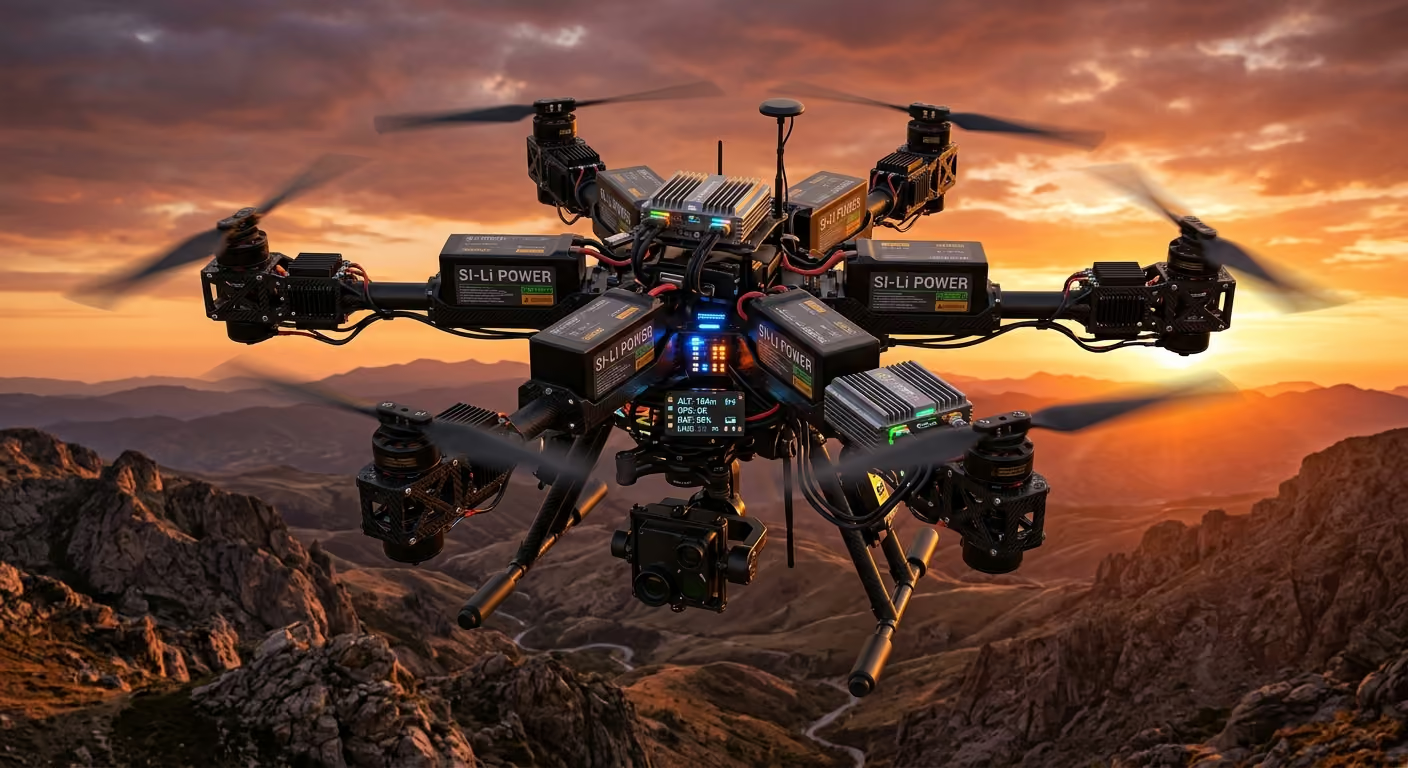
In aerial connectivity and autonomous systems, SoftBank partnered with Sceye to build a nationwide stratospheric connectivity network across Japan utilizing high-altitude platform stations (HAPS). In defense hardware, Safran turbojet propulsion was selected for new supersonic target drones, including the Falcon supersonic UAV program. In addition, France officially qualified the Aliaca VTOL UAV for naval service, expanding shipboard tactical reconnaissance capabilities.
Cellular IoT Management and Industrial Hardware Risks
Network management standards advanced as Eseye introduced AnyNet Select to support profile choice under the SGP.32 eSIM specification for global IoT deployments. However, physical hardware security remains a pressingly vulnerable area. Cyberattacks targeting connected refrigeration systems in European supermarkets demonstrated how unsecured operational technology (OT) and low-cost IoT controllers can disrupt critical commercial supply chains.
The Bottom Line
- Battery-first Edge AI: Nordic Semiconductor's new Wi-Fi and Edge AI silicon proves machine learning is migrating directly into battery-constrained end sensors.
- Multi-protocol Industrial Silicon: Texas Instruments' triple-Ethernet silicon simplifies industrial automation by reducing component counts on factory floors.
- Stratospheric Redundancy: SoftBank and Sceye demonstrate how stratospheric relays bridge geographic connectivity gaps for connected hardware.
- IoT Hardware Fun Fact: The SGP.32 specification represents the latest GSMA standard for IoT eSIM architecture, enabling remote SIM provisioning without requiring SMS channels or manual carrier swaps, making it ideal for headless industrial sensors deployed in remote regions.
Stay Connected for Weekly IoT & Edge Intelligence
Follow us to get the latest breaking Internet of Things, drone technology, sensor networks, and edge computing reports delivered weekly.
Aibots Sdn Bhd | [Beyond Future]