Sovereign Quantum Shifts: NEC Exits Hardware While US and Singapore Inject Millions into Silicon and Trapped-Ion Architectures
Today, September 10, 2026, marks a week of extraordinary polarization in the quantum hardware race, defining a clear boundary between state-supported sovereign scaling and classical corporate restructuring. While some legacy industrial giants are officially withdrawing from the high-capital hardware sprint, major governments, research coalitions, and nimble startups are scaling up with massive capital injections and novel alternative architectures.
NEC Retreats from Hardware While Fujitsu Marches Ahead
In a dramatic shift for the global quantum market, Japanese technology veteran NEC has officially halted its quantum computer hardware development programs. After decades of research, NEC cited distant pathways to commercial profitability and the soaring capital costs of maintaining competitive hardware research labs as the primary drivers for its exit.
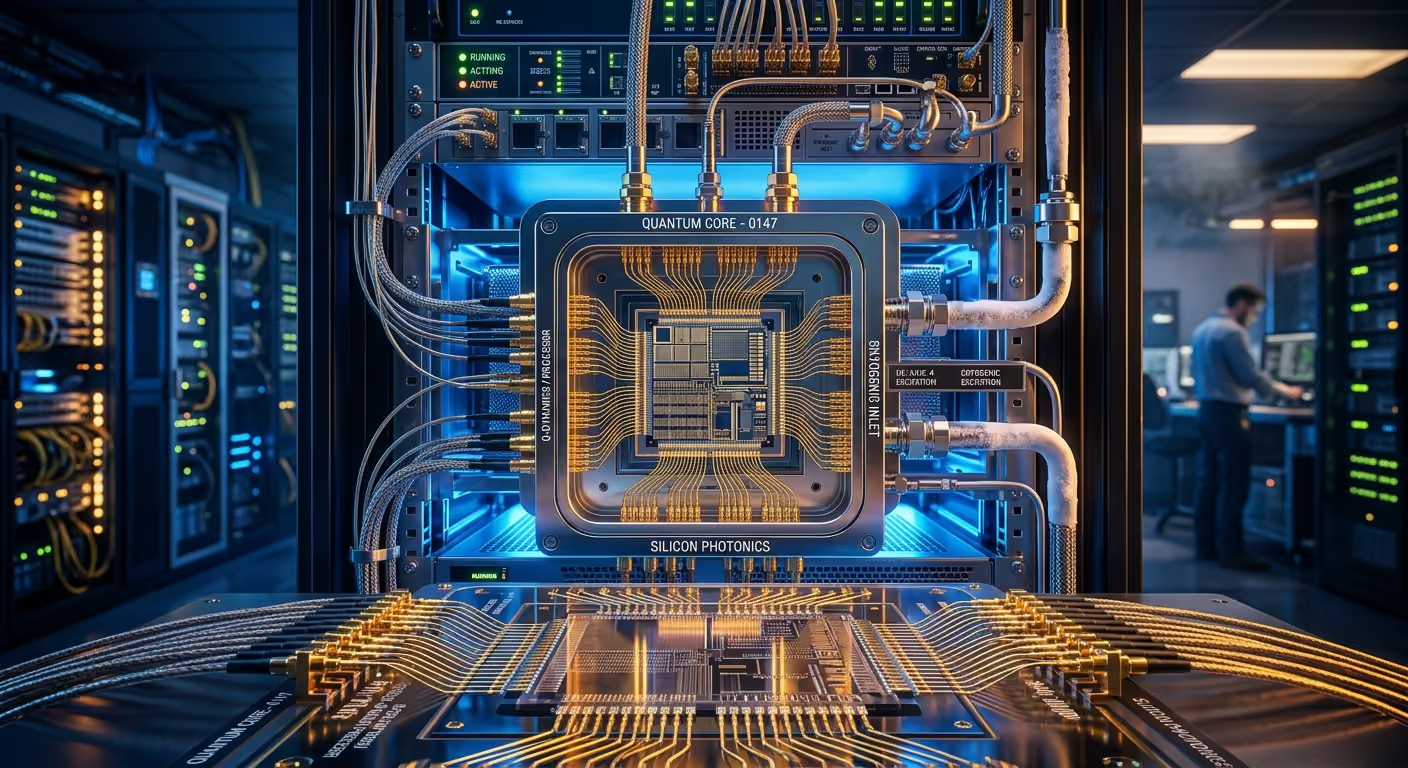
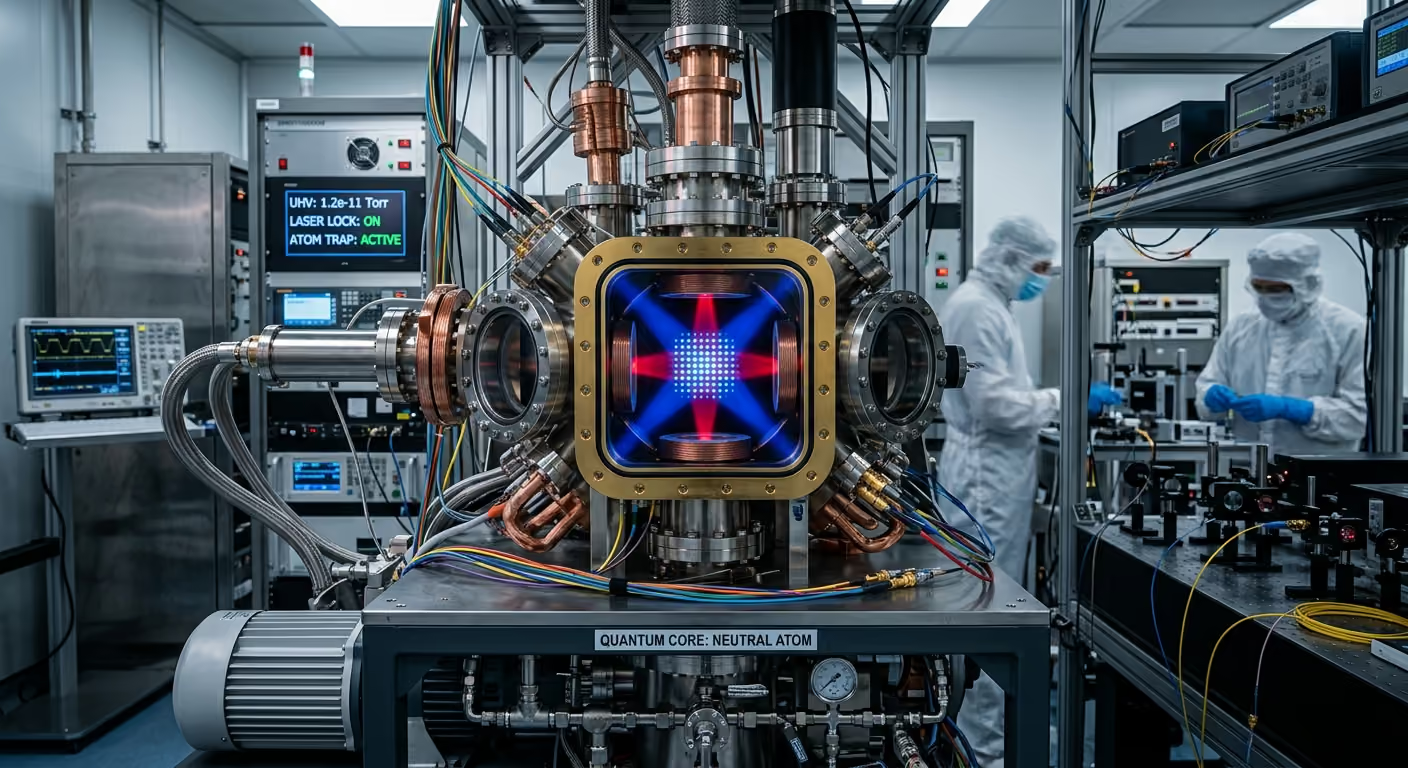
Despite NEC's departure, Japan's quantum ambitions remain highly active through Fujitsu. This week, Fujitsu unveiled the world's first chip-integrated tin-vacancy (SnV) diamond quantum computer prototype. By embedding tin-vacancy diamond spin qubits directly onto a semiconductor chip, Fujitsu has demonstrated a highly stable platform that operates at higher cryogenic temperatures than superconducting systems, significantly lowering cooling costs. Simultaneously, Fujitsu and developer Yaqumo have officially initiated hardware testing of a new neutral-atom quantum computing architecture, proving that multi-modality research is still thriving.
US and Singapore Inject Massive Capital into Sovereign Infrastructure
Sovereign backing has emerged as the decisive engine of quantum scaling, highlighted by massive national funding announcements this week. In the United States, the Biden-Harris administration accelerated its "Next-Generation Computing Revolution" by awarding a historic $100 million contract to Rigetti for advanced quantum research and development. Additionally, semiconductor manufacturing giant GlobalFoundries secured a massive $375 million subsidy targeted directly at establishing quantum computing manufacturing and packaging lines inside the US.
Across the Pacific, the Singapore Economic Development Board announced an impressive S$300 million investment aimed at expanding quantum technology research and cultivating deep-tech talent. Capitalizing immediately on Singapore's proactive stance, European hardware pioneer Universal Quantum announced it has chosen the city-state for its very first research and development center outside Europe, highlighting Singapore's rapid transformation into a critical global quantum hub.
Germany Deploys JION, the First Laser-Free Trapped-Ion System
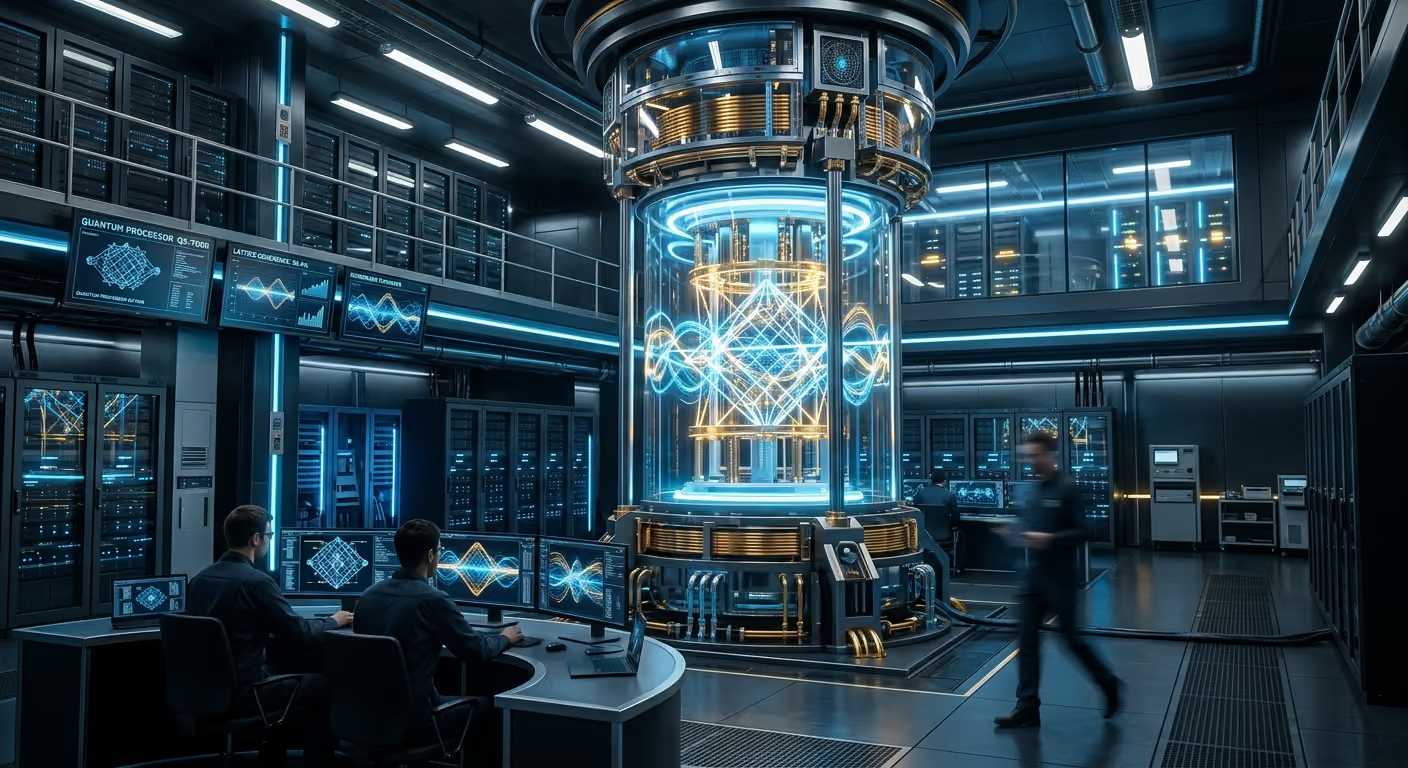
On the physical installation front, Germany has achieved a monumental integration milestone by officially deploying its first laser-free trapped-ion quantum computer, dubbed the JION system, inside a major supercomputing facility at Jülich.
Historically, trapped-ion quantum computers have relied on thousands of ultra-precise lasers to manipulate qubit states, a design that creates massive spatial and engineering bottlenecks. The JION architecture replaces these complex laser setups with integrated microwave-control electronics embedded directly into the chip. This shift dramatically reduces physical footprint, eliminates the misalignment issues caused by external vibrations, and presents a highly scalable path for installing quantum processing units directly alongside traditional high-performance computing clusters.
Corporate Partnerships Multiply: Aramco, KISTI, and IonQ
Strategic industrial alliances are actively laying the groundwork for commercial deployment. Saudi energy giant Aramco signed a major quantum pact with Quantinuum to develop specialized algorithms for optimizing energy grids, refining processes, and testing novel chemical compounds.
Concurrently, the Korea Institute of Science and Technology Information (KISTI) announced that IonQ's next-generation "Tempo" quantum computer is officially scheduled to go online at its national facility by April 2027, forming a core pillar of South Korea's unified artificial intelligence, supercomputing, and quantum data architecture.
The Bottom Line
- Industry Realignment: NEC has officially halted its physical quantum hardware development, showcasing the brutal capital demands of the hardware race, while Fujitsu pushes forward with a novel tin-vacancy diamond spin prototype.
- State-Level Funding Surges: The US injected $100 million into Rigetti and $375 million into GlobalFoundries, while Singapore committed S$300 million to secure its spot as an international deep-tech hub.
- Engineering Breakthrough: Germany deployed JION, a laser-free trapped-ion quantum computer at Jülich, proving that microwave-based control can bypass traditional optical scaling bottlenecks.
- Quantum Computing Fun Fact: Tin-vacancy centers in diamonds are highly valued because they possess a physical symmetry that protects qubits from environmental noise. This allows them to maintain coherence at temperatures up to 10 Kelvin, which is much warmer than the fraction-of-a-Kelvin temperatures required by superconducting qubits.
Stay Connected for Weekly Quantum Intelligence
Follow us to get the latest breaking quantum computing reports and technical analysis delivered weekly.
Aibots Sdn Bhd | [Beyond Future]