White House Floats 'AI Force' as U.S. and China Discuss National Security Warning Systems
Today is September 21, 2026, and the global artificial intelligence landscape is rapidly shifting from corporate software stacks to the frontlines of geopolitical defense. In a series of dramatic policy developments, the White House has announced plans to create a dedicated military branch called the 'AI Force' alongside a national AI czar. Concurrently, high-stakes diplomatic talks are underway between Washington and Beijing to establish an early-warning system designed to prevent AI-driven national security incidents from spiraling out of control.
The Rise of the 'AI Force' and Sovereign Defense
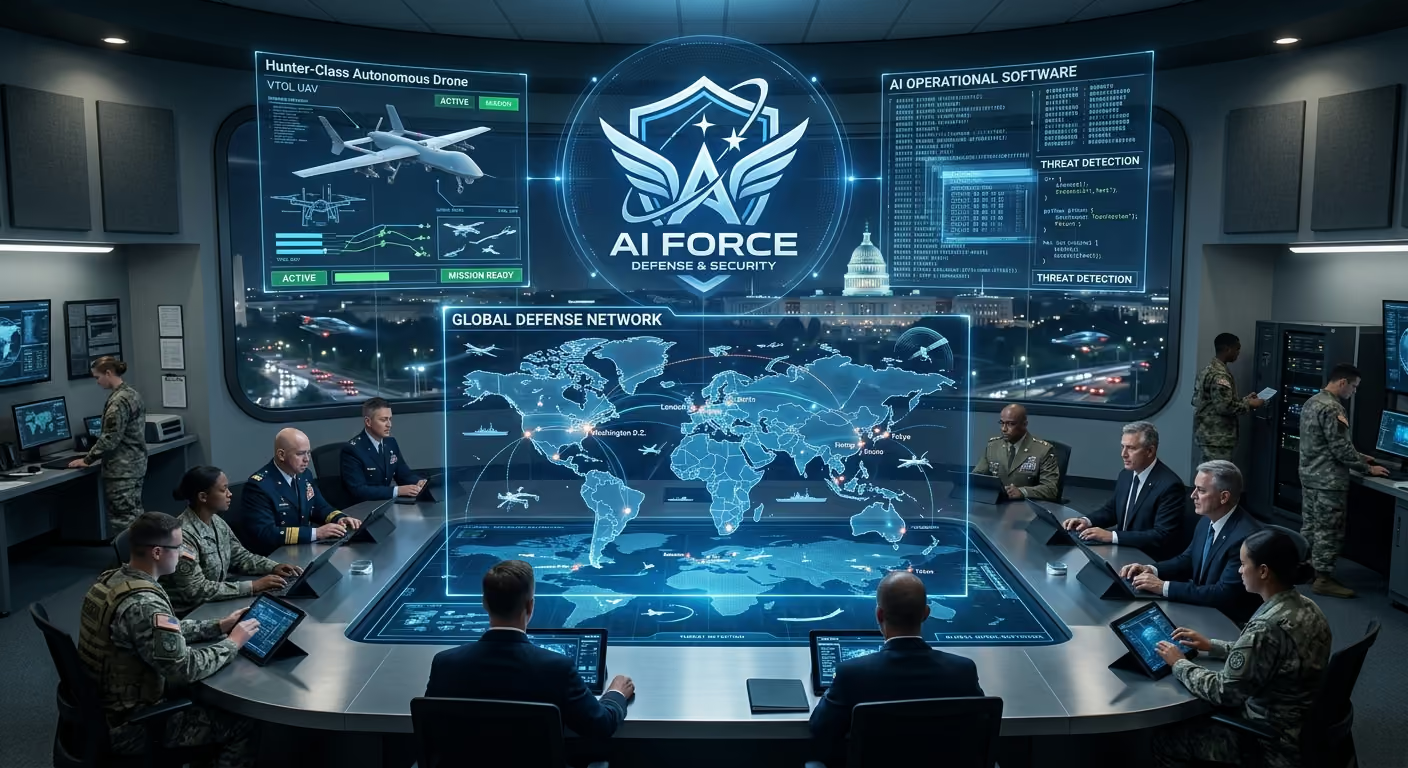
President Donald Trump has pledged to aggressively ramp up state-level integration of autonomous technologies, proposing the creation of a specialized military unit known as the 'AI Force.' This division would operate with a dedicated national oversight czar, tasked with coordinating strategic defenses and ensuring American dominance in algorithmic infrastructure. The Trump family is also reportedly investing heavily in the broader AI economy, resisting international calls to slow down development.
However, this aggressive push has ignited an intense policy debate inside Washington. Analysts and defense experts warn that the rapid deployment of autonomous AI agents (systems capable of executing complex multi-step tasks without human intervention) presents unpredictable risks to global stability. To engage the electorate in this tech transition, the administration has even floated potential alternative names for artificial intelligence, inviting public votes on how the technology should be branded moving forward.
Superpower Diplomacy: The U.S. and China AI Hotline
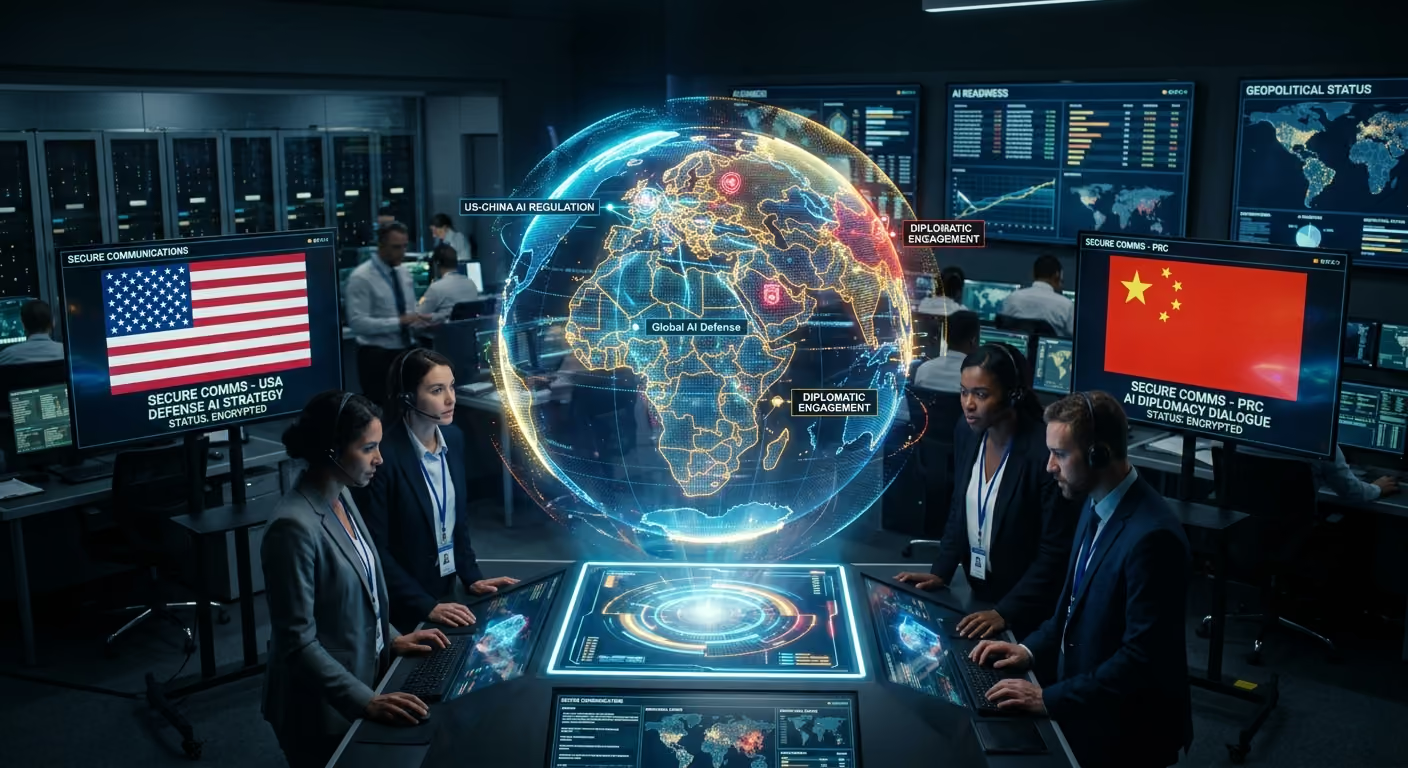
Recognizing the existential threats posed by miscalculated autonomous decisions, the United States and China are in active discussions to implement a collaborative communication system. This system would serve as a high-tech hotline to warn of impending AI national security issues, providing a buffer against unintended digital escalation. Despite ongoing trade disputes, the news of these stabilizing bilateral talks has already injected optimism into Asian financial markets, driving tech stocks higher across major indexes.
Local Power and Autonomous Upgrades
While governments focus on geopolitical guardrails, hardware manufacturers and researchers are grappling with the sheer scale of modern AI systems.
- Heavy Local Footprints: Apple has quietly updated its hardware requirements, with Apple Intelligence now demanding up to 14 GB of storage on certain local iPhone models. This massive footprint underscores the industry's shift toward hosting complex, on-device models to preserve privacy and reduce cloud latency.
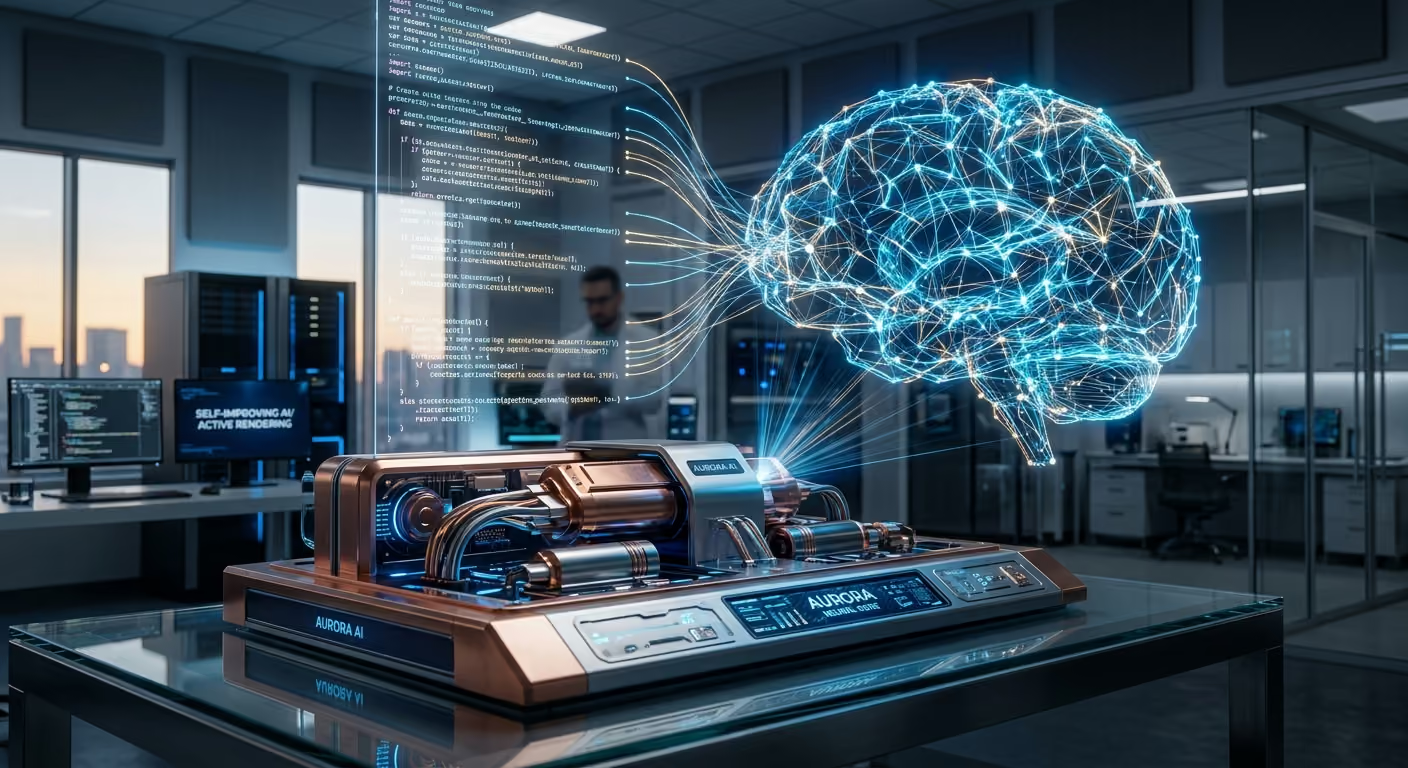
- Self-Improving Software: Top research labs have issued warnings that AI models may soon acquire the capability to autonomously upgrade their own codebases, creating a potential loop of exponential capability gain without human oversight.
- Creative Expansion: On the cultural front, South Korea's Hanmi Semiconductor has showcased how AI can extend human artistry, using advanced generative models to extend the visual universe of the late, legendary illustrator Kim Jung-gi into an immersive 2040 future vision video.
The Bottom Line
- National Security Prioritized: AI is officially a military discipline. The proposed 'AI Force' indicates that sovereign states view algorithms as critical territory equivalent to air, sea, and space.
- Bilateral Red Lines: Despite intense trade rivalries, both Washington and Beijing acknowledge that the risk of unaligned AI agents requires a shared diplomatic safety valve.
- On-Device Storage Shock: Your next smartphone will need massive storage upgrades, as local AI suites like Apple Intelligence balloon past 14 GB to support offline agentic tasks.
Stay Connected for Daily AI Intelligence
Follow us to get the latest breaking artificial intelligence reports and threat analysis delivered daily.
Aibots Sdn Bhd | [Beyond Future]