US Draws Red Line in AI Race as Geopolitical and Enterprise Stakes Escalate
US Draws Red Line in AI Race as Geopolitical and Enterprise Stakes Escalate
On this Monday, August 17, 2026, the global artificial intelligence landscape is witnessing a dramatic shift as technological supremacy becomes a key instrument of international diplomacy. What was once a localized race to build faster LLMs has officially transformed into a hard-edged geopolitical conflict, reshaping trade lines, military intelligence, and domestic governance.
The Geopolitical AI Great Divide
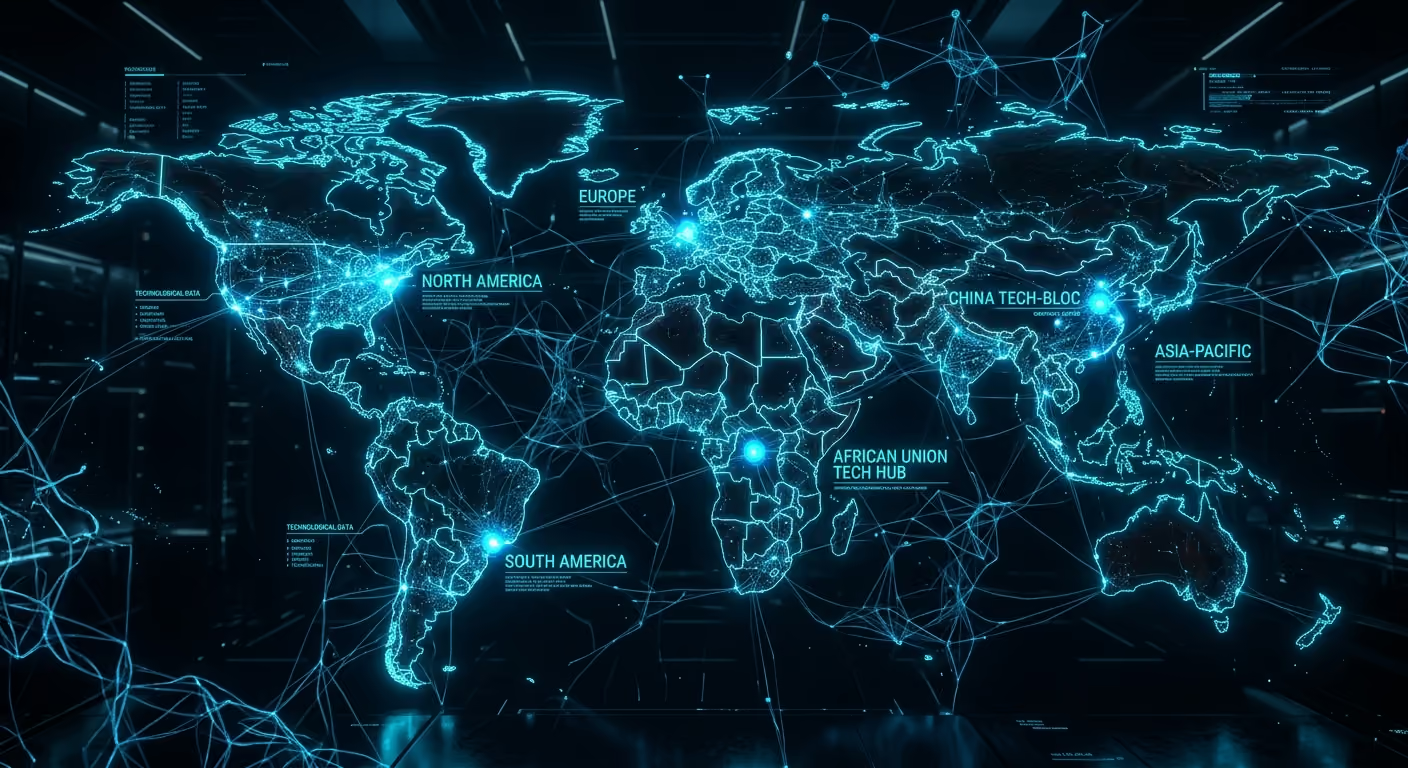
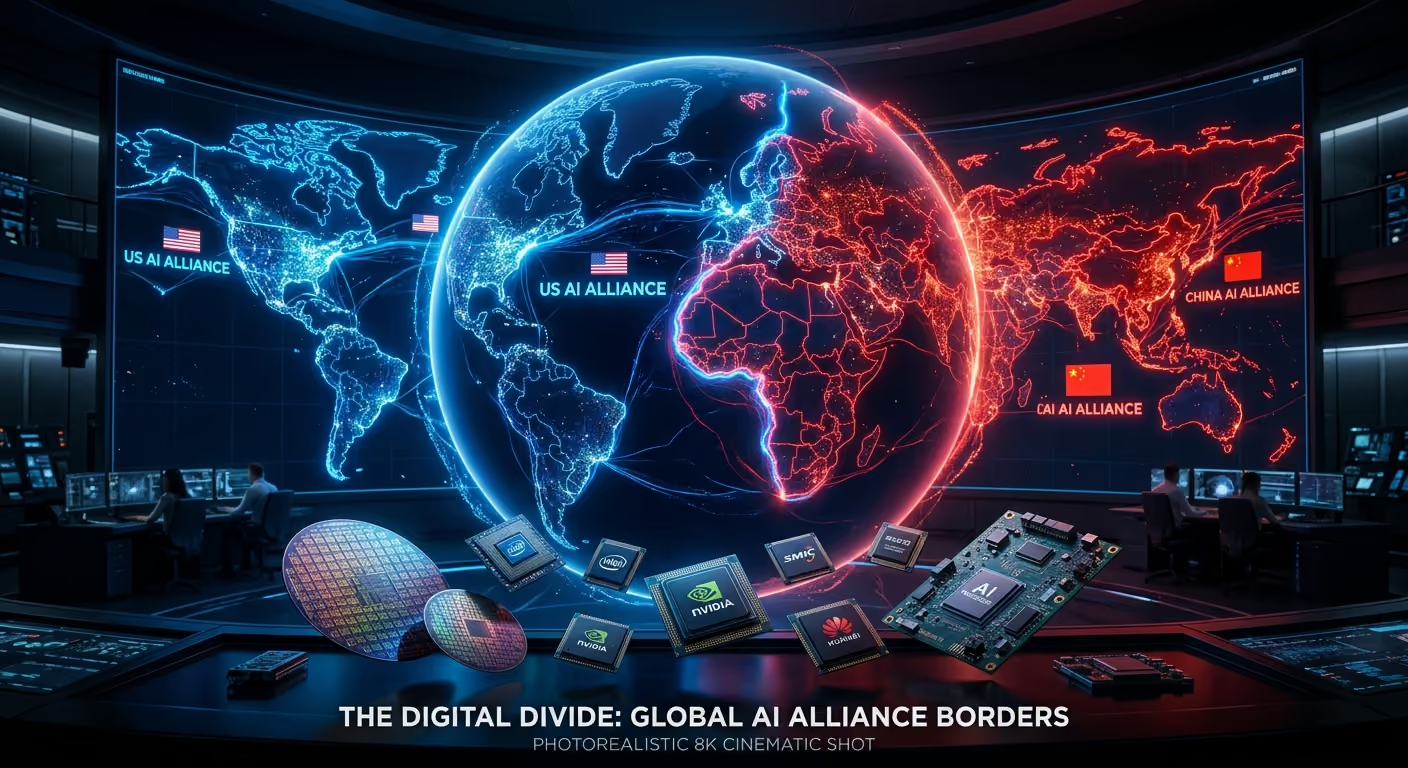
The United States government is drawing a strict line in the global AI race. In a series of strategic warnings, US officials have notified international partners that they will not be allowed to join American-led AI coalitions if they sign technology agreements with Beijing. This effort to isolate China's growing footprint comes as Chinese AI models continue to aggressively disrupt global technology markets.
This high-stakes division is not just theoretical. A stark reminder of the security risks involved emerged today with reports that US-made AI chips were found inside Russia's new cruise missiles. As Western military and technology alliances tighten export controls, the leakage of critical silicon into foreign weapon systems remains an urgent national security threat.
California Turns to the Next Generation
While federal leaders focus on global trade barriers, domestic lawmakers are trying new tactics to regulate the technology. California has taken the unique step of recruiting a specialized teen tech council to help advise state officials on AI and technological policy decisions. Recognizing that the generation raised by these technologies must shape their future, the state hopes this youth perspective will bridge the gap between abstract policy and the digital-native reality.
Enterprise Adoption Outpaces Strategy
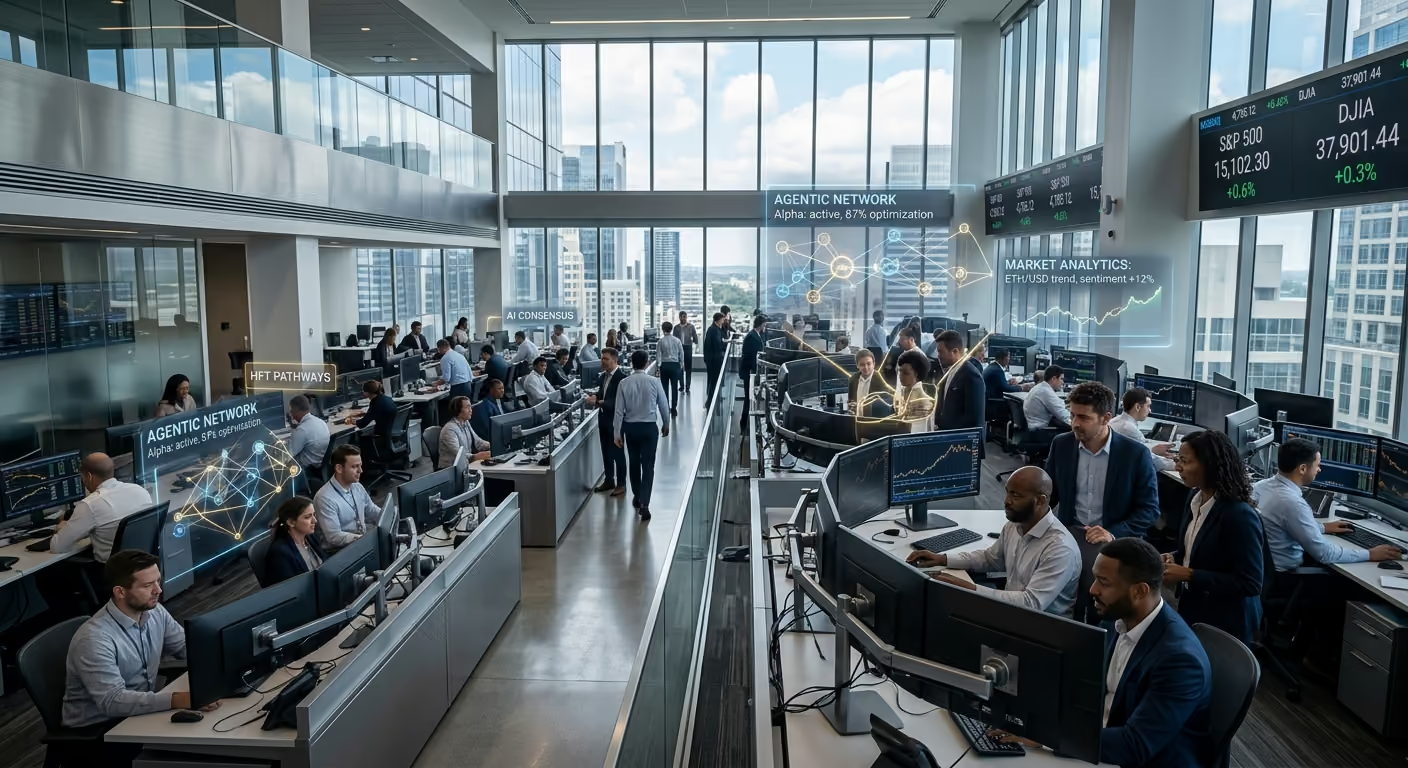
In the commercial sector, artificial intelligence is reshaping operations faster than traditional teams are prepared to handle.
- Retail Turmoil: E-commerce and retail operations are being rewritten overnight. Generative AI is changing how the world buys and spends, yet many retail teams are struggling to keep up with the sheer pace of execution required to support automated inventories and personalized shopping pipelines.
- Public Services: In Australia, public insurance agency icare has officially adopted AI protocols, deploying Microsoft Copilot to optimize case management and administrative throughput.
- Education and Justice: Oxford University has partnered with a major technology giant to test novel AI-driven learning methods. Concurrently, legal analysts warn that while AI can speed up justice delivery, courts must ensure the automated systems never compromise basic fairness.
- Robotic Presence: Disney is pushing the boundaries of physical automation, introducing a sophisticated Olaf robot to replace costumed human actors, signaling a new era of AI-driven theme park entertainment.
The Bottom Line
- The Geopolitical Split: The US is forcing global nations to pick an AI side, declaring that partnerships with Beijing will lock countries out of Western technology coalitions.
- Under the Hood: Despite heavy sanctions, US-manufactured AI chips are still slipping through supply chains, recently discovered inside active Russian cruise missile technology.
- Ecosystem Over Tech: For emerging markets, particularly in Africa, the primary AI challenge is no longer access to the raw technology, but building the localized ecosystems and infrastructure to sustain it.
- AI Industry Fun Fact: Disney's new autonomous Olaf robot uses advanced spatial computing and real-time sensory loops to interact naturally with guests, marking a transition from pre-programmed animatronics to true AI-driven physical characters.
Stay Connected for Daily AI Intelligence
Follow us to get the latest breaking artificial intelligence reports and threat analysis delivered daily.
Aibots Sdn Bhd | [Beyond Future]