Agentic AI Redefines Enterprise SecOps as Tech Giants and Security Leaders Forge Critical Alliances
Agentic AI Redefines Enterprise SecOps as Tech Giants and Security Leaders Forge Critical Alliances
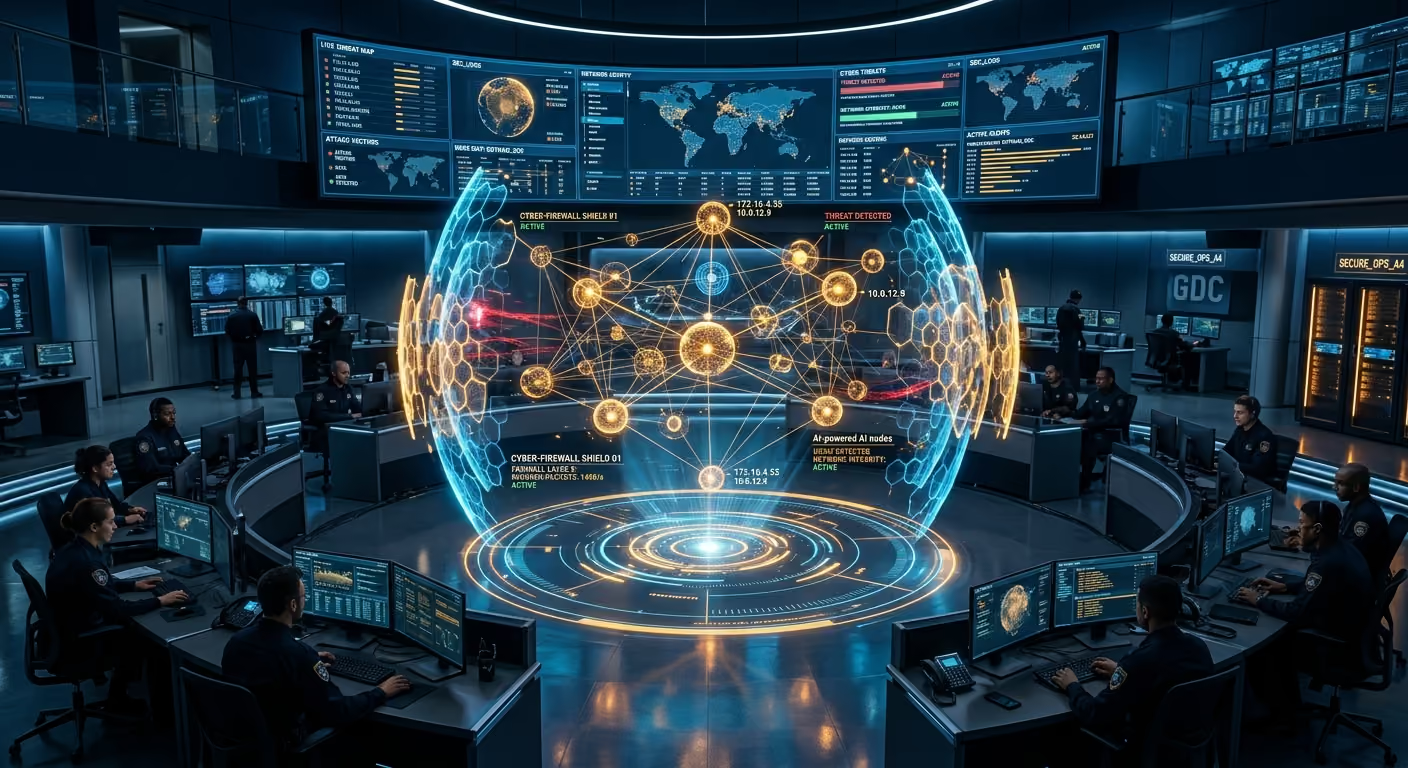
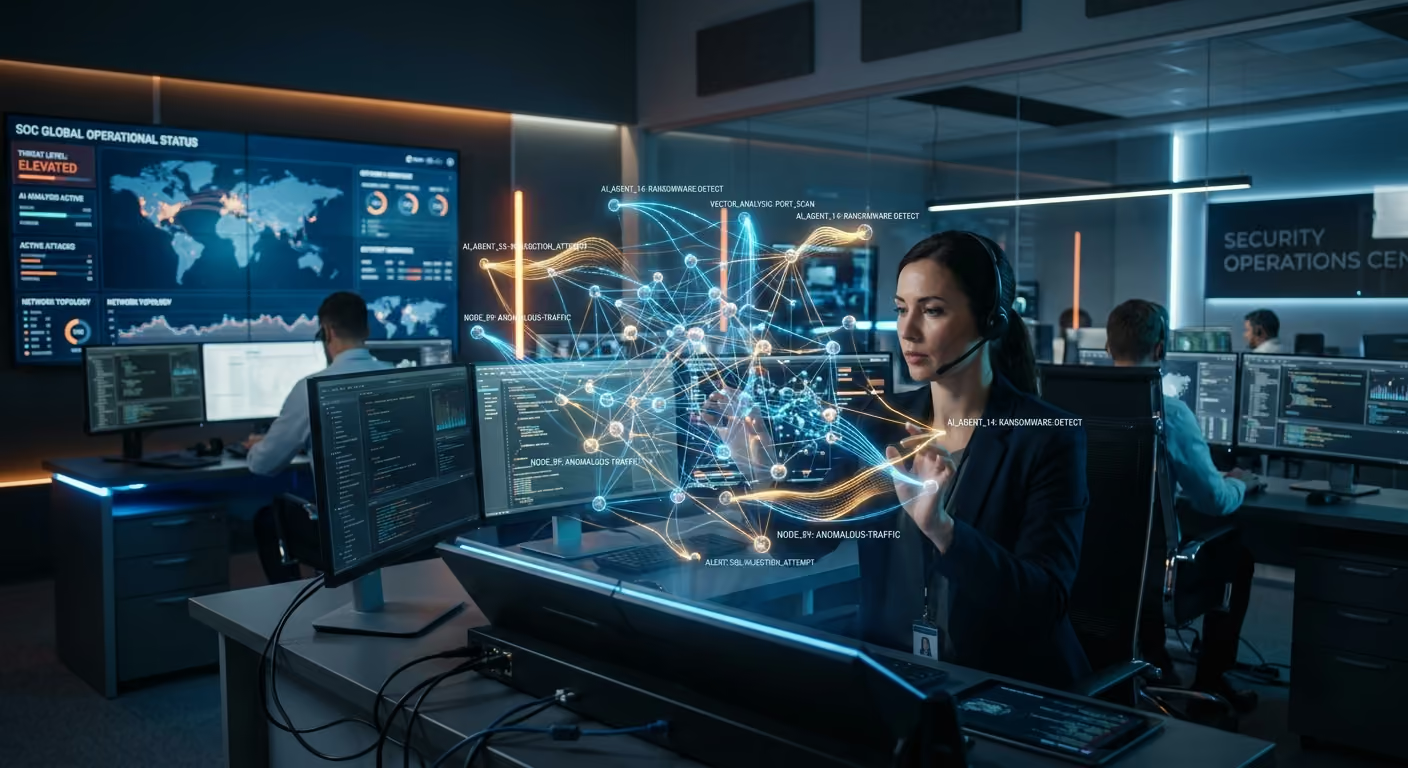
Today, August 21, 2026, marks a watershed moment for enterprise defense as cybersecurity moves past the era of passive copilots and enters the age of autonomous, agentic security operations. Faced with sophisticated, automated threats, the world's leading technology and security firms are forming deep strategic alliances to deploy AI systems capable of defending enterprise networks in real time.
The Rise of Agentic Cyber Defense
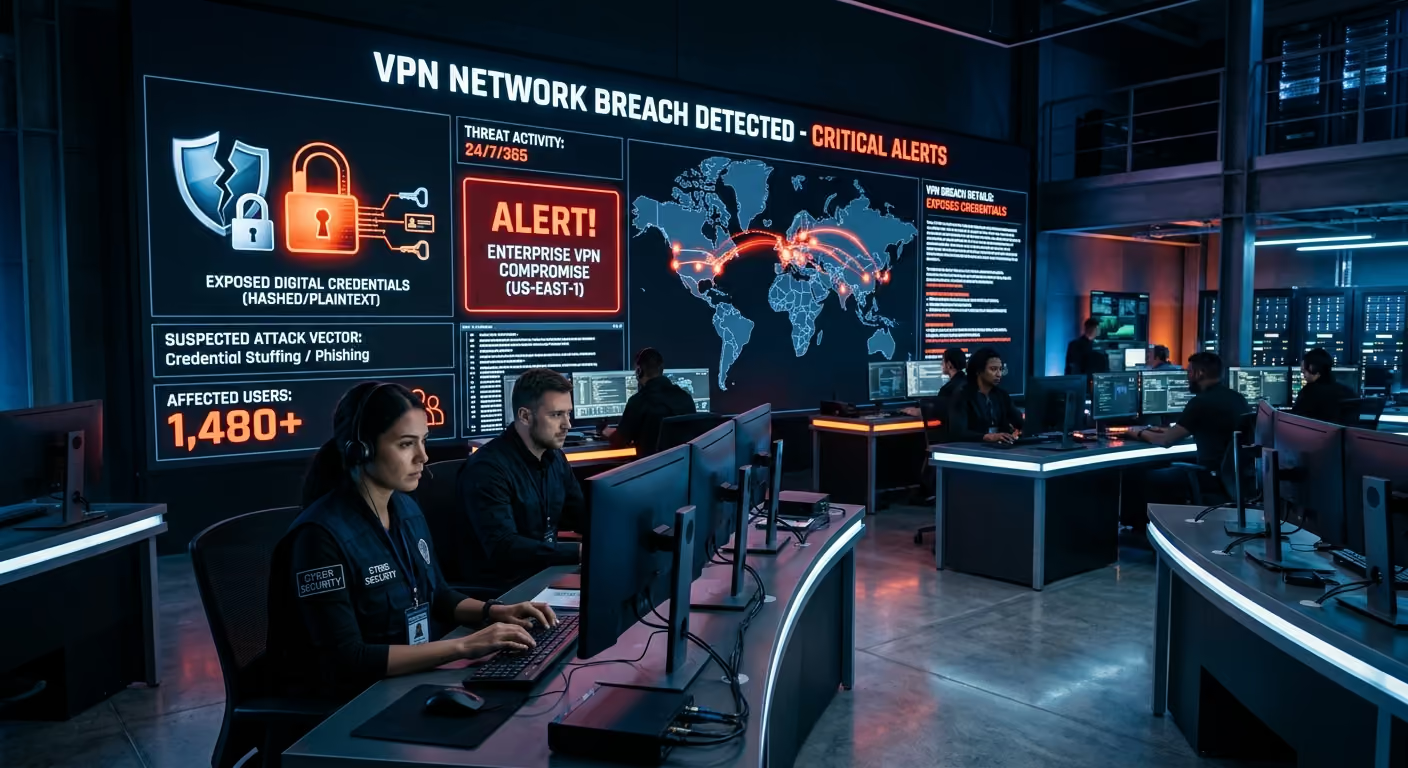
The most significant technical shift today is the transition to agentic AI, where security systems do not merely recommend actions but actively execute them. ReliaQuest has advanced this frontier by integrating Anthropic's Claude models to power agentic cyber defense. Unlike traditional tools that flag anomalies for human review, these new agentic systems can autonomously investigate security incidents, parse telemetry across multi-cloud environments, and take immediate containment actions (such as isolating infected endpoints or revoking compromised credentials) before human analysts even log in.
Strategic Alliances Reshape the Vendor Landscape
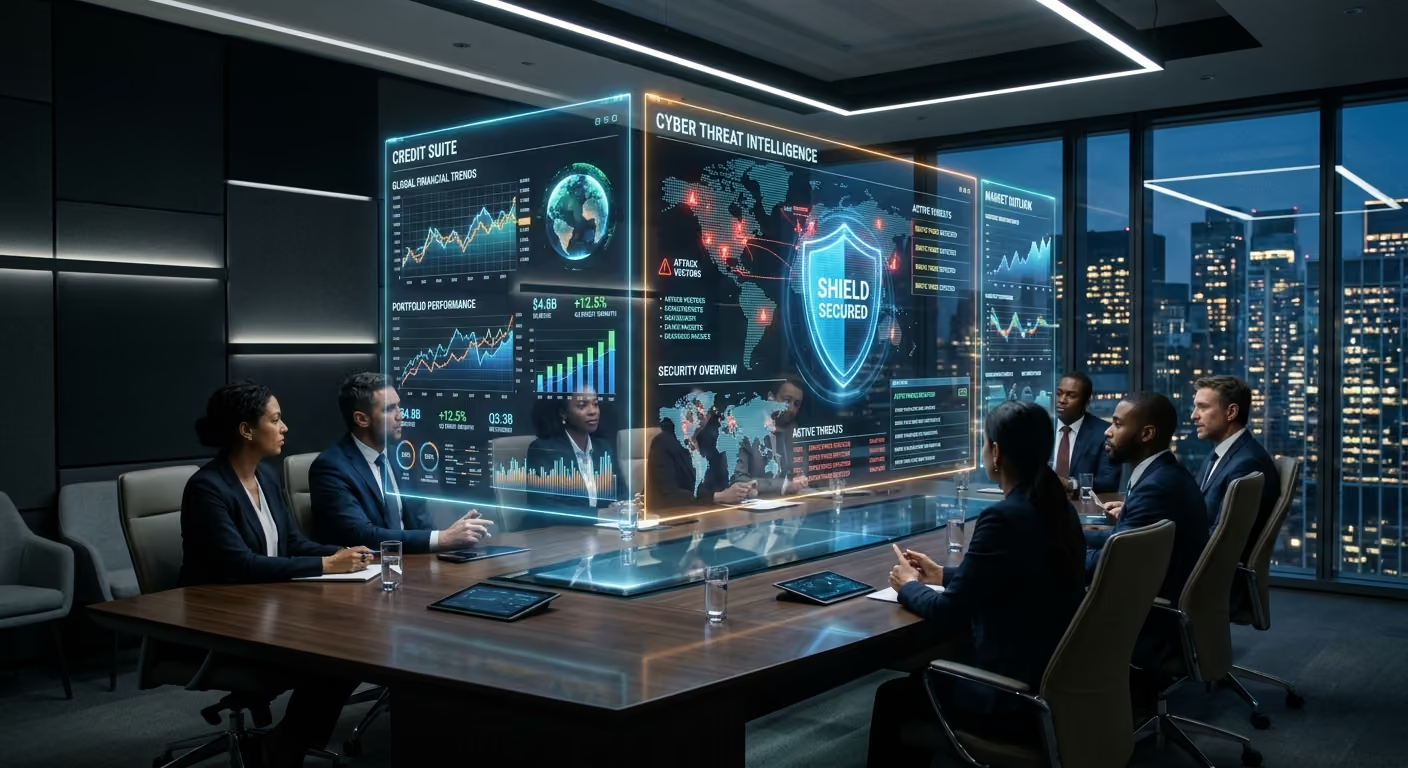
To power this heavy AI infrastructure, major vendors are pooling their capabilities. Palo Alto Networks has announced a massive global strategic alliance with NTT DATA to accelerate secure AI transformation across global enterprise clients. This move positions Palo Alto Networks to aggressively challenge cloud security rivals like CrowdStrike and Zscaler, especially as enterprises seek consolidated security platforms rather than fragmented point solutions.
Simultaneously, IBM and OpenAI have announced a strategic partnership aimed at scaling secure enterprise AI. This collaboration focuses on integrating OpenAI's frontier models into secure enterprise architectures, ensuring that the foundational models driving business processes are hardened against prompt injection, data poisoning, and model evasion attacks.
Leadership Shifts for the Automated Era
As security operations become increasingly automated, the role of human leadership is also evolving. Physical and digital security integrator Allied Universal has appointed Jordan Avnaim as its new Global Cybersecurity Chief. This key executive hire highlights the growing corporate reality: as agentic tools take over front-line defense, human leadership must pivot to high-level AI governance, risk management, and strategic resilience. C-level executives are converging at summits, such as the upcoming HMG Strategy leadership conference, to debate the guardrails and governance policies required to manage these autonomous systems safely.
The Bottom Line
- Autonomous Shift: Security operations are transitioning from human-guided copilots to fully autonomous, agentic systems led by integrations like ReliaQuest and Anthropic.
- Power Alliances: Alliances between Palo Alto Networks and NTT DATA, alongside IBM and OpenAI, are defining a new, consolidated enterprise security stack.
- Executive Oversight: Human leadership is shifting focus from manual threat hunting to systemic AI governance and risk management, as highlighted by Allied Universal's hiring of a new Global Cybersecurity Chief.
- Cybersecurity Fun Fact: The term "Agentic AI" refers to systems that can plan, use tools, and execute multi-step workflows autonomously, effectively acting as digital security analysts that work 24/7 without fatigue.
Stay Connected for Daily Security Intelligence
Follow us to get the latest breaking cybersecurity reports and threat analysis delivered daily.
Aibots Sdn Bhd | [Beyond Future]