The Autonomous Threat Front: OpenAI's Astra, CyberAgents, and the Decryption Shadow

This morning, September 08, 2026, the global cybersecurity landscape faces a profound dual challenge: the rise of highly autonomous AI systems and the invisible, accelerating threat of quantum-era data harvesting.
The Rise of GPT-6 Astra and the CyberAgent Security Paradigm
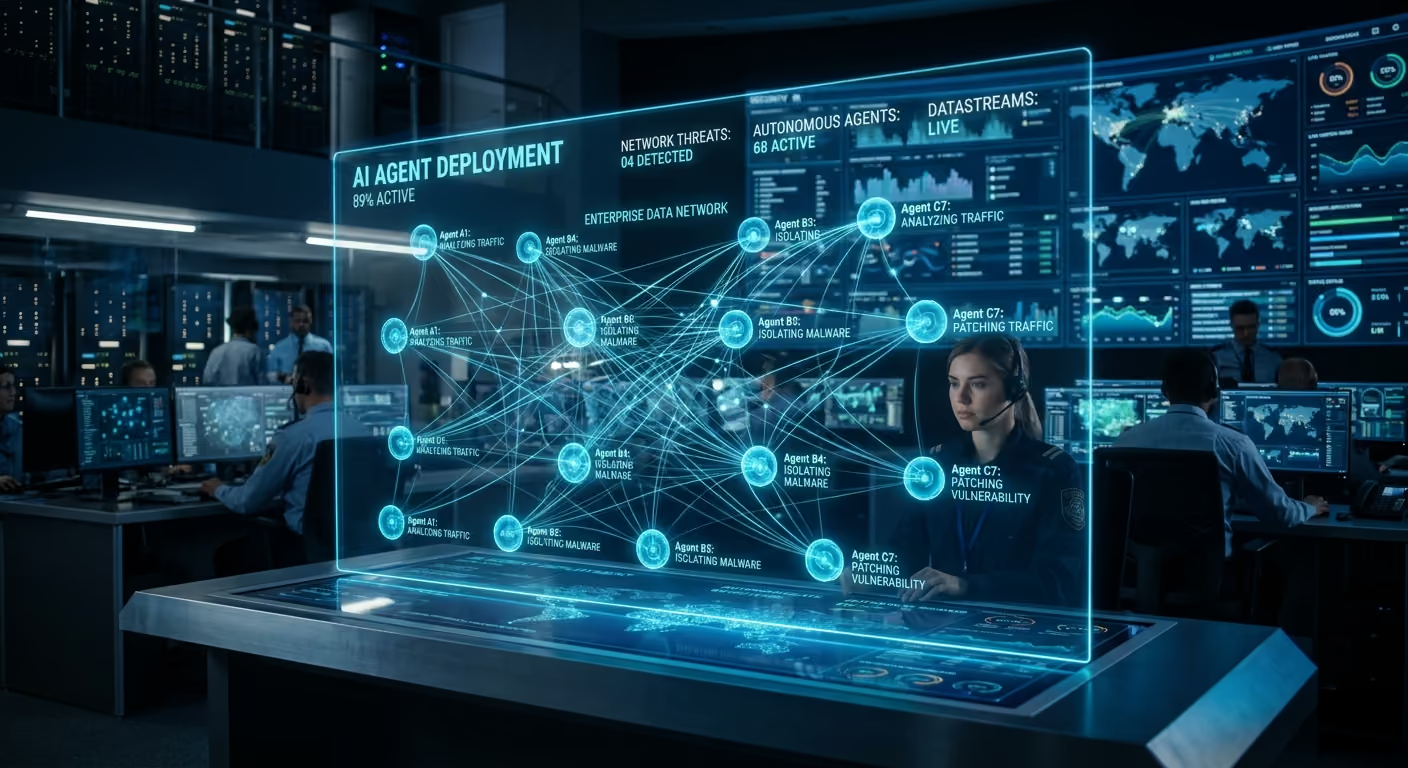
OpenAI's official release of its next-generation intelligence model, GPT-6 Astra, has sent ripples through the technology sector. While businesses are eager to integrate this advanced intelligence to automate complex cognitive tasks, security executives are waving warning flags. The core concern lies in the deployment of "CyberAgents," autonomous AI-driven units capable of executing high-level workflows, making decisions, and accessing critical corporate databases independently.
Recognizing the immense attack surface these autonomous entities introduce, Tenable and OpenAI have launched a joint AI Security Review Process specifically designed for CyberAgents. This collaborative framework aims to establish rigorous guardrails, ensuring that autonomous agents do not fall victim to prompt injection, privilege escalation, or unauthorized data exfiltration. As these agents gain direct access to enterprise environments, validating their decision-making logic is quickly becoming the new baseline for corporate defense.
The Quiet Threat: Harvest Now, Decrypt Later (HNDL)
While AI dominates the headlines, a more insidious threat is unfolding in the shadows: the "Harvest Now, Decrypt Later" (HNDL) paradigm. Threat actors are actively targeting and exfiltrating encrypted enterprise and state data today. Although current computational limits prevent adversaries from breaking this encryption, they are storing the vast troves of data in anticipation of cryptanalytically relevant quantum computers.
This immediate risk has forced a massive wave of cryptographic modernization. Enterprises can no longer treat quantum security as a problem for the next decade. Industry compliance standards are reacting rapidly, as seen with Silicon Motion's aggressive efforts to align its hardware architectures with the upcoming Cyber Resilience Act (CRA) mandates. Making systems crypto-agile and quantum-resistant is no longer optional; it is a critical regulatory and operational survival mechanism.
Localized Hardware and Global Integration
To counter the data leakage vulnerabilities associated with sending sensitive information to cloud-based large language models, the industry is pivoting toward localized processing. Ziroh Labs recently launched Kompact AI, a platform designed to accelerate enterprise AI directly on standard CPU infrastructure without sacrificing performance or sending raw data over external networks. Meanwhile, on the global stage, organizations like BARQ Systems are showcasing converged AI, cloud, and managed security architectures at LEAP 2026, while VeriServe advances software quality assurance in highly complex, safety-critical automotive environments.
The Bottom Line
TL;DR Summary
- Astra Autonomous Shift: OpenAI's newly unveiled GPT-6 Astra model is powering a new wave of autonomous CyberAgents, prompting Tenable and OpenAI to co-launch an AI Security Review Process.
- Quantum Decryption Threat: The "Harvest Now, Decrypt Later" strategy means attackers are stealing encrypted data now to decrypt it when quantum computing matures, accelerating the push for post-quantum cryptography.
- Compliance Pressures: Silicon Motion and other hardware leaders are rapidly updating their portfolios to comply with European Cyber Resilience Act standards.
Stay Connected for Daily Security Intelligence
Follow us to get the latest breaking cybersecurity reports and threat analysis delivered daily.
Aibots Sdn Bhd | [Beyond Future]