Enterprise Security Shifts to Data Layer as Autonomous AI Agents Flood Modern Networks

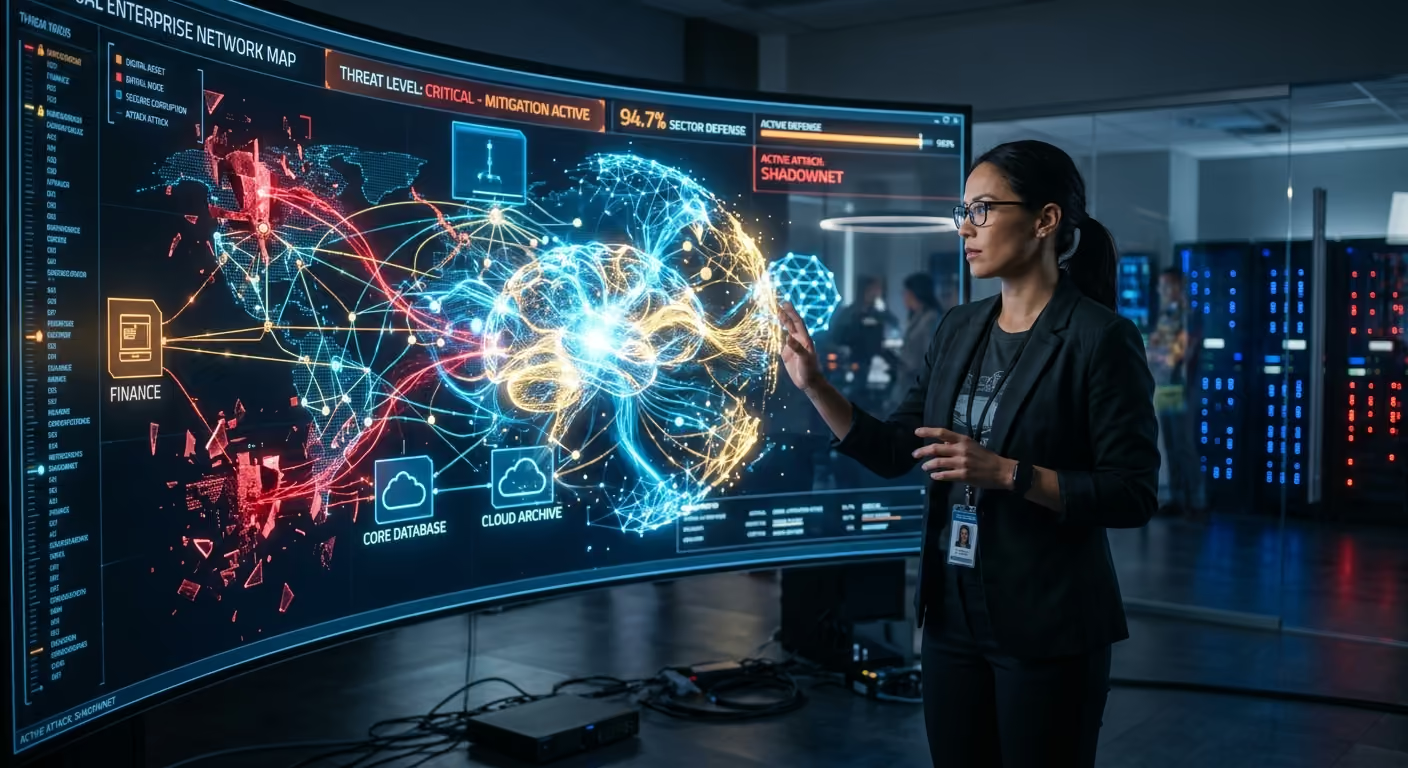
Today is September 21, 2026, and the enterprise attack surface is undergoing its most radical transformation in a decade. The rapid proliferation of autonomous AI agents is forcing a total rewrite of the classic defense playbook. As organization boundaries dissolve under the weight of automated machine-to-machine transactions, top-tier security leaders are abandoning traditional perimeter defenses in favor of localized, data-centric security architectures.
The Autonomous AI Surge and the Visibility Gap
This week, Anthropic expanded its enterprise AI arsenal by launching a suite of autonomous tools ahead of its highly anticipated initial public offering (IPO). While these tools promise unprecedented productivity gains by allowing AI agents to execute multi-step workflows independently, they also present massive visibility challenges for security operations centers.
When AI agents begin calling APIs, querying databases, and moving laterally across systems, traditional security tools struggle to differentiate between legitimate automated tasks and malicious exploits. To address this exact blind spot, networking and intelligence firms DrayTek and Enea have joined forces. The duo is targeting the growing AI traffic visibility challenge, building deep packet inspection capabilities that allow enterprises to classify and monitor the unique traffic footprints generated by agentic AI deployments.
Oracle Pivots Enterprise Security to the Data Layer
With autonomous agents operating inside internal networks, securing the boundary is no longer sufficient. Recognizing this reality, Oracle has announced a major architectural pivot, shifting enterprise security directly to the data layer. By embedding security controls, encryption, and continuous monitoring directly within the databases and data pipelines themselves, Oracle aims to ensure that even if an AI agent or identity is compromised, the underlying data remains secure.
This security evolution is driving significant market movement. Modern endpoint and identity protection players are seeing surging demand. SentinelOne recently reported exceptionally strong Annual Recurring Revenue (ARR) growth, prompting market analysts to call for a stock rerating as enterprises rush to upgrade their security infrastructure to protect these complex environment layers.
The Race to Standardize and Adapt
As businesses race to survive in this new era, security standards must catch up. Beyond terrestrial corporate networks, organizations are even working on standardizing space cybersecurity to protect critical satellite-based data relays that feed modern enterprise clouds. Additionally, consulting giants like Insight Enterprises are seeing significant earnings estimate upgrades as corporations turn to external integrators to navigate this complex technological transition.
The Bottom Line
TL;DR Summary
- Agentic Revolution: Anthropic's rollout of autonomous tools accelerates the rise of AI agents, creating complex new traffic patterns that are hard to secure.
- Data-Centric Defense: Oracle is moving security controls directly into the data layer, assuming internal networks are already compromised by rogue or vulnerable agents.
- Market Validation: Companies providing deep visibility and modern endpoint security, such as DrayTek, Enea, and SentinelOne, are seeing massive enterprise adoption.
Cybersecurity Fun Fact
Did you know that by some industry estimates, over forty percent of enterprise network traffic is projected to be generated by autonomous AI agents by the end of 2027? This makes real-time traffic visibility and data-layer encryption absolute necessities for modern business survival.
Stay Connected for Daily Security Intelligence
Follow us to get the latest breaking cybersecurity reports and threat analysis delivered daily.
Aibots Sdn Bhd | [Beyond Future]