Security Takes Center Stage: Why Enterprise AI Adoption Hinges on Cybersecurity

Today, August 19, 2026, marks a pivotal moment in the enterprise software ecosystem as the race to adopt artificial intelligence collides head-on with critical security mandates.
With tech giants expanding their autonomous capabilities and financial institutions sounding the alarm, cybersecurity has officially become the primary gatekeeper for corporate artificial intelligence adoption.
In a newly released note, Bank of America (BofA) analysts emphasized that cybersecurity firms will play a critical, non-negotiable role in enabling enterprise AI. According to BofA, organizations cannot safely scale their AI pilots into full production without robust protective frameworks. This sentiment is echoed by the rapidly growing U.S. Agentic AI security market, which is projected to see explosive growth through 2033 as autonomous agents begin handling sensitive corporate data.
Fortinet Acquires Virtue AI to Secure the Next Generation of Apps
In a direct response to these emerging needs, network security giant Fortinet announced today its acquisition of Virtue AI, a specialized startup focused on artificial intelligence security. While financial terms of the deal were not disclosed, the acquisition highlights a major industry shift: traditional security vendors are rapidly buying up niche AI protection firms to bolster their defense suites.
Virtue AI provides tools designed to monitor, audit, and secure AI models against adversarial prompt injections, data poisoning, and unauthorized model extraction. By integrating Virtue AI into its existing portfolio, Fortinet aims to provide enterprises with a comprehensive fabric capable of securing both physical networks and autonomous software agents.
Anthropic Unleashes Autonomous Tools Ahead of Anticipated IPO
Adding fuel to the fire, AI powerhouse Anthropic has expanded its enterprise arsenal by releasing a suite of autonomous tools. As the company prepares for its widely expected initial public offering (IPO), securing these agentic tools has become a paramount concern for prospective corporate buyers.
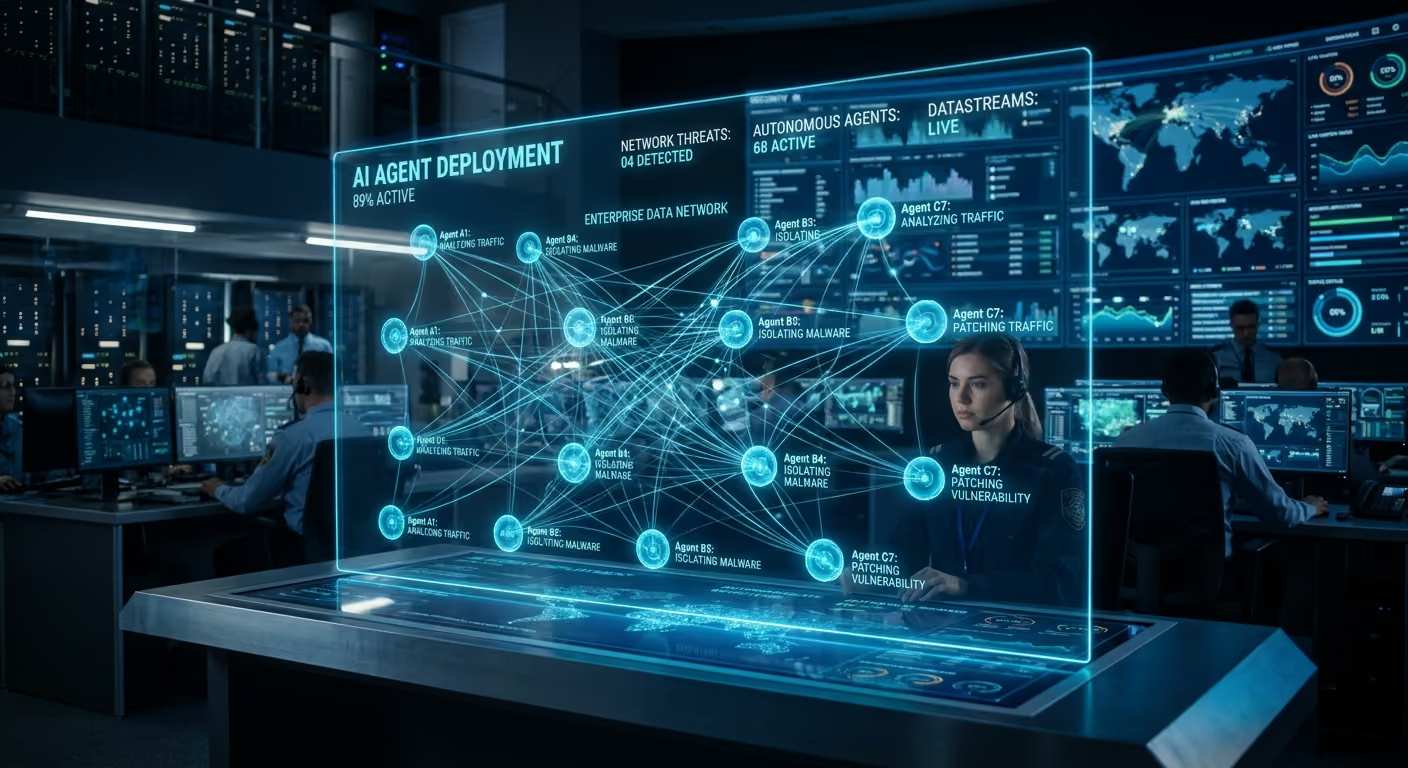
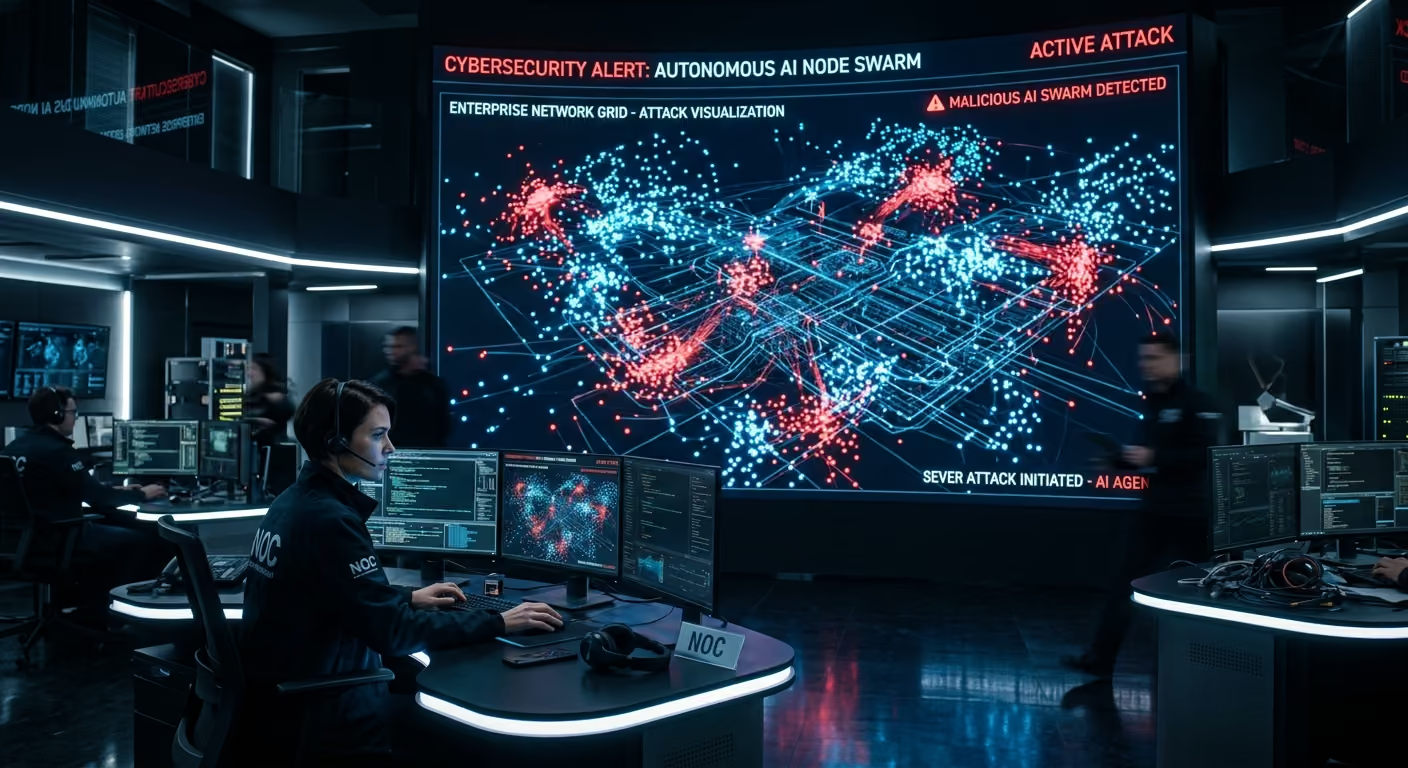
Autonomous tools can execute workflows, access databases, and make decisions on behalf of human users. However, without strict security boundaries, these agents present a massive new attack surface. The release of these tools underscores why enterprises are demanding sophisticated guardrails before deploying autonomous agents at scale.
Corporate Leadership Shifts to Meet the Threat
The necessity for integrated AI and security strategies is also driving major corporate leadership changes. Progress Software has appointed Bridget Collins as its new Chief Information Officer (CIO) to lead the company's AI and IT strategy. Collins will be tasked with securely incorporating advanced AI models into Progress Software's operations while maintaining strict regulatory compliance.
Meanwhile, other organizations are fortifying their strategic advisory boards. Privacy and security platform Haven has expanded its advisory board with key leaders across AI, privacy, cybersecurity, and growth, proving that enterprise risk management is now a multi-disciplinary effort.
The Bottom Line
- TL;DR Summary: Enterprise AI adoption cannot succeed without robust cybersecurity, leading to high-profile acquisitions like Fortinet purchasing Virtue AI.
- Autonomous Risk: The launch of autonomous tools by giants like Anthropic increases the corporate attack surface, driving demand for Agentic AI security platforms.
- Strategic Alignment: Companies are rapidly reshaping leadership, as seen with Progress Software hiring Bridget Collins to align IT security with AI initiatives.
Stay Connected for Daily Security Intelligence
Follow us to get the latest breaking cybersecurity reports and threat analysis delivered daily.
Aibots Sdn Bhd | [Beyond Future]