Saxon Q Launches 512-Qubit Room-Temperature Systems as ZuriQ Secures $25.5M for 2D Hardware
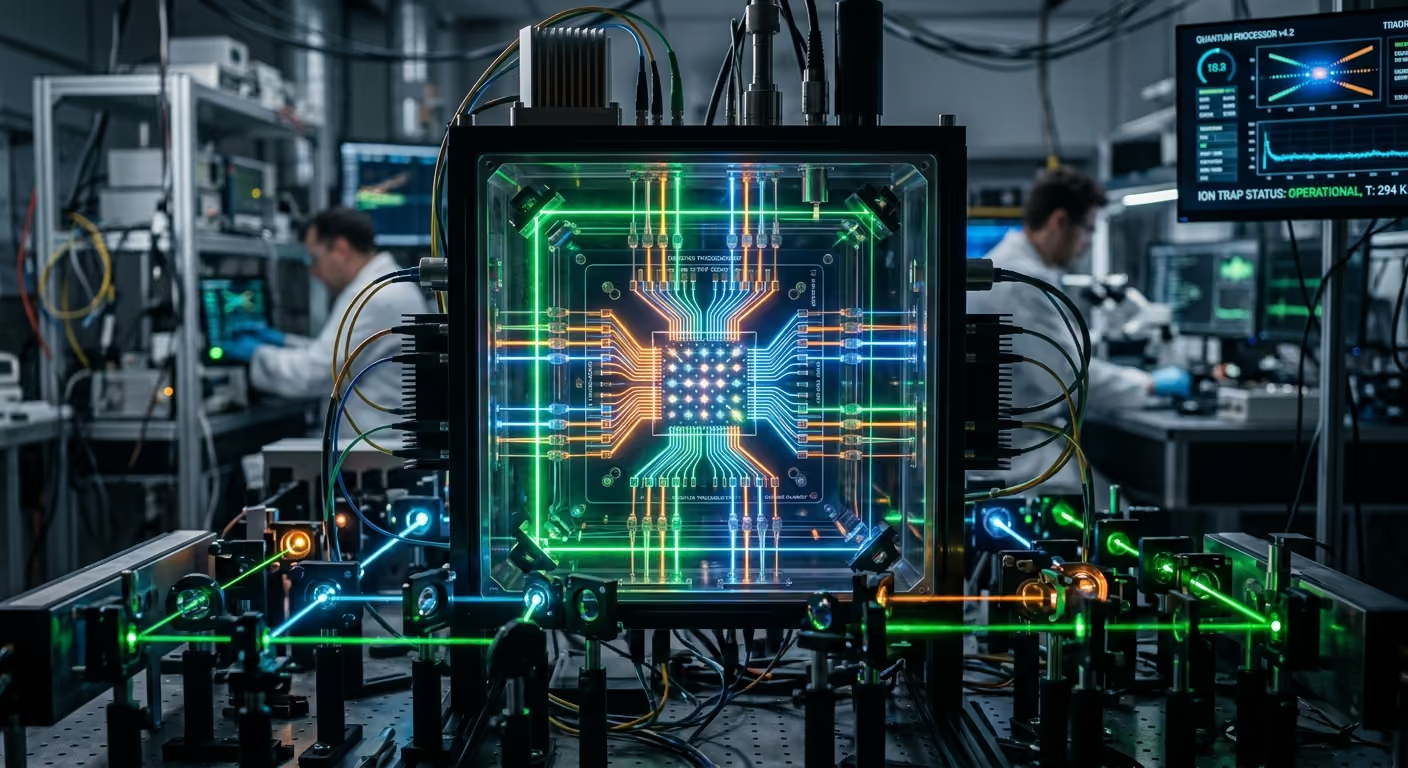
As of July 30, 2026, the global quantum computing sector is moving at a breakneck pace, building on last week's wave of consolidation to deliver dramatic breakthroughs in room-temperature hardware, hybrid integration, and venture funding. The transition from massive cryogenic refrigerators to accessible, room-temperature systems is accelerating alongside major new regional investments.
Saxon Q Unveils 512-Qubit Room-Temperature Systems
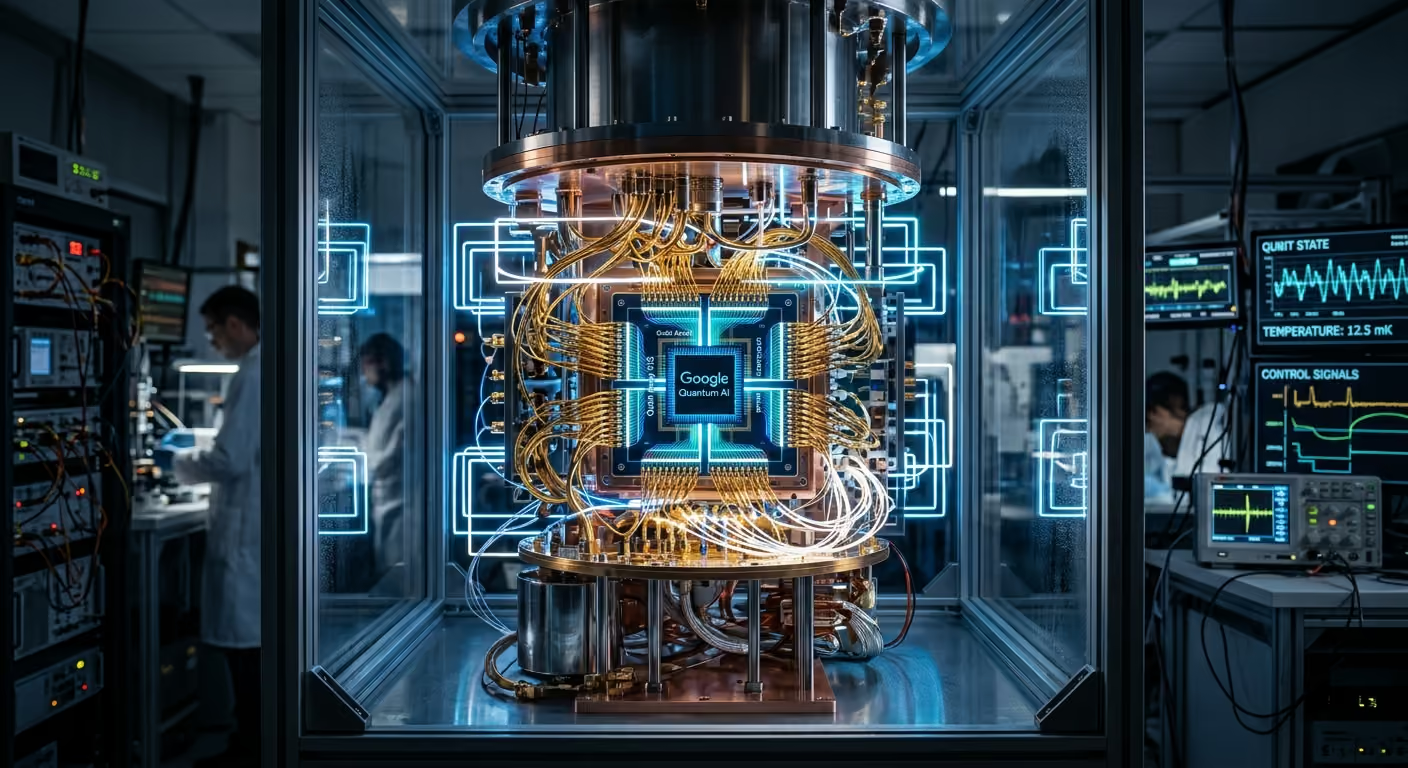
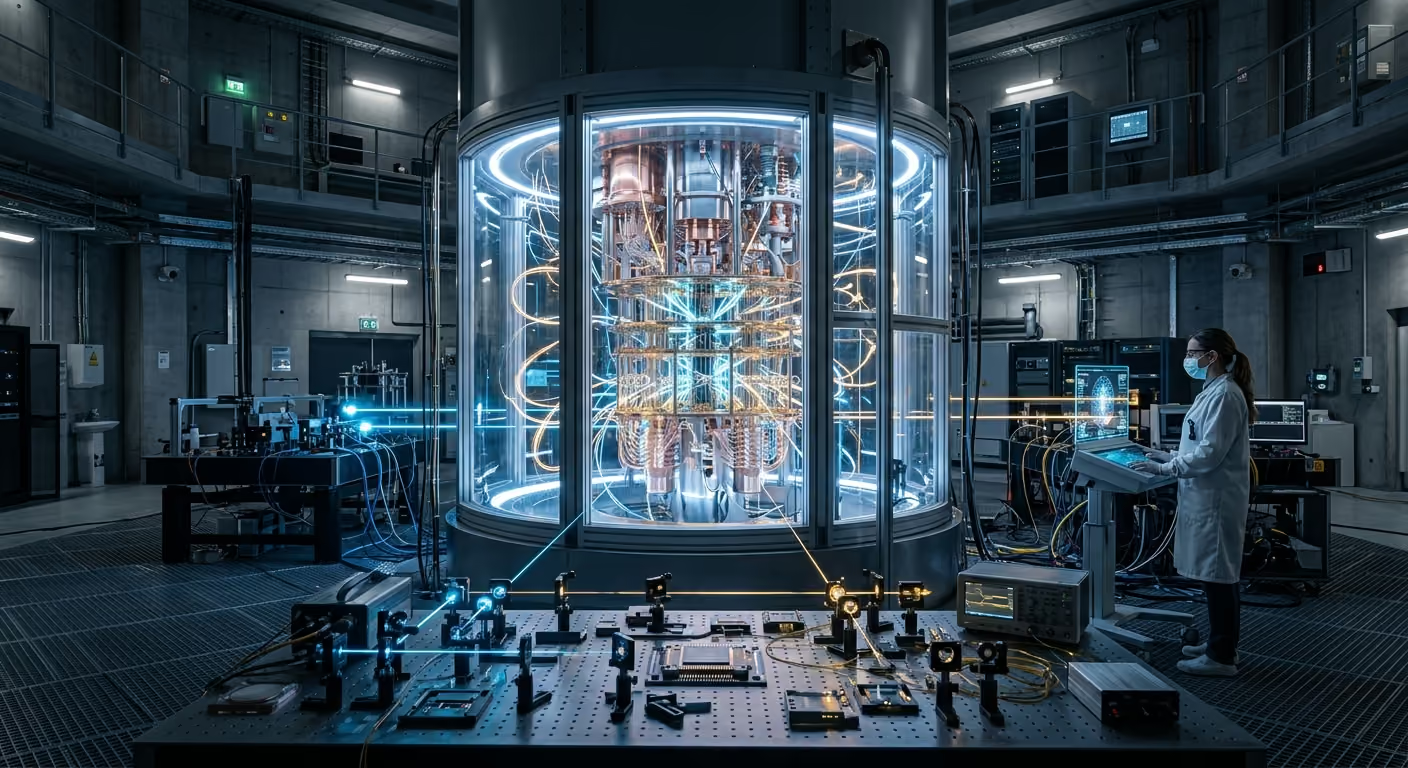
In a stunning development for physical hardware accessibility, developer Saxon Q has officially launched a line of commercial room-temperature quantum computers featuring up to 512 qubits. This release marks a significant milestone in bypassing the complex and expensive helium cooling arrays traditionally required for quantum processors. By operating at ambient temperatures, Saxon Q's machines offer a highly scalable pathway for enterprise deployment.
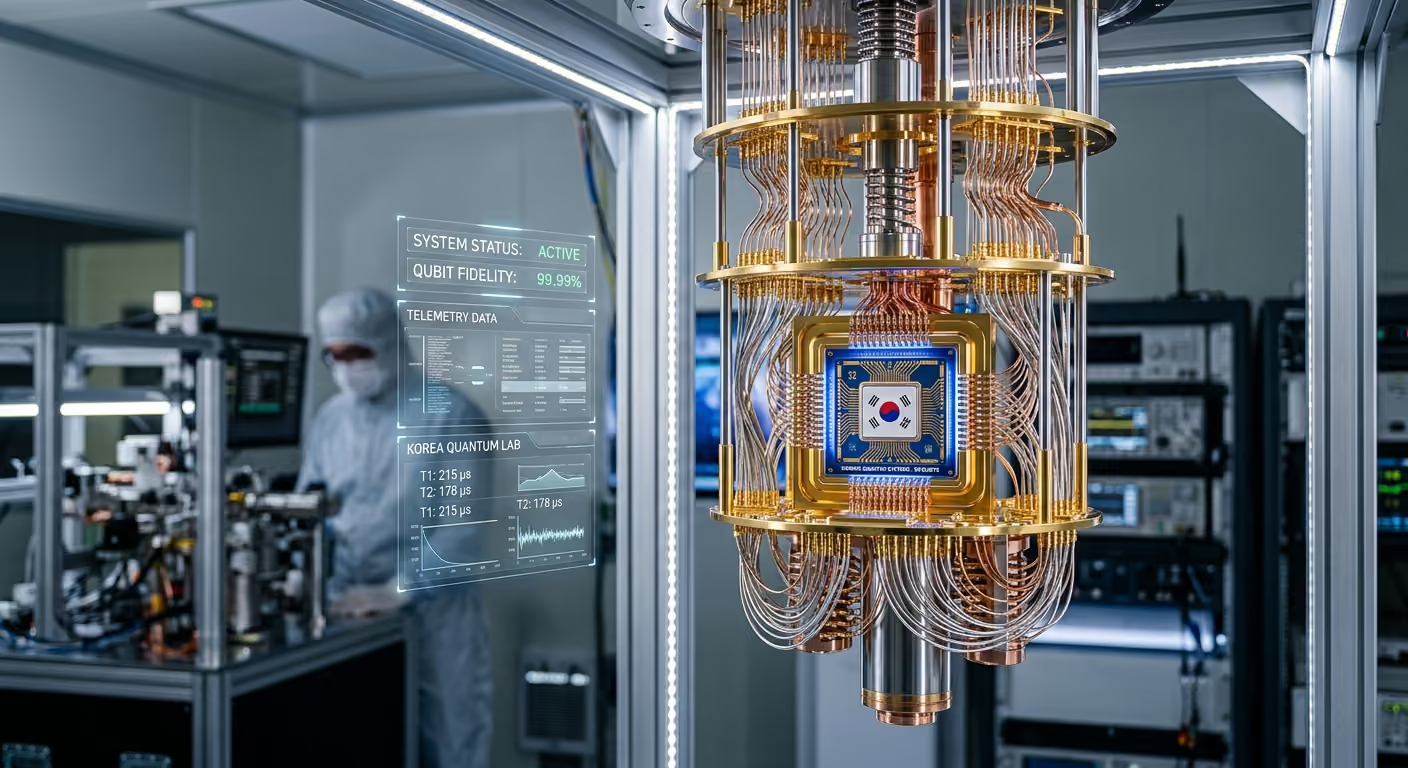
Simultaneously, the global startup ecosystem is expanding. In South Korea, Trapeons has announced the launch of the nation's first ion-trap quantum computer startup, scheduled for late 2026. This move diversifies East Asia's hardware approaches, introducing a strong regional competitor in the high-fidelity ion-trap space.
ZuriQ Secures $25.5 Million to Scale 2D Architecture
Venture capital continues to flow into novel qubit modalities. Quantum startup ZuriQ has successfully raised 25.5 million dollars in funding to scale its breakthrough 2D quantum architecture. The capital injection will allow ZuriQ to transition its experimental designs into robust, error-corrected commercial hardware.
On the collaboration front, international research is receiving a major boost. NordForsk has officially joined the G7 initiative, partnering in the Canada, G7, and Nordic Programme on Quantum Technologies. This coalition will fund international quantum technology research projects, helping align global standards. In the United States, QTREX and Northeastern University have launched a joint research collaboration specifically targeted at advancing quantum interconnect technologies, a critical component for linking multiple quantum processors together.
Pittsburgh Supercomputing Center Wins $5 Million for Hybrid Testbed
The convergence of classical supercomputing and quantum processors is accelerating. The Pittsburgh Supercomputing Center (PSC) has secured a 5 million dollar grant from the National Science Foundation (NSF) to build a state-of-the-art hybrid quantum-classical supercomputer. This new testbed will allow researchers to benchmark quantum algorithms directly against advanced classical systems, optimizing the workflows of both paradigms.
This development pairs naturally with the efforts of TangleLab, which recently announced a software framework designed to pair quantum processors seamlessly with existing classical supercomputers. Additionally, Japan's New Energy and Industrial Technology Development Organization (NEDO) has selected Qubitcore to participate in its large-scale quantum computer development project, further strengthening public-private hybrid initiatives.
On the application side, Quantum X Labs demonstrated a complete, end-to-end quantum-enabled clinical data analysis use case. Using real-world clinical information run on a quantum computer simulator, the company successfully bridged the gap between raw data ingestion and clinical interpretation, demonstrating quantum's potential to revolutionize personalized medicine and cancer vaccine design.
The Bottom Line
The quantum computing landscape is rapidly shifting toward hybrid integration and ambient-temperature accessibility. As capital floods into diverse hardware platforms, the industry is laying the groundwork for scalable, practical quantum networks.
TL;DR Summary
- Ambient Hardware: Saxon Q launched commercial room-temperature quantum computers with up to 512 qubits, while Trapeons introduced South Korea's first ion-trap startup.
- Capital Infusions: ZuriQ secured 25.5 million dollars for its 2D quantum architecture, and NordForsk joined G7 allies to fund international projects.
- Hybrid Ecosystems: The Pittsburgh Supercomputing Center landed a 5 million dollar NSF grant for a hybrid testbed, while Quantum X Labs simulated end-to-end clinical data workflows.
Stay Connected for Weekly Quantum Intelligence
Follow us to get the latest breaking quantum computing reports and technical analysis delivered weekly.
Aibots Sdn Bhd | [Beyond Future]